As the calendar turns to mid-August 2026, the European continent is once again under siege by a relentless meteorological phenomenon. A high-amplitude, upper-level ridge has locked the fifth major Heat Dome of the season into place, creating an atmospheric "pressure cooker" that is pushing temperatures across the continent into record-breaking territory.
From the sun-scorched valleys of Iberia to the urban corridors of the United Kingdom and the plains of Central Europe, widespread afternoon temperatures are forecast to surge past 40°C. Driven by an intense northward surge of warm air, these thermal anomalies are climbing into the 99th percentile of historical data, signaling an extreme event that threatens public health, energy infrastructure, and agricultural stability.
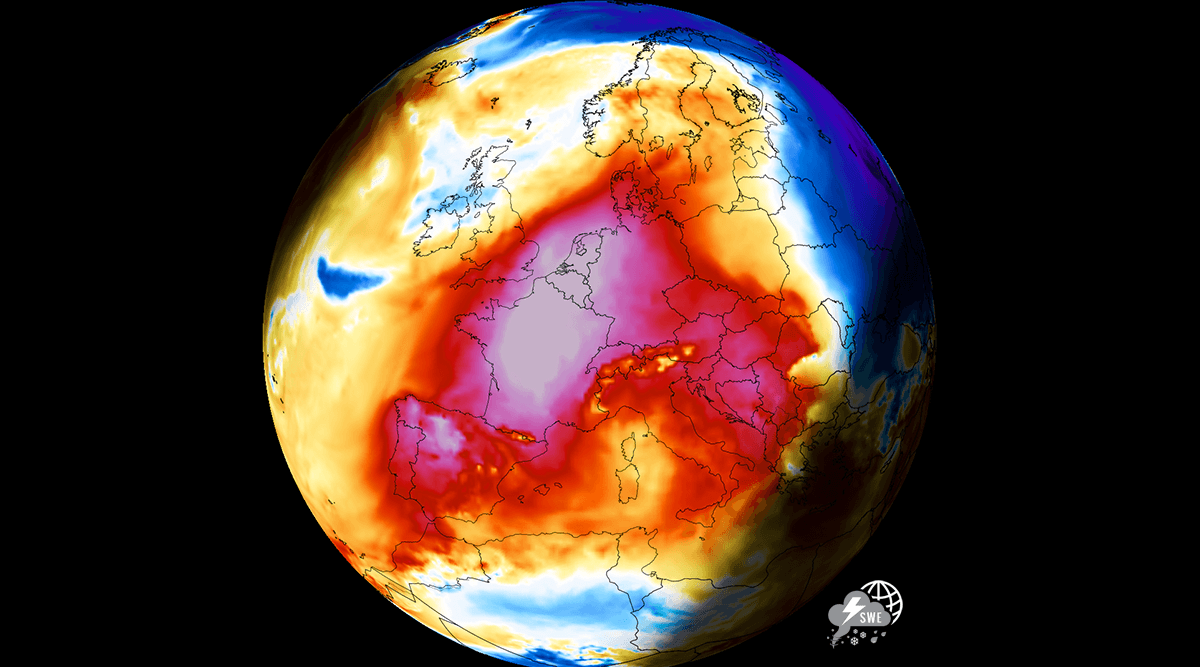
The Anatomy of an Atmospheric Crisis
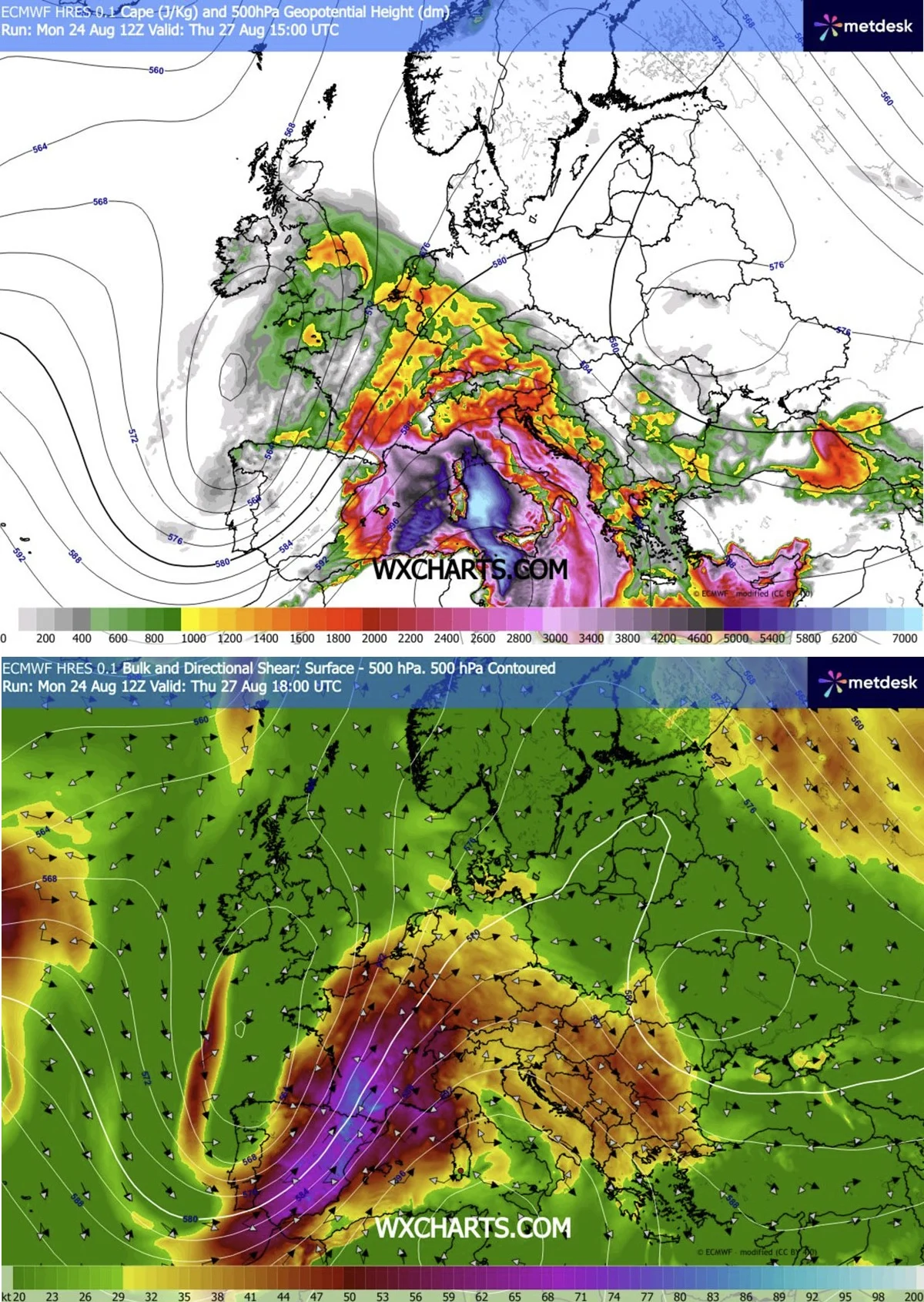
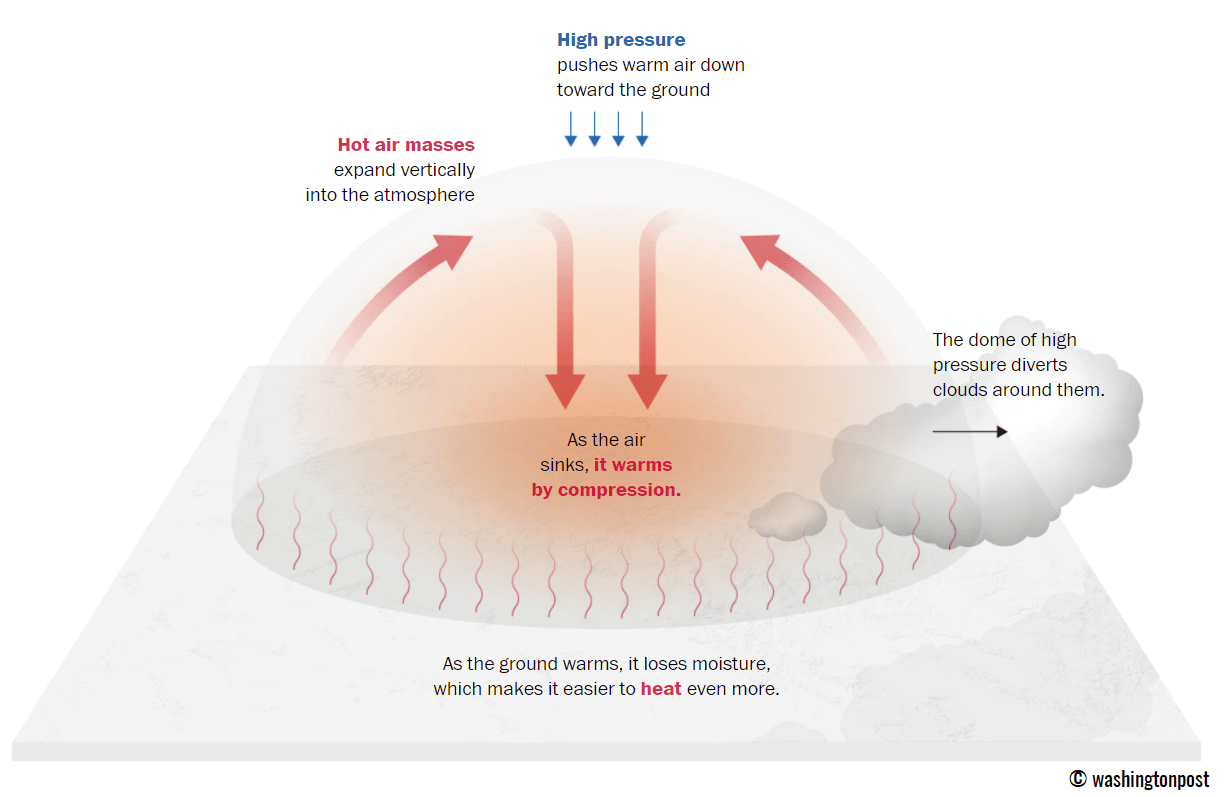
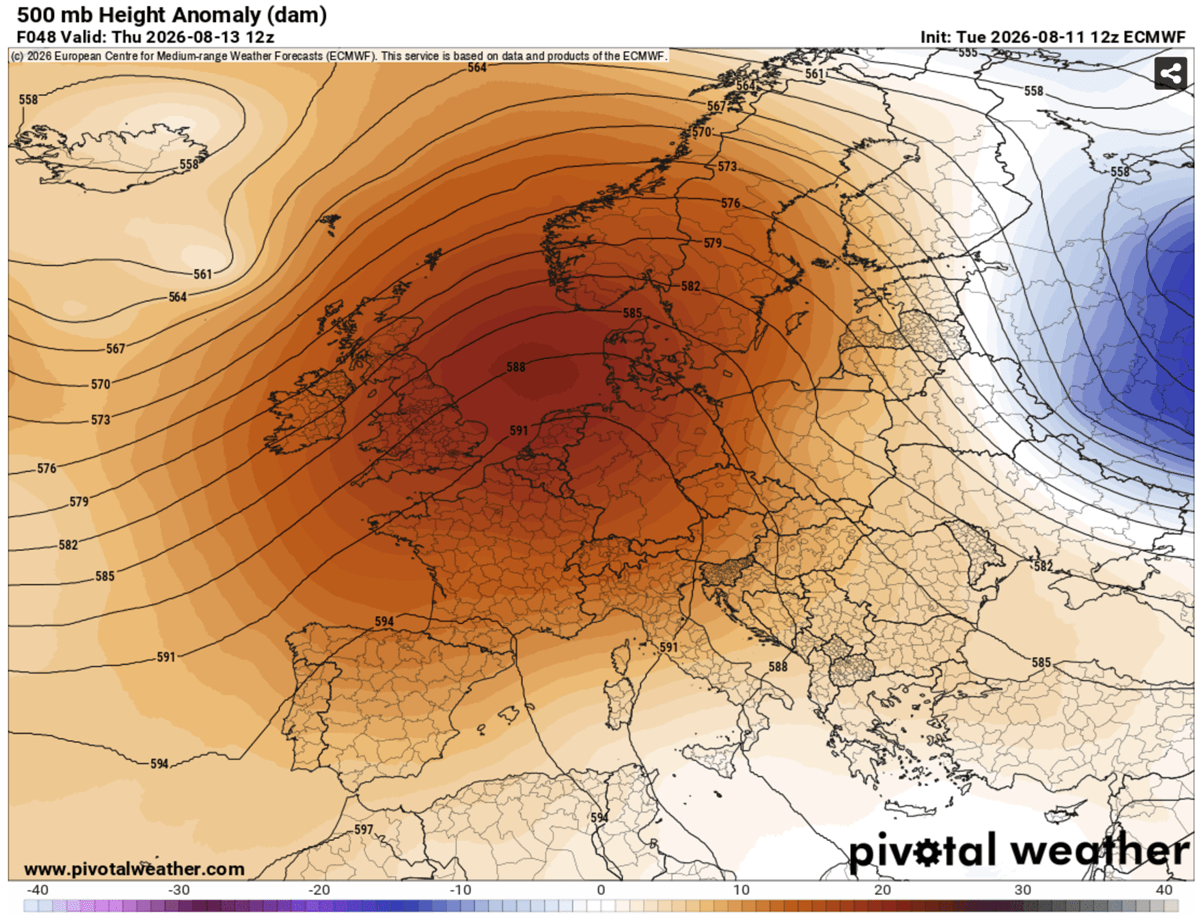
At the heart of this weather emergency lies a stubborn, stationary high-pressure system. Meteorologically, this is referred to as a "Heat Dome." The process is conceptually simple but physically devastating: as the high-pressure ridge parks over the heart of the continent, it acts like a lid on a pot. Sinking air within the ridge undergoes adiabatic compression, a process that rapidly heats the lower troposphere.
Because the air is being pushed toward the surface, it prevents the formation of clouds and rain, allowing solar radiation to bake the ground. This, in turn, dries out the soil, reducing the cooling effects of evaporation and creating a feedback loop that drives surface temperatures to their absolute, stifling maximum.
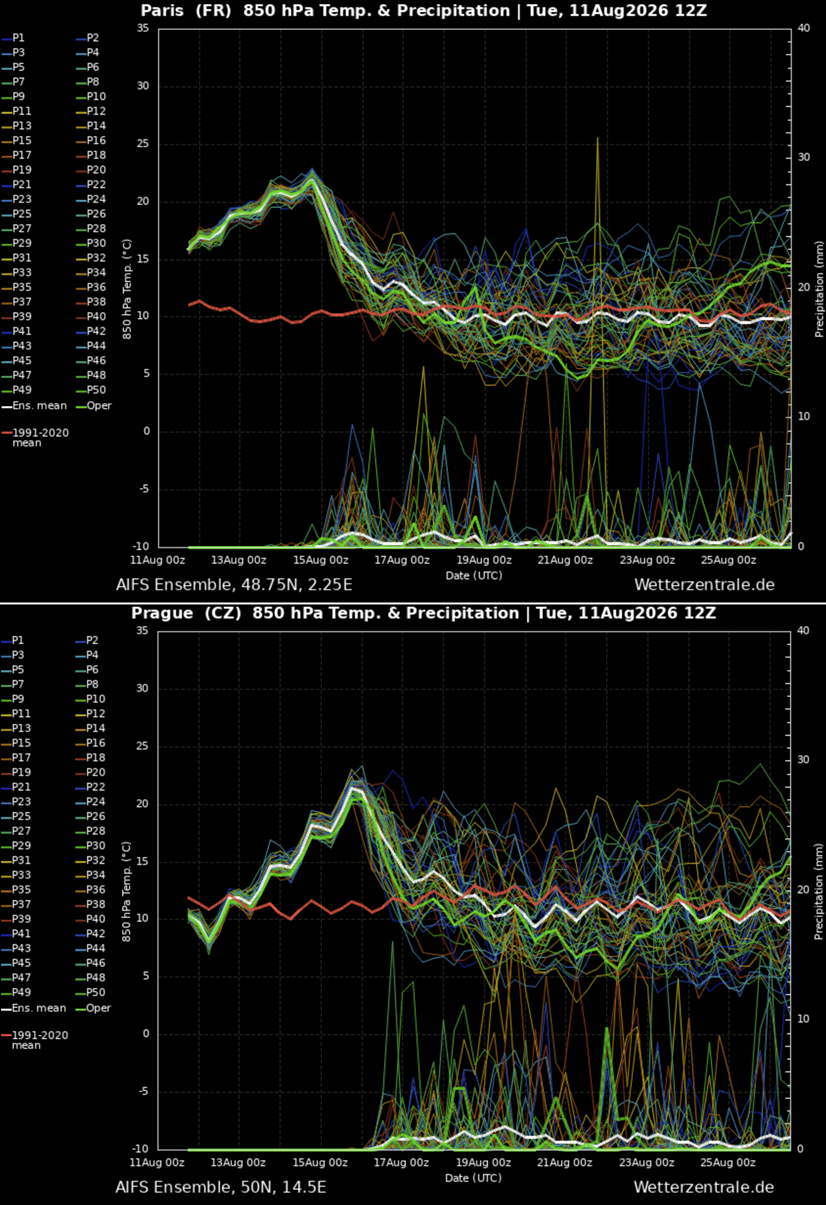
In low-lying basins and plains across France, Italy, and the Balkans, meteorological models are consistently predicting peak surface temperatures between 40°C and 43°C. Compounding this, dry continental winds are exacerbating the situation, stripping away remaining soil moisture and creating a tinderbox environment for wildfires, which are already showing extreme activity in the southwestern regions of the continent.
Chronology of the 2026 Heatwave
The progression of this thermal event is methodical and sweeping. By midweek, the heat dome began its primary assault on Western Europe.
Mid-Week: The Western Front
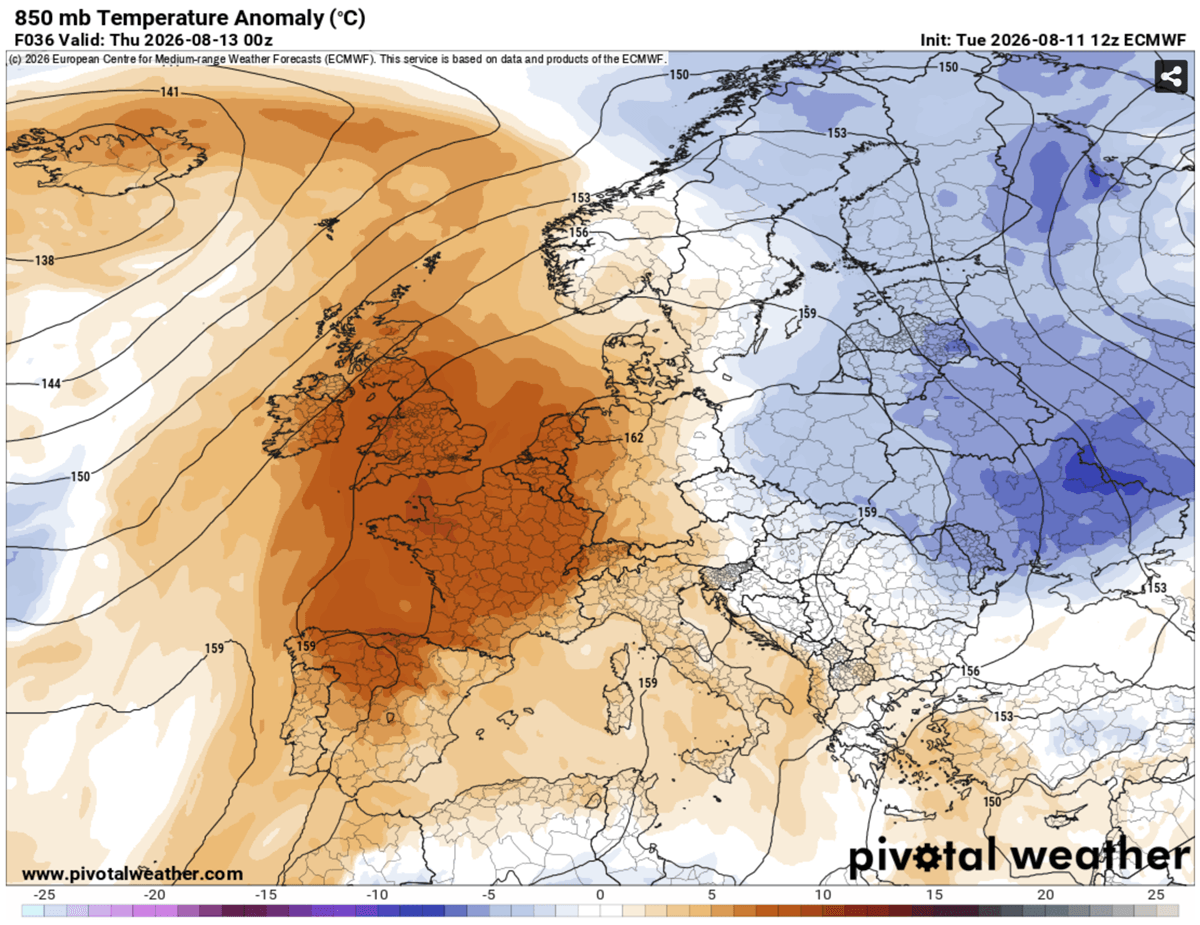
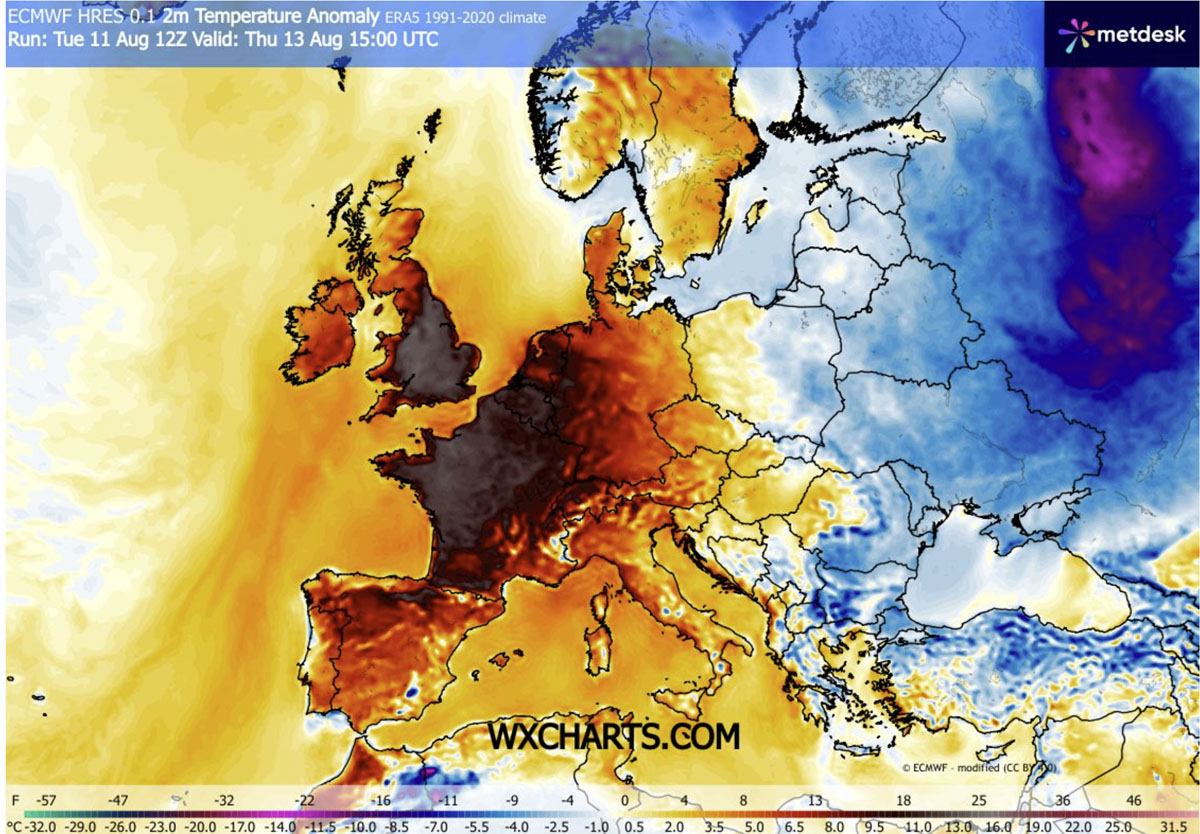
On Wednesday and Thursday, the core of the heat dome sat directly over northern France, the English Channel, and the United Kingdom. During this period, the UK experienced a brief but intense spike in temperature, with southern and central England seeing the mercury climb toward 38°C–39°C. Ireland, while cooler, reached temperatures in the high 20s, a significant deviation from seasonal norms.
Friday: The French and Benelux Peak
As the system intensified on Friday, France bore the brunt of the heat. Large swaths of the country recorded temperatures in the 42°C–43°C range. This period also saw the heat plume expand into the Benelux region, with Belgium and Luxembourg facing sustained heat in the 36°C–40°C range, testing the limits of infrastructure not traditionally built for such prolonged extreme warmth.
The Weekend: The Eastern Shift
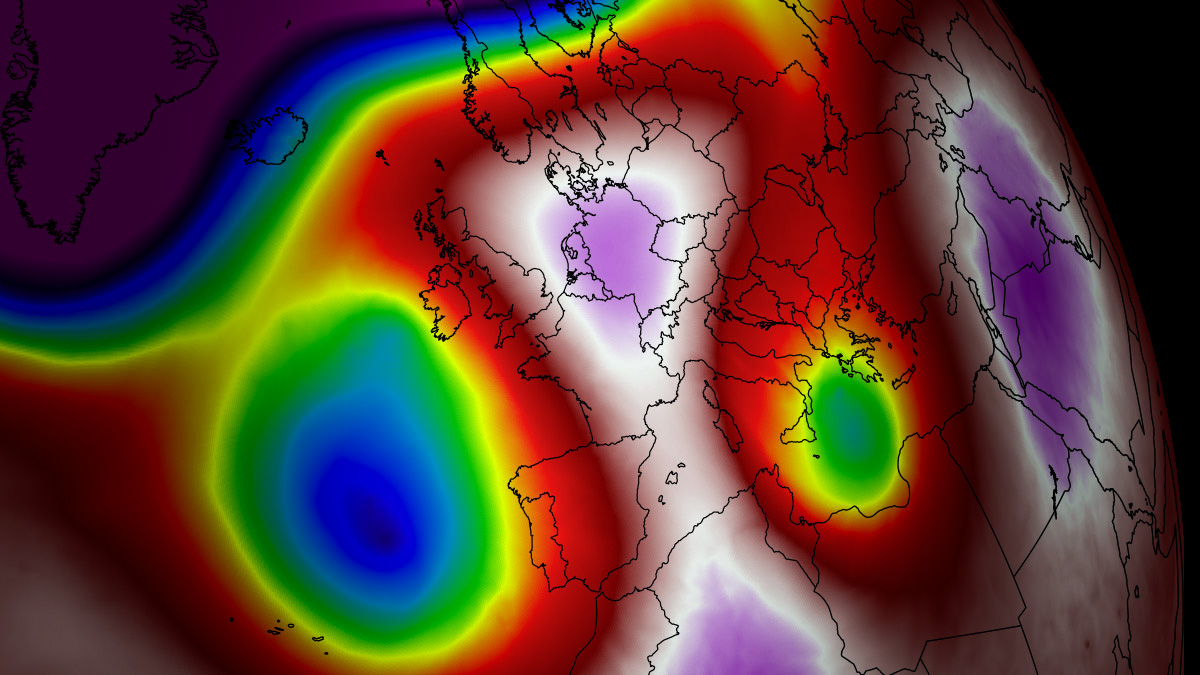
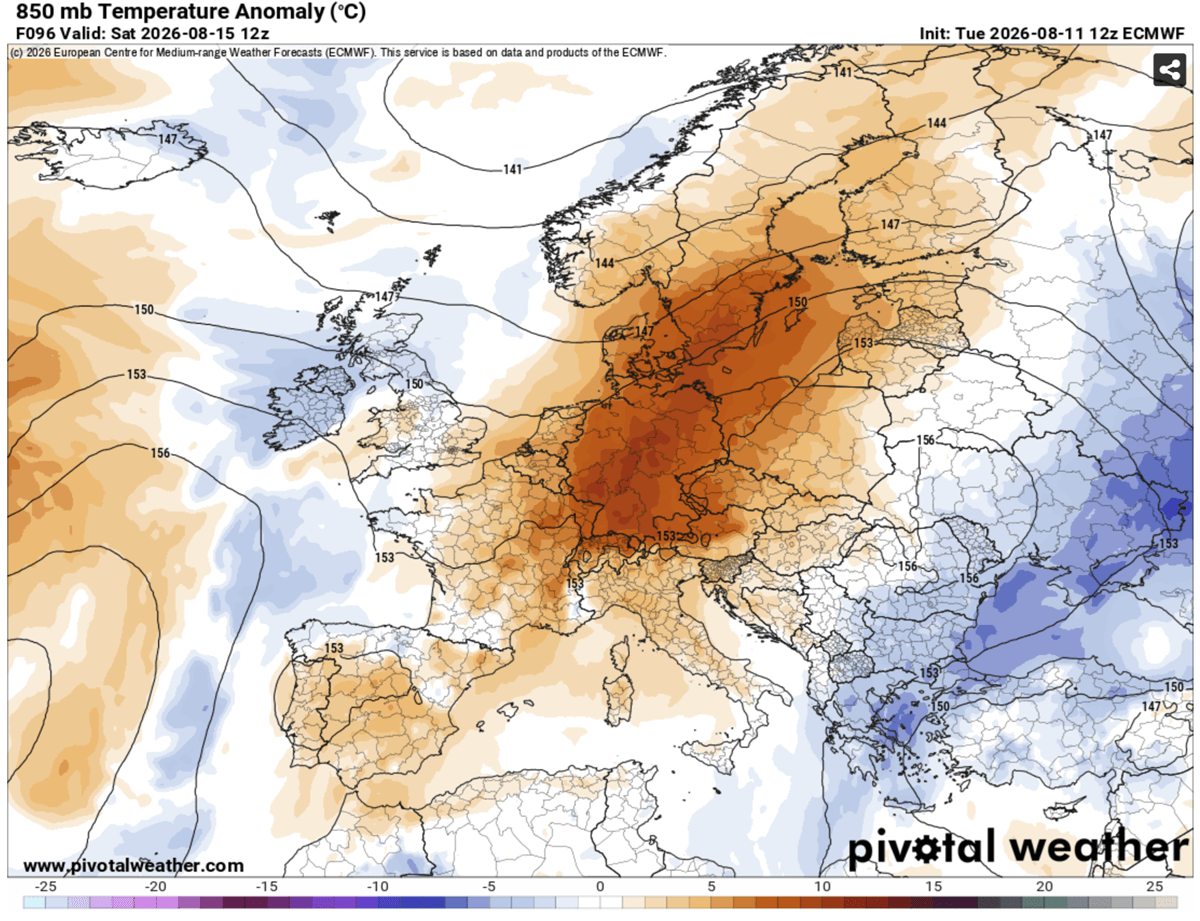
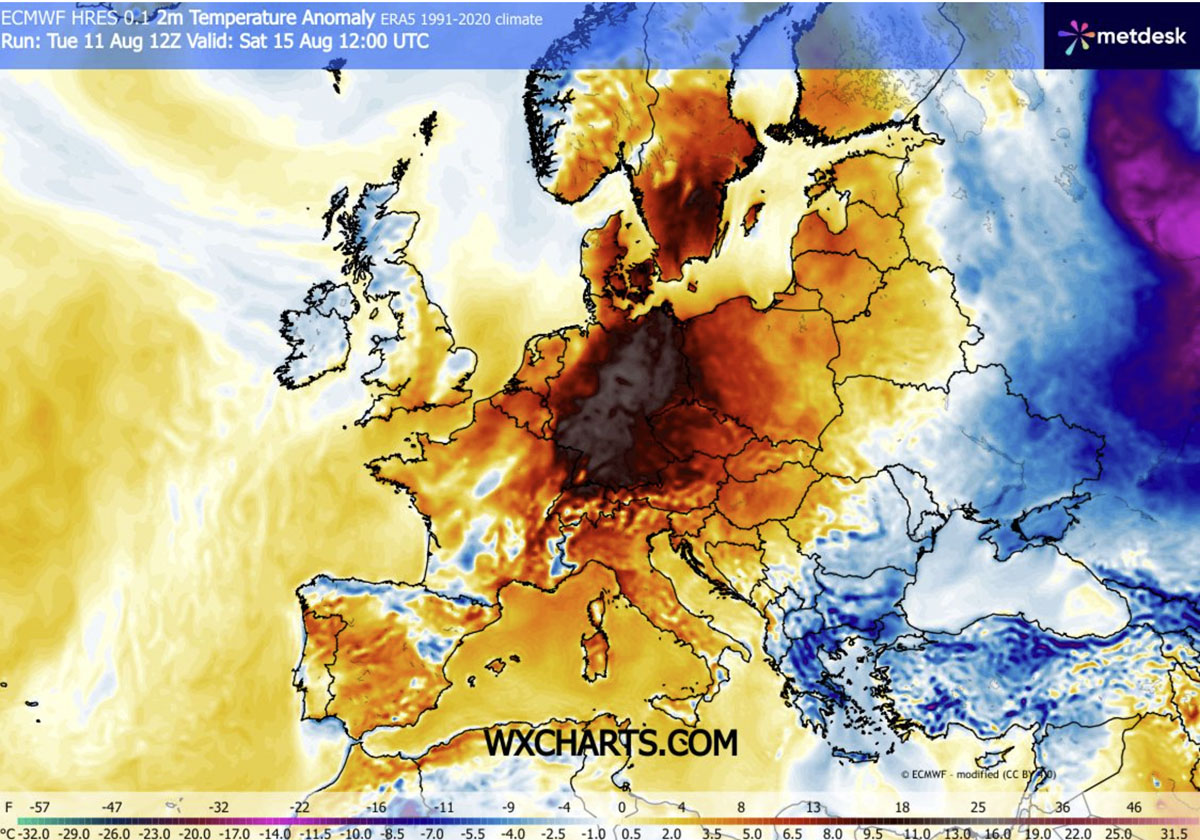
As we head into the weekend, the heat dome is expected to become more elongated, shifting its center of gravity toward Central Europe and the Balkans. By Saturday, Germany, the Czech Republic, and Poland will face the most significant temperature spikes, with the heat beginning to bleed into Denmark and southern Sweden.
Simultaneously, Italy and the Pannonian plains—covering Hungary, northern Serbia, and eastern Croatia—will see temperatures return to the 38°C–40°C range. It is not until late Sunday and into the following week that a shift in the North Atlantic synoptic pattern is expected to bring a maritime air mass from the west, finally providing a reprieve for Western Europe.
Supporting Data: Why "Tropical Nights" Are a Silent Killer
Meteorological data indicates that this heatwave is particularly dangerous due to its lack of nocturnal relief. In a typical summer pattern, temperatures drop significantly after sunset, allowing both human bodies and residential infrastructure to shed heat.
During this event, however, major urban centers are recording "tropical nights," where overnight low temperatures refuse to dip below 22°C to 26°C. These persistent high temperatures prevent the body from recovering from the thermal stress of the day. When the body cannot cool down at night, the cumulative physiological strain on the cardiovascular and respiratory systems increases exponentially.
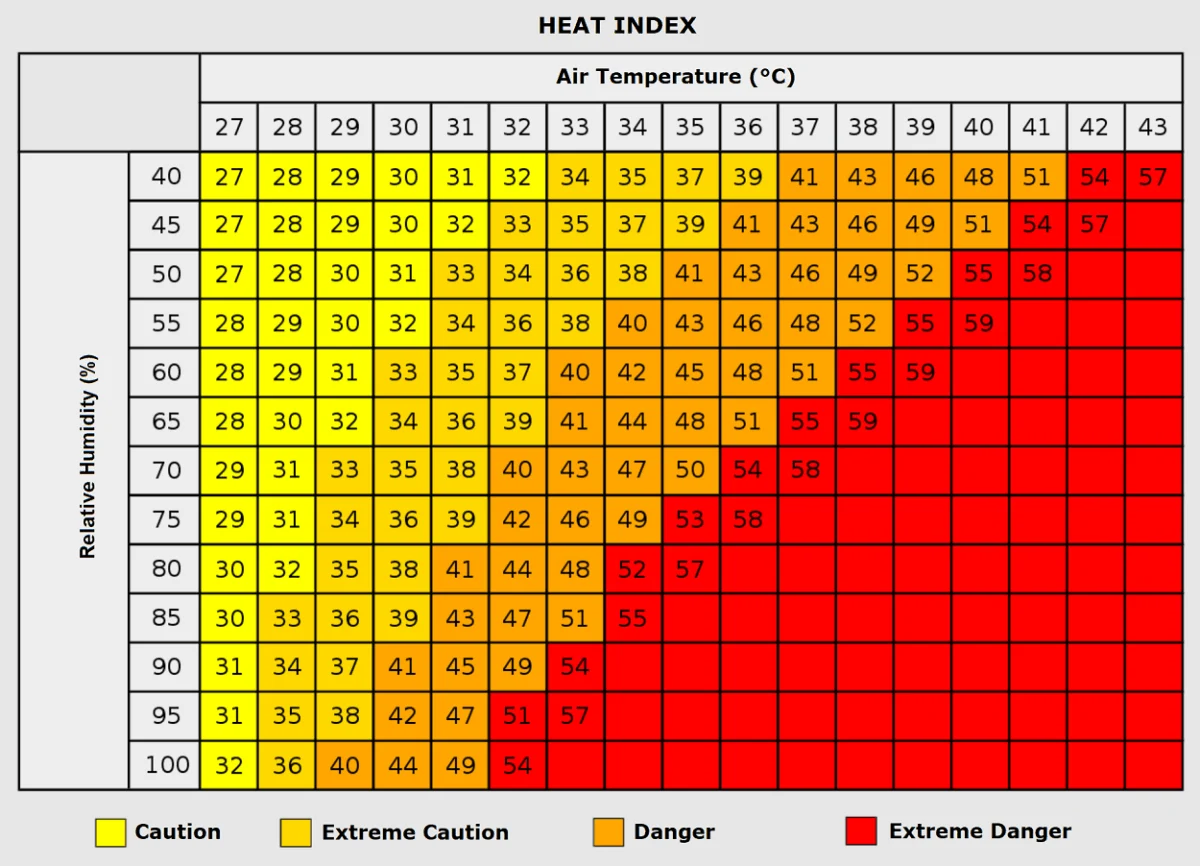
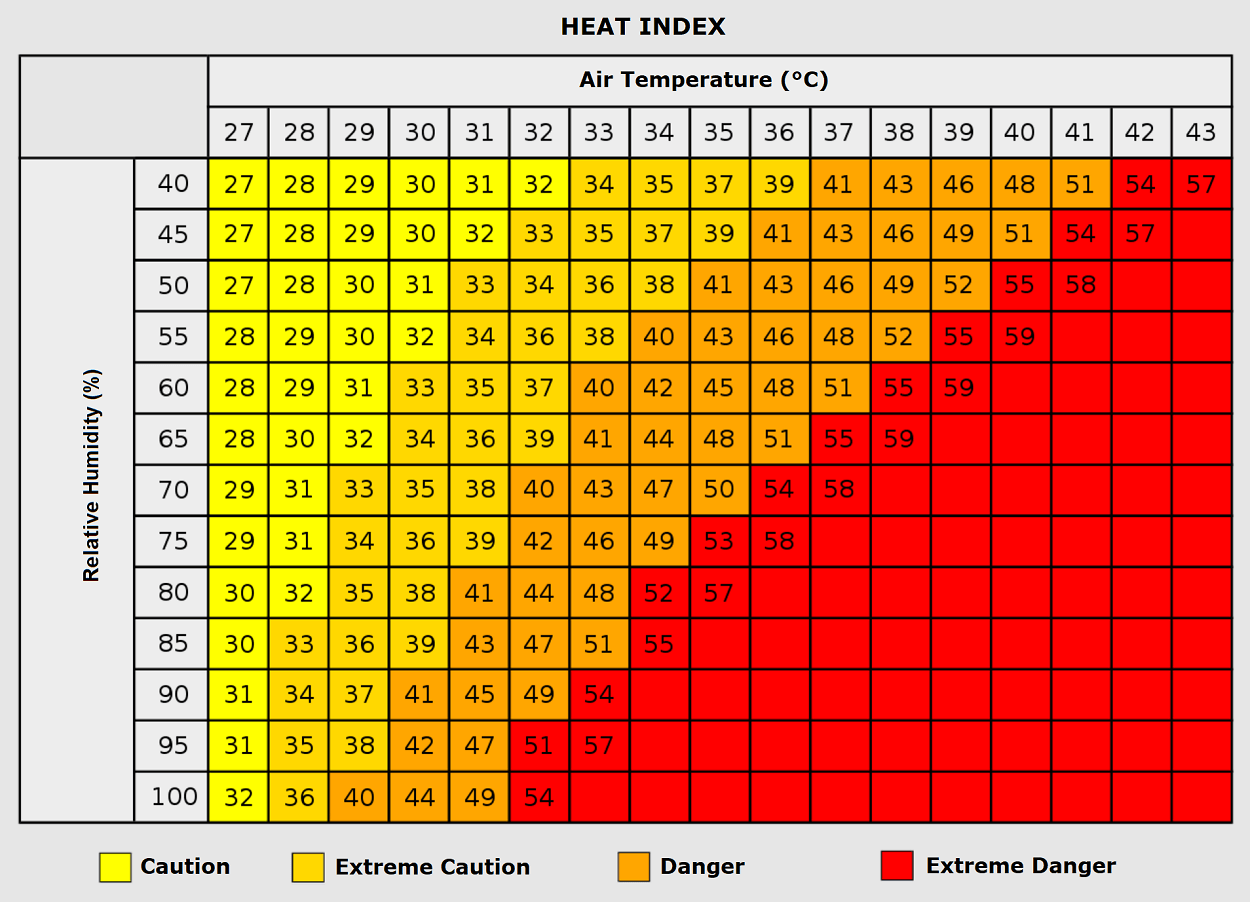
Furthermore, the "Heat Index"—the measure of how hot it actually feels—is being pushed to critical levels by a combination of temperature and humidity. In areas where temperatures reach 35°C, humidity levels above 60% can push the "feels-like" temperature toward 50°C. This calculation highlights why even moderate-looking temperature forecasts can be lethal if the air is saturated with moisture.
Official Responses and Public Health Implications
Public health authorities across Europe have issued high-level heat warnings, emphasizing that the danger is not limited to the daytime highs. Governments in France, Italy, and Spain have activated emergency protocols, including the opening of "cool rooms" and the implementation of mandatory welfare checks for the elderly and vulnerable populations.
The economic impact of the heat dome is equally significant. Energy grid operators have reported a massive surge in electricity demand, driven by an unprecedented reliance on air conditioning. In many regions, the aging electrical infrastructure is being pushed to its breaking point, raising concerns about rolling blackouts.
Labor unions and safety regulators have also intervened. Across the continent, construction workers, agricultural laborers, and transport staff have been issued guidance on mandatory rest breaks, with many industries shifting their operating hours to the early morning or late evening to avoid the peak solar radiation between 12:00 PM and 6:00 PM.
Medical experts have warned that the current conditions are a recipe for a sharp increase in heat-related emergency admissions. Symptoms of heat exhaustion—dizziness, rapid heart rate, and dehydration—are expected to be widespread. If not addressed, these can quickly escalate into heat stroke, which is a life-threatening medical emergency characterized by the body’s total failure to regulate its core temperature.
Broader Environmental and Infrastructure Implications
The persistent nature of this fifth heat dome has profound implications for the environment. Beyond the immediate wildfire risks, the depletion of soil moisture is severely impacting agriculture. Crops that have already suffered through four previous heatwaves this season are showing signs of irreversible stress, which will likely lead to diminished yields and higher food prices in the autumn.
Furthermore, the heat dome is affecting water management. Low river levels across the Rhine and the Danube are hindering inland shipping, which is a critical artery for fuel and commodity transport in Central Europe. As water temperatures rise, the cooling capacity for nuclear power plants—which rely on river water to manage their reactors—is being compromised, forcing some facilities to throttle output to avoid environmental damage to aquatic life.
Conclusion: A New Normal?
While climate scientists are currently analyzing the specific role of anthropogenic climate change in this 2026 event, the frequency and intensity of these heat domes point to a shifting climate baseline. Having endured five such events in a single season, European cities are finding that their historical planning is no longer sufficient.
The immediate future looks to bring a pattern flip next week as the Atlantic lows finally break the blocking high-pressure ridge. However, as the continent looks toward the remainder of August and the autumn months, the conversation is shifting from emergency management to long-term adaptation. Whether through urban redesign, improved energy grid resilience, or more robust public health strategies, Europe must prepare for a future where these "Heat Domes" are not the exception, but a recurring feature of the summer season.
As the forecast shifts toward the weekend, citizens are urged to stay informed via local meteorological services and to prioritize hydration and rest. The current crisis is a stark reminder of the power of the atmosphere and the fragility of our modern, interconnected systems when faced with the raw energy of an extreme heat dome.