In the rapidly shifting world of smart home technology, Amazon’s Echo lineup remains the cornerstone of the modern connected household. However, as the ecosystem matures, the criteria for selecting the "right" device have become increasingly complex. Between the introduction of generative AI-powered features, shifting privacy protocols, and a broad, recent increase in hardware pricing, consumers are finding that choosing an Alexa-enabled speaker requires more discernment than ever. This guide examines the current state of the Echo lineup, providing a roadmap for those looking to invest in voice-activated convenience.
The Best Alexa Speakers: A Curated Selection
While Amazon’s catalog is vast, a few standout models distinguish themselves through specific use cases, ranging from high-fidelity audio to bedside utility.
The Audiophile’s Choice: Echo Studio (2nd Gen)
For those who prioritize sound fidelity, the Echo Studio (2nd Gen) stands unrivaled within the Amazon ecosystem. Despite its relatively compact footprint—comparable to the Apple HomePod—the Studio delivers a sonic performance that punches significantly above its weight class. Equipped with three 1.5-inch midrange drivers and a substantial 3.75-inch woofer, it provides a soundstage that is both broad and deeply detailed.
During testing, the speaker effortlessly filled large, open-concept spaces without requiring maximum volume. Whether rendering the delicate piano riffs of modern pop or the complex harmonic layering of musical theater, the Studio remains composed and crisp. With support for spatial audio, Dolby Atmos, and a built-in Zigbee smart home hub, it functions as both a powerhouse speaker and a central nervous system for a connected home.
The Bedside Essential: Echo Spot (2nd Gen)
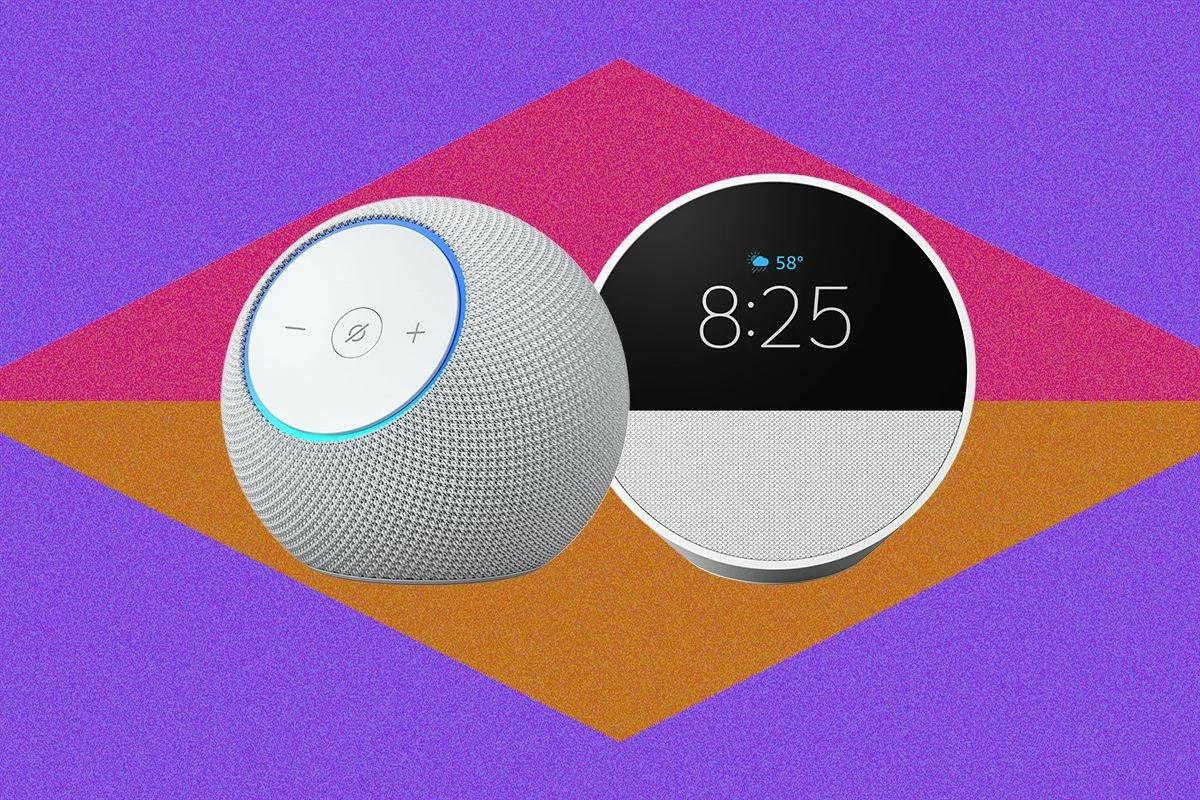
After a period of discontinuation, the Echo Spot returned in 2024 to reclaim its title as the premier bedside companion. Its design is intentional: a half-circle display that provides essential information—time and alarms—without the visual clutter of a full-fledged smart display.
The device features a gentle, customizable clock face that dims to a soft red hue, preventing light pollution in the bedroom. Crucially, the absence of a camera and the exclusion of a distracting video slideshow make it a privacy-conscious choice for the most intimate room in the house. While its audio quality is modest, it is perfectly suited for morning routines and casual listening.
The Family-Friendly Pick: Echo Dot Kids (5th Gen)
The Echo Dot Kids edition brings the functionality of the standard 5th-generation Dot into a more controlled environment. Designed with parents in mind, it features robust parental controls, including explicit content filters, activity review, and daily time limits. The included subscription to Amazon Kids+ provides a wealth of educational content, audiobooks, and interactive games, making it a compelling tool for children’s development.
A Comparative Overview of the Echo Ecosystem
Beyond the top picks, Amazon offers a variety of devices tailored to niche requirements.
- Echo Dot (5th Gen) with Clock: A perennial favorite for its minimalist LED display, which surfaces weather and time information. While supply has been sporadic, it remains one of the best value-to-utility devices in the lineup.
- Echo Hub: This device marks a departure from traditional speakers. Positioned as a dedicated smart home controller, the Hub features a tablet-like interface designed for wall mounting. It is an excellent choice for users who already possess a robust smart home setup and need a centralized control point rather than another media speaker.
- Echo Pop: The most compact and aesthetically diverse option, the Pop is ideal for dorms or smaller rooms. While it lacks the audio depth of the Echo Dot, its compact form and vibrant color options offer a distinct charm.
- Smart Displays (Echo Show Series): The range includes the Show 5, 8, 11, 15, and 21. While these devices offer visual utility, their value varies. The Show 8 and 11 are particularly effective for kitchens, while the larger Show 15 and 21 occupy a strange middle ground between smart display and secondary TV—a space where they have yet to fully excel.
- Third-Party Alternatives: For users seeking greater flexibility, the JBL Authentics 200 offers dual-assistant support, allowing users to switch between Alexa and Google Assistant seamlessly. Meanwhile, the Sonos Era 100 provides a premium audio experience for those already invested in the Sonos ecosystem who still wish to utilize Alexa’s voice capabilities.
The Financial Shift: Understanding Recent Price Increases
As of late 2026, the cost of entering the Amazon smart home ecosystem has risen. Last month, Amazon implemented price hikes across its hardware portfolio, including Echo speakers, Kindle e-readers, Fire TV sticks, and Eero mesh routers.
Why the Price Hikes?
The decision mirrors a broader industry trend. Amazon, like its competitors, has cited rising costs in logistics, manufacturing, and supply chain constraints—specifically regarding memory and storage components. These increases have been significant, with some devices seeing price jumps of $20 to $100. Consequently, the traditional "budget" nature of the Echo line is evolving. Consumers should anticipate that holiday sales events, such as Black Friday or Prime Day, will be more critical than ever for securing these devices at previous price points.

The Emergence of Alexa+ and AI Integration
The most significant evolution in the Alexa ecosystem is the rollout of "Alexa+," a generative AI-powered layer designed to make the assistant more conversational and capable.
What is Alexa+?
Alexa+ represents a departure from the command-and-response model. It can manage complex, multi-part requests and maintain context over longer conversations. While a 30-day free trial is available, the service requires a $20 monthly fee unless the user maintains an active Prime membership.
Current feedback suggests that while the conversational voice is improved and the processing speed is impressive, the value proposition for the subscription fee remains debatable for the average user. It appears that Amazon is using the service as a primary incentive for Prime retention.
Privacy Implications
The transition to Alexa+ has brought a notable change in data handling. As of March 2025, Amazon discontinued the "Do Not Send Voice Recordings" privacy feature. Previously, users could opt to have voice requests processed locally. Now, all voice recordings are sent to Amazon’s cloud for processing. This shift has prompted significant discussion among privacy advocates, as it removes the ability for users to maintain a strictly local voice-processing environment.
Strategic Implementation: How and Where to Deploy Your Echo
Optimizing a smart home requires intentional placement. Based on extensive testing, the following strategy is recommended:
- The Kitchen: This is the ideal location for a smart display (such as the Echo Show). It allows for hands-free access to recipes, timers, and weather updates while the user is occupied.
- The Living Room: A high-quality speaker, such as the Echo Studio, provides the best experience for music playback and smart home control without the distraction of a screen.
- The Bedroom: Privacy should be the primary concern. Opt for devices without cameras, such as the Echo Spot or a standard Echo Dot, to ensure peace of mind during rest.
Frequently Asked Questions
Is Alexa Always Listening?
Technically, yes. The device is in a state of constant, low-level monitoring to detect the "wake word." Once that word is identified, the device activates and begins recording. Users should be aware that the assistant can occasionally be triggered by sounds that mimic the wake word.
How Can I Mitigate "Spam" on Echo Shows?
Echo Shows often display aggressive default content, including sports scores and news, which can be intrusive. While you cannot disable all content, you can navigate to Settings > Home Content to toggle off unwanted feeds. For the cleanest experience, utilizing "Photo Display" mode transforms the device into a digital picture frame, effectively silencing the influx of algorithmic suggestions.
What is the Best Time to Purchase?
Given the recent price hikes, purchasing outside of a major sales event is no longer advisable. Historically, Amazon Prime Day and Black Friday offer the most aggressive discounting, often slashing prices by up to 50 percent. For those who can wait, these windows offer the best return on investment.
Conclusion
The Amazon Echo ecosystem remains the most pervasive and capable smart home platform on the market, yet it is no longer the "set it and forget it" commodity it once was. With the advent of Alexa+ and the consolidation of cloud-based voice processing, users must be more proactive in managing their privacy and hardware investments. By selecting the right device for each room—and timing purchases to coincide with major sales—consumers can continue to enjoy the convenience of a voice-controlled home in this new era of smart technology.