As the global energy transition accelerates, the limitations of surface-level battery storage—primarily regarding duration, material scarcity, and spatial footprint—have pushed engineers and policymakers to look toward a more traditional frontier: the subsurface. From repurposed salt caverns to abandoned mining shafts, the earth beneath our feet is being transformed into a vital reservoir for the next generation of energy storage.
Main Facts: The Shift to Geologic Storage
The fundamental challenge of modern power grids is intermittency. As renewables like wind and solar become the dominant sources of generation, the need for long-duration energy storage (LDES) has become a primary hurdle for grid operators. While lithium-ion batteries are excellent for short-term frequency regulation, they struggle to provide the days or weeks of capacity required to bridge long periods of low renewable output.
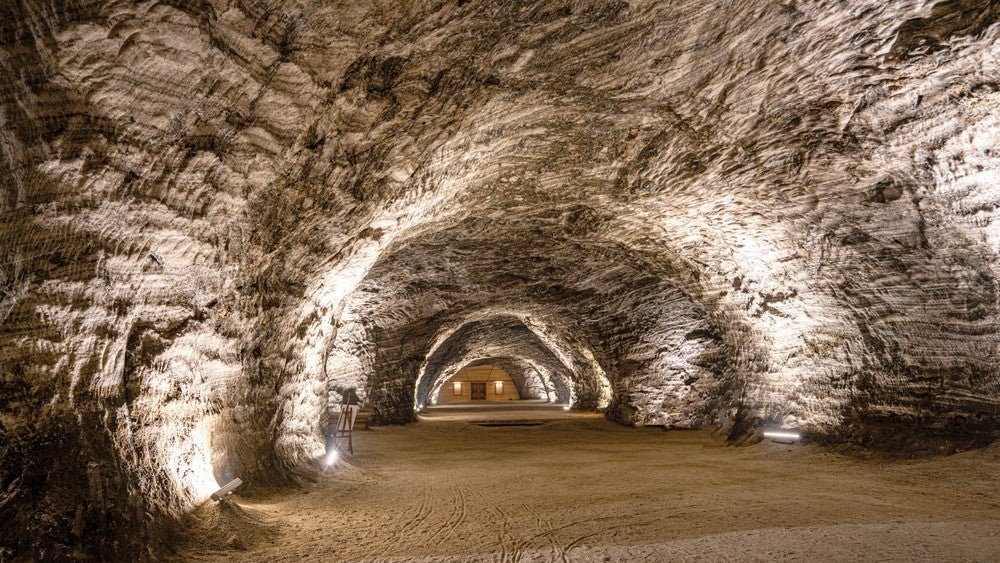
Underground energy storage offers a solution by utilizing geological formations to store energy as compressed air, thermal mass, or hydrogen. The primary technologies currently gaining traction include:
- Compressed Air Energy Storage (CAES): Using surplus electricity to compress air into underground cavities. When demand peaks, this air is released, heated, and expanded through a turbine to generate power.
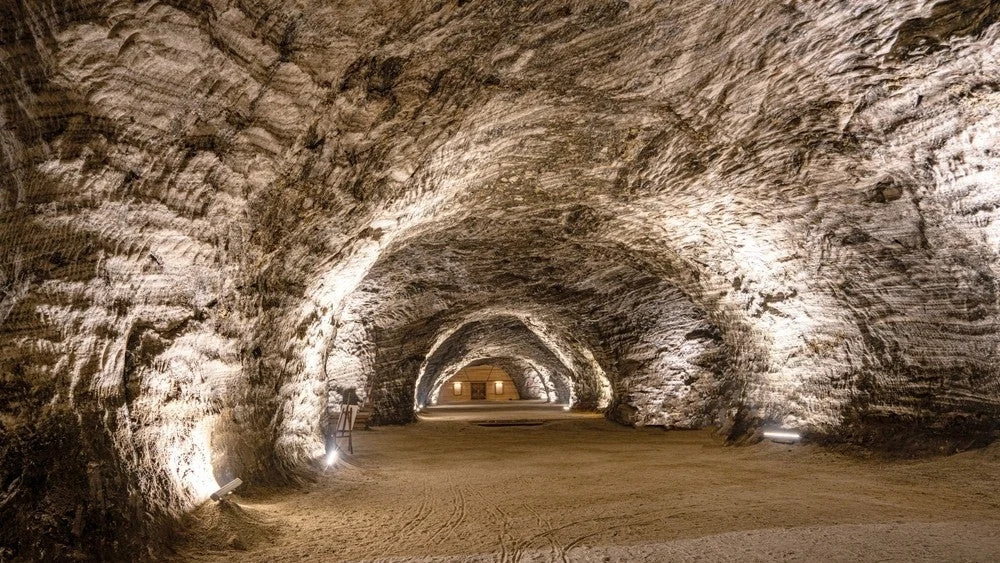
- Hydrogen Storage: Leveraging salt caverns to store green hydrogen at scale, providing a carbon-neutral alternative to natural gas for both power generation and industrial feedstock.
- Thermal Energy Storage (TES): Utilizing deep boreholes or abandoned mines to store heat in rock formations or liquid media, which can be extracted later to provide steam or electricity.
- Pumped Hydro (Underground): Converting decommissioned deep-level mines into closed-loop pumped hydro systems, where water is cycled between surface and subsurface reservoirs to act as a massive "gravity battery."
These methods share a common advantage: they utilize the inherent pressure and insulation properties of the Earth to store vast quantities of energy at a lower cost per kilowatt-hour than surface-level chemical batteries.
Chronology: From Fossil Fuels to Future-Proofing
The history of underground storage is inextricably linked to the fossil fuel era, but its current pivot represents a radical shift in utility.
- 1970s–1980s (The CAES Pioneers): The world’s first commercial CAES plants, such as Huntorf in Germany (1978) and McIntosh in the US (1991), proved that underground caverns could effectively serve as pressure vessels for power generation. These projects relied on natural gas for heating the air, a practice now being phased out in favor of thermal storage.
- 2000s–2010s (The Mining Decline): As coal production waned globally, the industry was left with thousands of abandoned deep-shaft mines. During this period, researchers began exploring the "repurposing" potential of these sites, recognizing that the infrastructure required to access the deep earth already existed.
- 2020–2023 (The Green Hydrogen Pivot): With the surge in renewable energy, salt caverns—previously used for natural gas storage—became the focal point for green hydrogen pilots. Projects in Europe, particularly in the UK and Netherlands, began testing the feasibility of "hydrogen-ready" caverns.
- 2024–Present (Integrated Systems): We are currently in an era of multi-modal storage. New projects are beginning to integrate CAES with thermal heat recovery, ensuring that the energy stored is not just converted to electricity but also serves district heating needs, significantly increasing the overall round-trip efficiency of the system.
Supporting Data: Economic and Technical Viability
The transition to underground storage is driven by cold, hard numbers. According to recent reports from the International Renewable Energy Agency (IRENA), the LDES market must grow by at least 15 times by 2040 to meet net-zero targets.
Cost Efficiency
Surface-level lithium-ion systems generally reach their economic limit at roughly four to eight hours of discharge. In contrast, underground CAES and hydrogen storage can scale to hundreds of hours of capacity. The capital expenditure (CAPEX) for creating a salt cavern for hydrogen is significantly lower than building an equivalent capacity of electrochemical battery farms, primarily because the "container" is provided by nature.
Scaling Potential
- Energy Density: A typical salt cavern can store thousands of megawatt-hours (MWh) of energy. To achieve this with traditional batteries, one would require a land footprint the size of several football fields.
- Efficiency: Modern advanced adiabatic CAES (AA-CAES) systems can reach round-trip efficiencies of 70% to 75% by capturing the heat generated during compression and using it to reheat the air during expansion, bypassing the need for natural gas combustion.
- Geographic Availability: Studies by the European Association for Storage of Energy suggest that 60% of European industrial hubs are located within proximity to salt or rock formations suitable for underground storage, making it a highly localized solution.
Official Responses and Industry Perspectives
The move toward underground storage has garnered significant support from government energy departments, particularly in regions with established mining or oil and gas histories.
"The subsurface is the ultimate battery," says Dr. Elena Rossi, lead researcher for the Global Energy Storage Initiative. "We are essentially taking the infrastructure that powered the Industrial Revolution and retrofitting it to sustain the green revolution. It is a matter of circular economy principles applied to energy geography."
However, industry leaders are also tempering expectations. A spokesperson for a major European utility provider noted, "While the geology is promising, the regulatory framework for underground storage is still in its infancy. We need clearer policies on site integrity, leakage monitoring, and, crucially, long-term liability for subsurface storage. We cannot treat a salt cavern like a battery farm; the risk profile—while low—is fundamentally different."
Critics within the environmental sector have raised concerns regarding induced seismicity and the impact on local groundwater. In response, engineering firms are deploying advanced fiber-optic sensing technology that monitors the structural integrity of caverns in real-time, providing an "early warning system" for even the most microscopic changes in rock stress.
Implications: The Long-Term Energy Horizon
The implications of mastering underground energy storage are profound.

Grid Stability and Sovereignty
By localizing energy storage, nations can significantly reduce their reliance on imported energy or cross-border transmission lines. A city with a repurposed mine providing massive thermal and electric storage is a city that is resilient to external grid failures.
The Role of Abandoned Assets
The "Brownfield-to-Battery" movement is gaining momentum. Governments are beginning to offer tax incentives for mining companies to convert their closed sites into energy hubs. This not only cleans up abandoned land but also creates jobs in regions that have historically been left behind by the move away from coal.
A Hybrid Future
The future of the power grid will not be decided by a single technology. Instead, it will be a hybrid ecosystem where lithium-ion handles the "quick-twitch" response required to stabilize voltage, while deep-earth storage provides the "base-load" reliability that keeps the grid humming through extended periods of low renewable generation.
As we look toward the middle of this century, the most important energy infrastructure may not be the solar panels on our roofs or the turbines on our hills, but the vast, silent reservoirs beneath our feet. The Earth, which provided the fossil fuels that built our modern world, may ultimately provide the solution to decarbonizing it. Through a combination of geological ingenuity and bold policy, the subsurface is poised to become the bedrock of the global energy economy.