For decades, the barbell back squat has held the undisputed title as the "King of Exercises." Its ability to load the entire body and elicit massive systemic strength gains is undeniable. However, in the evolving landscape of modern bodybuilding and functional fitness, athletes are increasingly looking for ways to maximize hypertrophy while minimizing the joint stress associated with heavy axial loading.
Enter the "Somersault Squat"—a movement gaining significant traction thanks to high-profile endorsements from elite fitness influencers like Australian bodybuilder Kwame Duah. As the fitness industry shifts toward more nuanced, biomechanically targeted training, this unconventional movement is proving that you don’t always need a heavy barbell or a commercial rack to build world-class quadriceps.
Main Facts: The Anatomy of the Somersault Squat
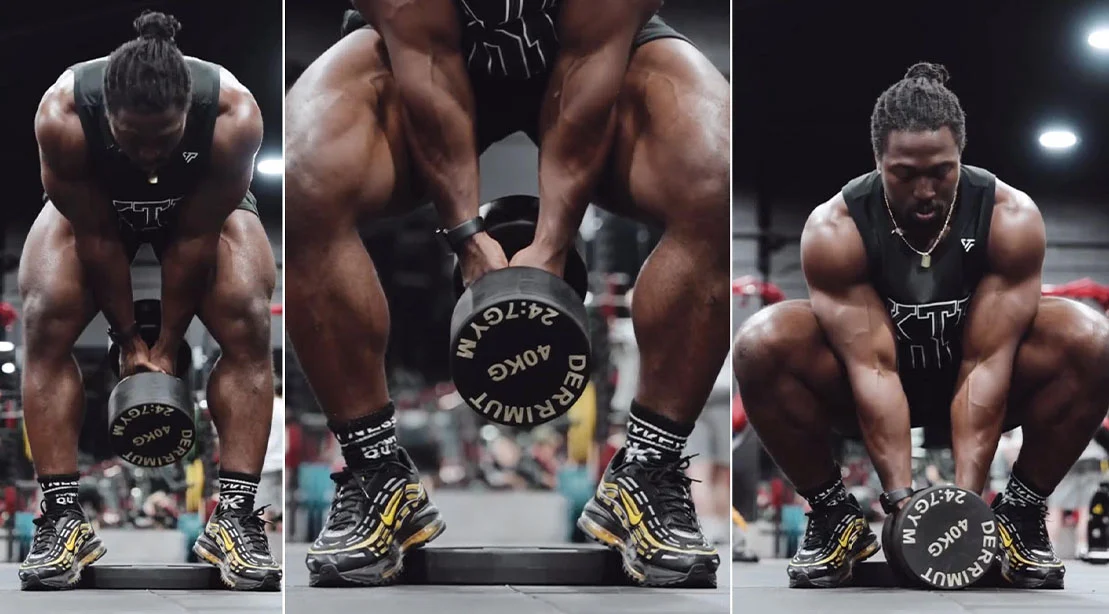
The somersault squat, often referred to by fitness enthusiasts as the "Joe Daniels Squat," is a sophisticated, highly targeted lower-body movement that relies on a single dumbbell or kettlebell. Unlike a traditional back squat, which relies on a vertical path and heavy spinal loading, the somersault squat is designed to maximize knee flexion and isolation of the quadriceps.
At its core, the exercise is a technical evolution of the goblet squat. By elevating the heels on weight plates, the lifter is forced into an upright, knee-dominant position. The weight is held between the legs, allowing it to act as a counterweight that enables a deeper, more controlled range of motion. The primary objective is to maintain a "vertical" torso, ensuring the tension stays squarely on the quads rather than being dissipated into the lower back or glutes.
A Chronological Rise: From Niche Move to Social Media Staple
The trajectory of the somersault squat mirrors the rise of the "home-gym era." During the global fitness shifts of 2020 and 2021, athletes were forced to abandon racks and heavy bars in favor of minimal equipment. It was during this period that Joe Daniels—a coach renowned for creative programming—popularized the movement as a way to maintain leg size without a traditional squat rack.
However, the move remained somewhat underground until early 2024, when Australian bodybuilding sensation Kwame Duah showcased the exercise to his massive social media following. Duah, who utilizes Instagram, TikTok, and YouTube to disseminate training science, recognized that the somersault squat offered a unique "stimulus-to-fatigue" ratio.
Duah’s viral reel broke down the movement into granular steps, stripping away the mystery and making it accessible to the average gym-goer. Since his post, the search volume for "somersault squat mechanics" has surged, marking a pivotal moment where a niche "hack" moved into the mainstream bodybuilding lexicon.
Supporting Data: The Science of Knee Flexion and Hypertrophy
To understand why the somersault squat is effective, one must look at the biomechanics of quad hypertrophy. The quadriceps are primarily responsible for knee extension. Therefore, the greater the degree of knee flexion (the distance the knee travels over the toes), the more the quads are stretched under load.
The Role of Heel Elevation
Standard gym shoes often have a cushioned sole that can destabilize the ankle during a deep squat. By placing the heels on two small weight plates, the lifter artificiality increases their ankle dorsiflexion. This allows the knees to travel significantly further forward without the lifter falling backward, placing the quads in a deep "stretch" position at the bottom of the movement.
The Center of Gravity Advantage
When holding a dumbbell between the legs, the load is directly beneath the body’s center of mass. In a barbell squat, the weight is behind the neck, which often forces the lifter to lean forward to maintain balance, thereby engaging the lower back and glutes. The somersault squat eliminates this "lean," forcing the quads to act as the primary engines of the movement.
Official Responses and Expert Commentary: Q&A with Kwame Duah
Following the viral response to his tutorial, Kwame Duah engaged directly with his audience, addressing common concerns regarding frequency and implementation. When asked by a follower about the ideal training volume, Duah provided a breakdown that aligns with current sports science literature.
"It really depends on your recovery capacity," Duah explained. "However, for optimal growth, I recommend hitting the quads at least twice per week. If you have a dedicated ‘Leg Day’ that is traditionally posterior-chain focused—meaning it centers on deadlifts or hamstring curls—you can easily convert it into a quad-dominant session by leading with these squats and prioritizing quad-focused accessory work."
Duah’s advice highlights a critical shift in modern programming: the transition from "General Leg Days" to "Targeted Quad/Hamstring Days." This specificity is what allows advanced bodybuilders to carve out the "teardrop" shape of the vastus medialis, which is often undertrained in general barbell-only programs.
Implications for Future Training Protocols
The popularity of the somersault squat suggests several implications for the future of strength training:
1. The Demise of the "Rack-Only" Mentality
For decades, beginners were told they "couldn’t grow" without a squat rack. The somersault squat proves that through intelligent manipulation of gravity and limb angles, one can induce significant mechanical tension with as little as a single 50-pound dumbbell. This opens the door for high-level training in apartment complexes, garages, and hotels.
2. Prioritizing Joint Health
The barbell back squat, while effective, can be brutal on the hips and lower spine for individuals with specific anthropometry (long femurs, short torsos). The somersault squat provides an "auto-regulating" safety feature: because the load is lighter than a barbell, the risk of catastrophic failure is reduced, and the upright posture spares the lumbar spine.
3. The Need for Foundational Mastery
The most important implication for those looking to adopt this move is the prerequisite of skill. Duah emphasizes that this is an advanced iteration of the goblet squat. Those who lack the requisite ankle mobility or the core strength to hold the weight in the "pocket" will likely struggle. The message is clear: master the basics before layering on the complexity.
Execution Guide: How to Perform the Somersault Squat Safely
For those ready to incorporate this movement into their routine, follow this step-by-step protocol as outlined by leading experts:
- Preparation: Place two small weight plates on the floor, roughly shoulder-width apart. These will serve as your heel wedge.
- The Setup: Stand with your heels elevated on the plates. Your toes should be pointed slightly outward to accommodate hip anatomy.
- The Grip: Hold a single dumbbell or kettlebell vertically by one end, letting it hang naturally between your legs. Ensure your grip is neutral.
- The Descent: Initiate the movement by bending your knees first. Let your knees travel as far forward as possible, keeping your torso perfectly vertical. Your goal is to descend until your hamstrings make contact with your calves.
- The Drive: Drive forcefully through the balls of your feet and heels, using your quads to return to the starting position. Maintain the neutral grip throughout.
- Tempo Control: Do not bounce at the bottom. A 2-second descent and a controlled explosion upward will yield the best hypertrophic results.
Final Considerations and Safety Warnings
While the somersault squat is a potent tool, it is not a panacea. Individuals with a history of patellar tendonitis, acute knee pain, or severe lack of ankle mobility should exercise extreme caution. Because the movement forces the knee over the toe, it places significant shear force on the knee joint. If you experience sharp pain rather than "muscle burn," discontinue the movement immediately and consult with a physical therapist.
For the healthy athlete, however, the somersault squat represents the cutting edge of hypertrophy training. It is a reminder that in the world of fitness, innovation doesn’t always come from the newest piece of expensive machinery; sometimes, it comes from rethinking the simple physics of how we move our bodies.
As Kwame Duah continues to share his methodology, one thing is certain: the barbell no longer has a monopoly on leg growth. Whether you are a professional bodybuilder or a dedicated home-gym warrior, the somersault squat might just be the missing link in your quest for thicker, more powerful quads.
For those interested in following Kwame Duah’s ongoing fitness journey and receiving more training tips, you can visit his Instagram profile here. Always consult with a certified fitness professional before beginning a new, advanced exercise program.