Executive Summary: Renewing a Proven Partnership
In a significant development for the German offshore wind sector, independent service provider Deutsche Windtechnik (DWT) has announced its return to the Riffgat offshore wind farm. Under a newly signed contract with energy major EWE, DWT will resume responsibility for the technical maintenance and operational oversight of the facility’s 30 Siemens SWT-3.6-120 turbines.
This agreement, set to commence on January 1, 2027, marks a pivotal "reunion" between the two entities, as DWT previously held the maintenance contract for the site between 2019 and 2021. The new contract serves as a testament to the industry’s shift toward highly specialized, independent maintenance solutions that prioritize long-term asset optimization and operational continuity.
Chronology: A History of Collaboration and Technical Evolution
The relationship between EWE and Deutsche Windtechnik at the Riffgat site is defined by a trajectory of technical pioneering.
- 2013: EWE officially commissions the Riffgat offshore wind farm, a landmark project for the region, boasting a total installed capacity of 108MW.
- 2019–2021: Deutsche Windtechnik serves as the primary maintenance provider for the site. During this tenure, DWT achieved a historic milestone by becoming the first independent service provider to maintain Siemens SWT-3.6 turbines in an offshore environment, effectively breaking the OEM (Original Equipment Manufacturer) service monopoly on this specific turbine model.
- 2022–2026: Following the conclusion of the initial DWT contract, the maintenance operations underwent a period of transition, allowing EWE to evaluate various service delivery models.
- 2027 (Future): The new contract cycle begins. The initial term is set for two years, with a flexible framework allowing EWE to trigger annual renewals for up to three additional years, potentially extending the partnership through 2032.
Supporting Data: Technical Scope and Operational Logistics
The Riffgat wind farm is a critical component of Germany’s renewable energy infrastructure in the North Sea. Maintaining its 108MW capacity requires a sophisticated logistical approach, particularly given the harsh, unpredictable conditions of the North Sea environment.
The Service Package
Under the new agreement, DWT is tasked with a comprehensive, multi-tiered service package designed to maximize the availability of the 30 Siemens turbines. Key deliverables include:
- Preventative Maintenance: Annual scheduled servicing of all turbines to ensure mechanical and electrical integrity.
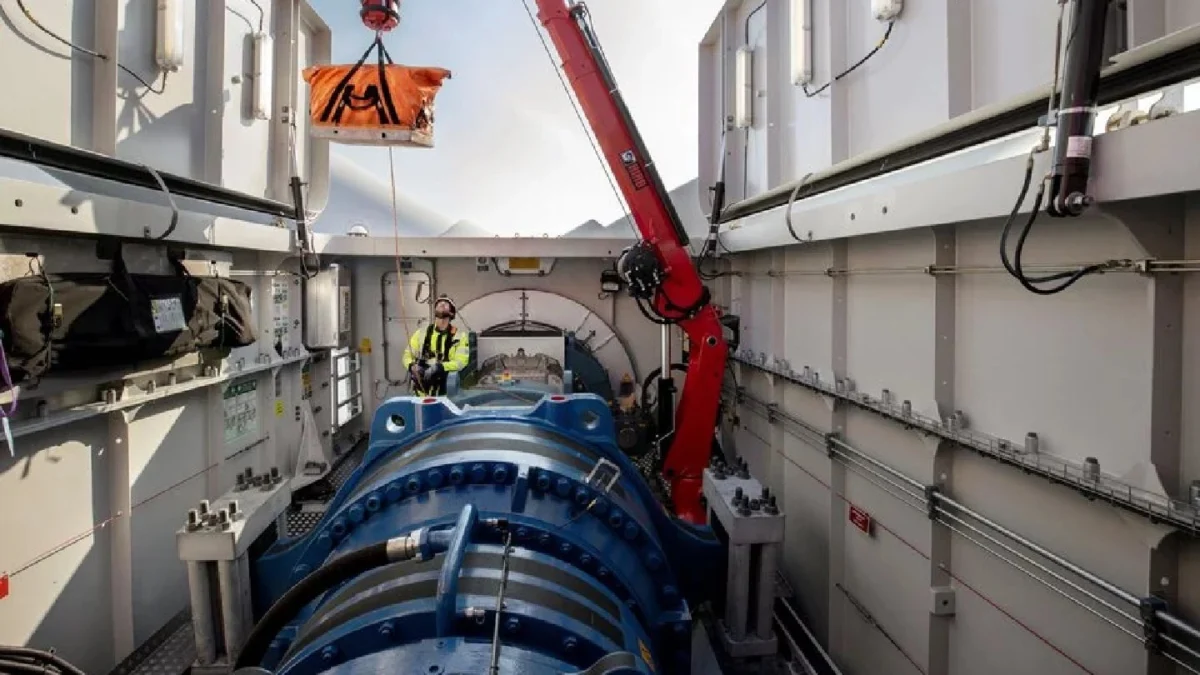
- Safety Infrastructure: Expert inspections of all crane systems and secondary access equipment, critical for the safety of offshore technicians.
- Technical Optimization: A proactive mandate to identify and implement performance enhancements across the fleet.
Optional Value-Added Services
The contract also incorporates a flexible, optional service layer that EWE can invoke based on real-time operational needs:
- Remote Diagnostics: Advanced second-level support utilizing remote monitoring to diagnose faults before they manifest as critical failures.
- Emergency Response: On-call troubleshooting and rapid repair services.
- Supply Chain Management: End-to-end management of spare parts and inventory warehousing, ensuring that critical components are available when needed, thereby minimizing downtime.
Logistical Orchestration
Operational coordination will be centralized at the German island of Borkum, where DWT maintenance crews will utilize EWE’s existing facilities. Recognizing the volatility of winter weather in the North Sea, the contract includes a seasonal logistical contingency plan. During the harsh winter months, troubleshooting and maintenance operations will shift to DWT’s specialized service station in Emden. When traditional vessel access becomes restricted due to sea conditions, the teams are prepared to utilize helicopter transport to ensure the turbines remain operational.
Official Perspectives: Building on Experience
The renewal of the partnership is being framed by both companies as a strategic move to leverage "institutional memory."
Jantje Bolduan, Offshore Manager at the EWE Offshore Centre, highlighted the value of the shared history between the two firms: "With DWT, we have secured a strong service partner for the maintenance and upkeep of the Riffgat offshore wind farm. The fact that we are working with DWT again and can build on the existing project experience makes this partnership particularly valuable."
This perspective underscores a growing trend in the wind industry: the transition from vendor-agnostic service to "experience-centric" service. By returning to a provider that already understands the unique "personality" of the Riffgat turbines, EWE aims to reduce the learning curve and improve the efficiency of maintenance cycles immediately upon the contract start date.
Implications: The Shift Toward Independent Maintenance
The return of DWT to Riffgat carries broader implications for the European offshore wind market, which is currently grappling with the challenges of aging assets and the need for cost-efficient life extension programs.
Challenging the OEM Dominance
When DWT first worked on the Siemens turbines at Riffgat, it was a test case for the industry. The success of that initial period proved that independent service providers (ISPs) could offer a level of technical rigor equal to or exceeding that of the manufacturers themselves. By successfully securing this contract for a second time, DWT is signaling that ISPs are no longer just "alternative" choices but are becoming the preferred partners for mature wind farms.
Life Extension and Asset Optimization
The Riffgat facility has been operational for over a decade. As wind farms move past their initial mid-life milestones, the focus shifts from simple maintenance to "life extension." The inclusion of "technical optimization opportunities" in the contract language is telling. It suggests that EWE and DWT are looking at ways to push the turbines beyond their original design expectations, optimizing software and hardware to squeeze every megawatt of power out of the North Sea winds.
The Strategic Value of Flexibility
The two-year base term with three one-year options is a shrewd strategic move by EWE. It provides the energy major with the stability of a long-term plan while retaining the leverage to adjust the partnership based on market shifts, advancements in drone-based inspection technology, or changes in the regulatory landscape.
Regional Economic Impact
The reliance on the Borkum and Emden facilities for logistics keeps the economic benefits of the maintenance cycle firmly within the German coastal region. By maintaining a robust local supply chain—including spare parts warehousing—the collaboration between EWE and DWT acts as a stabilizing force for the local renewable energy ecosystem.
Conclusion: A Model for the Future
The Riffgat contract renewal is more than just a business transaction; it is a reflection of a maturing industry. As offshore wind farms across the globe age, the "reunion" model—where operators partner with proven, experienced service providers—will likely become the standard for ensuring long-term profitability and grid reliability.
For EWE, the partnership provides a safe pair of hands for a critical asset. For DWT, it is a validation of their technical expertise and a reinforcement of their status as a tier-one offshore service provider. As January 2027 approaches, the industry will be watching closely to see how this renewed synergy between operator and service provider translates into operational performance for the 108MW Riffgat facility.