Main Facts: The Critical Necessity of Decontamination in Aquatic Spills
Inland oil spill response—particularly in fast-moving water—presents a unique set of challenges that distinguish it from deep-water or static reservoir containment. When oil is introduced into a river or stream, the fluid dynamics of the environment rapidly disperse contaminants, creating a high-stakes scenario where every second is vital. However, the most frequently overlooked or incompletely executed phase of these operations is the decontamination of personnel and equipment.
Effective decontamination is not merely a safety measure; it is the cornerstone of operational integrity. Without rigorous adherence to established work zones and cleaning protocols, responders risk cross-contamination, spreading hazardous materials into "clean" areas, and jeopardizing the health of the crew. Proactive and assertive decontamination strategies must be implemented during the very first phase of the response to ensure that the site remains controlled and the risk of secondary contamination is mitigated.
Chronology: Establishing the Response Architecture
In the chaotic initial moments of an inland spill, responders must act with a structured, predetermined methodology to prevent the "spill within a spill."
- Initial Assessment and Zoning: The first step in any fastwater response is the immediate identification of environmental hazards and the subsequent physical mapping of the site. Responders must designate three distinct work zones: the Exclusion Zone (EZ/Hot Zone), the Contamination Reduction Zone (CRZ/Warm Zone), and the Support Zone (CZ/Cold Zone).
- Mapping and Communication: A detailed site map must be produced, identifying these zones in relation to the river flow, access points, and the current location of the spill. This map is not a static document; it must be updated as the oil plume travels and as the recovery operations shift.
- The Decontamination Corridor: Before any personnel enter the Exclusion Zone, the decontamination corridor must be fully operational. It is a critical failure of management to deploy teams into the Hot Zone before the warm-zone reduction stations are ready to receive them.
- Operational Exit Strategy: Once work is complete, personnel must transition through the decontamination stations in a sequence that prevents the tracking of contaminants from the Hot Zone into the Support Zone.
Supporting Data: Operational Decontamination Standards
The standard protocol for personnel and equipment requires rigorous adherence to multi-stage cleaning procedures. For responders operating in Modified Level D or Level C protective gear, the decontamination process is mandatory. The following three-station minimum is the industry benchmark for effective risk reduction:
Station 1: Gross Decontamination
Personnel exiting the Exclusion Zone must first undergo a primary wash. This station focuses on the removal of gross contamination from outer clothing and boots. Using physical brushes and, where appropriate, low-pressure water, responders remove the bulk of the oil or chemical residue before moving to the secondary phase. This prevents the primary cleaning agents in Station 2 from becoming overwhelmed by heavy oil buildup.
Station 2: Outer Layer Removal
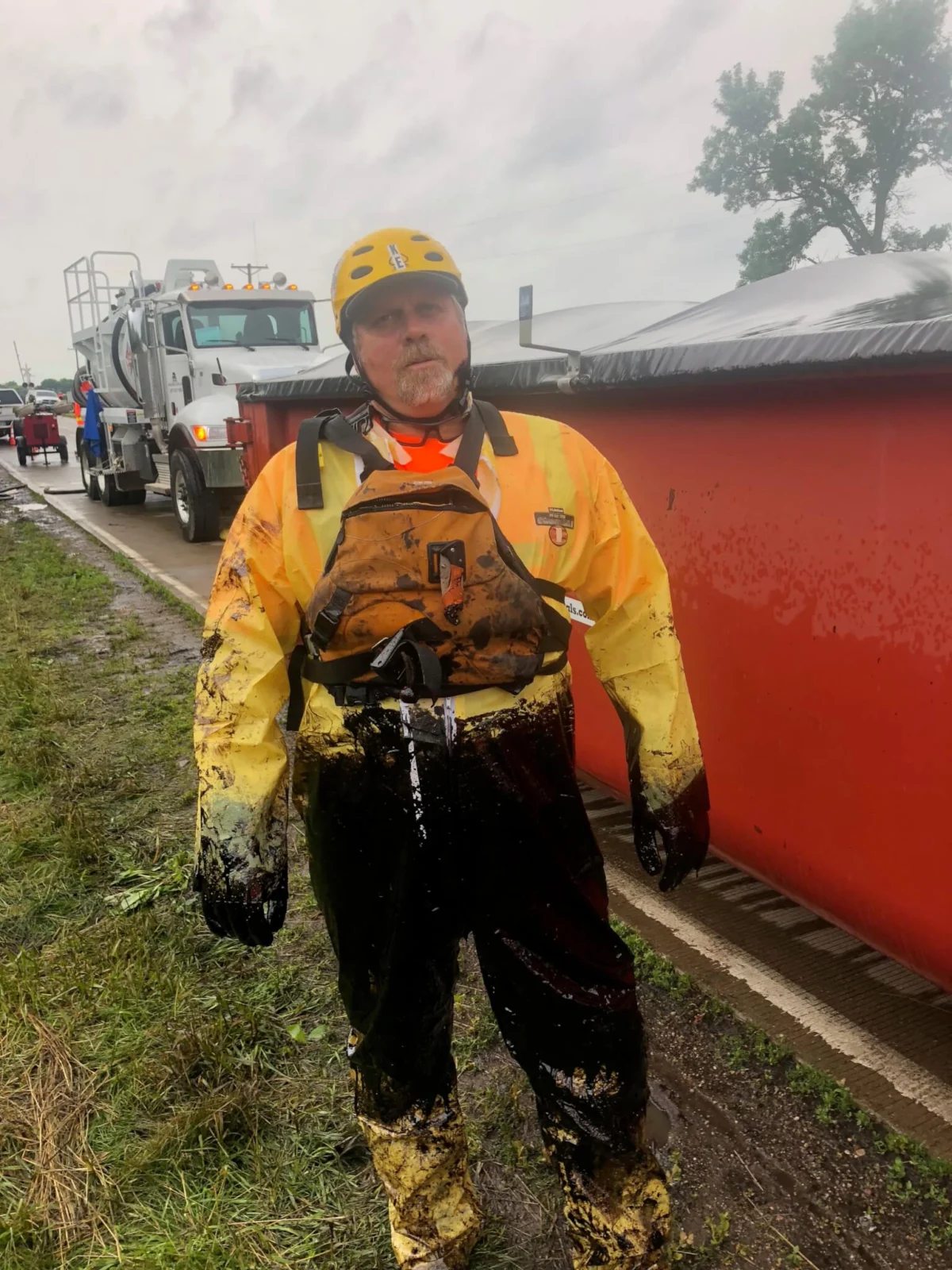
This stage is the most critical for limiting the spread of toxins. Responders remove their outer garments and gloves, disposing of them in clearly labeled, hazardous waste containers. Following the removal of these layers, the hard hats and boots undergo a secondary cleaning with an aqueous detergent solution. These items are then manually carried to the next station, ensuring they are scrubbed free of contaminants.
Station 3: Final Sanitation
The final station occurs before leaving the Contamination Reduction Zone (CRZ). Here, personnel perform a thorough wash of the hands and face to ensure no dermal exposure has occurred. Respirators, which may have been used in Level C operations, must be sanitized at this stage and immediately placed into clean, sealed plastic bags to prevent re-exposure.
Equipment and Vehicle Rinsing
Vehicles represent a massive vector for contamination. Any transport that has entered the Exclusion Zone must be processed at a designated decontamination pad. For vehicles with low-level contamination, rinsing the tires and wheel wells is often sufficient. However, for heavily soiled equipment, steam cleaning or high-pressure washing is the required standard. The rinsate from these operations must be collected, contained, and disposed of according to federal and local environmental regulations to ensure that the cleaning process does not itself become a source of pollution.

Official Responses and Best Practices
Industry leaders in whitewater and inland rescue have emphasized that "single-use" is the gold standard for protective equipment. Whenever possible, external protective clothing should be treated as disposable. Reusable clothing, while cost-effective, requires extensive, documented cleaning cycles using detergent and water.
Leading response agencies have noted that the failure to collect and contain rinsate is a common violation in inland spill responses. The mandate is clear: the water used to clean the equipment is now contaminated water and must be treated as part of the spill itself. Agencies must be assertive in their enforcement of these zones, treating the boundary between the CRZ and the Cold Zone as an absolute barrier.
Implications: The Long-Term Impact of Decontamination Neglect
The implications of failing to implement these protocols are profound, affecting legal liability, environmental recovery, and personnel health.
1. Personnel Health and Safety
The most immediate consequence of incomplete decontamination is the secondary exposure of the responder. Many of the hydrocarbons and industrial chemicals involved in inland spills are transdermal or respiratory hazards. When a responder moves into the Cold Zone—where they might eat, drink, or remove their remaining PPE—without proper sanitation, they carry the "ghost" of the spill with them. This leads to chronic health issues and potential workers’ compensation claims that can cripple an organization.
2. Legal and Regulatory Liability
Environmental regulators, such as the EPA or state-level departments of environmental quality, keep meticulous records of spill sites. If it is discovered that a response team acted as a vector for contamination by moving dirty equipment through clean zones, the responsible party (or the lead contractor) faces significant fines. Furthermore, in the event of a lawsuit, the lack of a documented decontamination log serves as prima facie evidence of negligence.
3. Environmental Integrity
The goal of an inland oil spill response is to protect the waterway. If a response team inadvertently spreads oil from a riverbank onto local roads or into clean fields via unwashed vehicle tires, they are effectively expanding the footprint of the disaster. In fastwater environments, where oil can be pushed deep into sensitive riparian habitats, the act of "tracking" contaminants can destroy areas that would have otherwise remained untouched by the spill.
4. Operational Efficiency
While decontamination may seem like a "slow" process, it is an essential part of the operational tempo. A site that is managed with proper zoning and decontamination protocols is a site that remains under control. When decontamination is ignored, the operational area effectively "blurs," making it impossible for incident commanders to track the movement of personnel, manage resources, or provide an accurate assessment of the recovery progress.
In conclusion, the Fastwater Spill Response protocol is a discipline of rigors. It requires the right equipment, the right training, and, most importantly, the right mindset. Responders must be proactive, assertive, and uncompromising in their approach to decontamination. By treating the cleaning process as an essential component of the rescue and recovery mission, teams can ensure the safety of the responders and the long-term health of the ecosystem they are tasked to protect. The river will continue to flow, and the oil will continue to move; only a disciplined, zoned approach to decontamination can ensure that the cleanup efforts remain ahead of the tide.