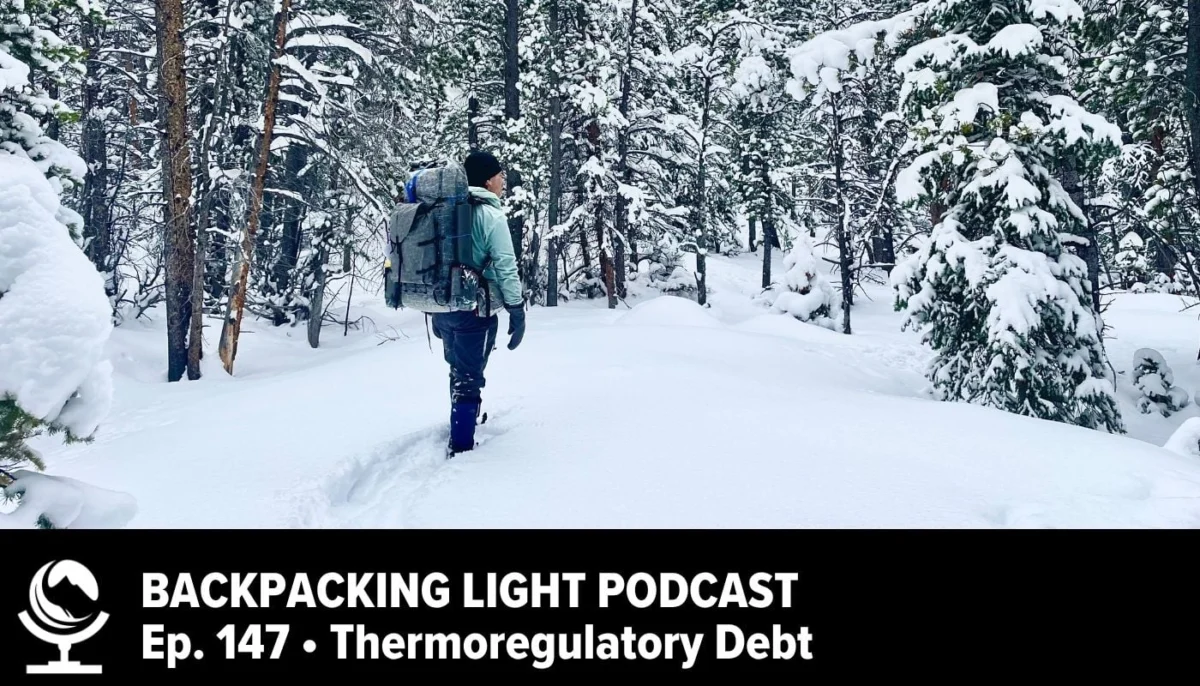
In the unforgiving environments of the high mountains, backcountry travelers often treat gear as a binary system: either you are warm, or you are cold. However, a recent deep dive by the Backpacking Light Podcast—specifically Episode 147, titled "Thermoregulatory Debt"—challenges this oversimplified view. Hosted by Ryan Jordan, the episode introduces a sophisticated field model for understanding how thermal management is not merely a matter of equipment, but a matter of timing and physiological accounting.
By reframing body temperature management through the lens of financial debt, the podcast provides a framework that transforms how outdoor enthusiasts approach layering, exertion, and energy conservation.
The Core Concept: Thermoregulatory Debt
At its heart, the concept of "thermoregulatory debt" posits that cold-weather safety and comfort depend as much on the timing of your actions as they do on the specific apparel tucked into your pack. The analogy is striking: much like credit card debt, small, seemingly harmless delays in adjusting your clothing during movement compound quietly over time.
When a hiker ignores the subtle warning signs of overheating—the "interest" on their debt—they inadvertently accumulate a physiological deficit. By the time the hiker actually feels freezing or miserable, they have already incurred a massive debt that is incredibly difficult to "repay" in a remote, exposed environment.
The Three Phases of Decline
The model suggests that a thermal crisis rarely happens all at once. Instead, it follows a predictable, three-stage trajectory:
- The Decision Phase: This is the moment of failure. It occurs when a traveler ignores the need to vent, adjust layers, hydrate, or manage moisture at the exact moment conditions change. It is the decision to "just push through" for another ten minutes that ultimately sets the stage for disaster.
- The Physiological Imbalance: Once the decision to ignore the environment is made, the body begins losing heat or trapping moisture faster than it can compensate. The internal environment is no longer in equilibrium.
- Delayed Impairment: This is the "collection" phase. It manifests as sudden, acute discomfort, uncontrollable shivering, or a drastic loss of physical capability when the traveler finally slows down, stops to rest, or attempts to reach camp. At this point, the body’s ability to self-regulate is already compromised.
Anatomy of the Deficit: Three Types of Debt
To manage this risk, the podcast breaks down thermoregulatory debt into three interlocking categories, each representing a different aspect of the body’s survival mechanism.
1. Moisture Debt
Moisture is the silent killer in the backcountry. Moisture debt refers to the accumulation of sweat, condensation, or external precipitation inside a clothing system. When a hiker exerts themselves, failing to vent early causes moisture to migrate through the layers. Once insulation—particularly down—becomes saturated, its thermal efficiency plummets. This creates a feedback loop: wet insulation loses heat via conduction and evaporation, which forces the body to work harder to stay warm, leading to more sweat, and ultimately, more moisture debt.
2. Heat Debt
Heat debt occurs when environmental heat loss—driven by conduction, convection, radiation, and evaporation—outpaces the body’s metabolic heat production. This debt is exponentially harder to reverse once a hiker is already wet. Furthermore, as the core temperature drops, the body initiates peripheral vasoconstriction, pulling blood away from the extremities to protect the vital organs. As a result, the hands become too cold to manipulate zippers, toggles, or stove controls, rendering the hiker incapable of taking the very actions needed to save themselves.
3. Performance Debt
Performance debt is the direct consequence of the first two. It is the cognitive and physical toll of being "in the hole." It manifests as a loss of fine motor skills, reduced finger dexterity, sluggish physical mobility, and ultimately, impaired judgment. This is perhaps the most dangerous stage, as basic tasks—pitching a tent, lighting a stove, or opening a food wrapper—suddenly become monumental challenges that require cognitive energy the hiker no longer possesses.
Practical Interventions: How to Stay Solvent
The podcast emphasizes that survival in the backcountry is an act of proactive management, not reactive gear use. To avoid falling into thermoregulatory debt, adventurers must shift their mindset from "waiting until I’m cold" to "managing the state of the system."
Vent Early and Often
The most common mistake is waiting until the hiker is fully sweating to open pit zips or strip off a wind shell. By the time a hiker feels "warm," they have already likely compromised their base layers with perspiration. Experts suggest opening vents before the heart rate spikes on a climb to allow moisture to escape before it condenses.
Anticipate the Change
"If you are going to be cold in five minutes, you are already late," is a common sentiment in professional mountaineering. Hikers should add or remove layers before they change their output level. This includes stripping a shell before a sustained uphill climb or layering up before stopping for a lunch break, rather than waiting for the chill to set in once movement stops.
Protect Dry Insulation
The "dry" rule is absolute. Dedicated camp insulation—such as a heavy down parka—must be kept completely isolated from active moisture. If your base layers are damp, they should be swapped or dried before putting on high-loft insulation to prevent the "wetting out" of your final line of defense.
Fuel the Furnace
Metabolic heat production is the primary way the body fights cold. If a hiker is caloric-deficient, the body cannot generate the heat necessary to stay warm. Eating and hydrating before deep energy deficits occur is essential. The body is a furnace, and it requires constant, high-quality fuel to combat exposure.
Implications for Gear and Strategy: A Personal Perspective
The discussion of thermoregulatory debt has resonated deeply with the backpacking community, as it addresses the "numb finger" phenomenon many hikers experience. Long-term exposure to the cold, even when it doesn’t lead to full-blown hypothermia, can have lasting effects.
One listener noted that they previously viewed numb, white fingers—often called "frost nip"—as a standard part of the winter hiking experience. However, repeated exposure can cause permanent sensitivity and nerve damage. The realization that this is a symptom of the body rerouting blood flow to the torso to survive—a symptom of being in "heat debt"—is a wake-up call. By adjusting insulation proactively, a hiker can keep their extremities warmer and avoid the long-term damage caused by constant vasoconstriction.
The podcast also touches upon the role of materials. For instance, the episode is sponsored by companies like Brynje, which advocate for alternative fabric structures such as polypropylene and merino wool fishnets. Unlike traditional solid knits, these open-mesh designs maximize breathability and drying speed, helping to prevent moisture debt before it begins.
Beyond the Framework: The Broader Context
While the "Thermoregulatory Debt" model is the highlight of the episode, the podcast also covers a wide range of industry news and equipment testing. The first third of the episode provides a broader look at current gear trends, industry news, and the evolution of outdoor apparel.
The effectiveness of this debt analogy lies in its simplicity. It transforms abstract physiological concepts into a relatable, logical system. By viewing every hike as a series of thermal transactions, the hiker becomes more aware of their decisions. Are you "spending" your energy reserves too quickly? Are you "borrowing" heat from your extremities to keep your core warm?
Conclusion
As the outdoor community continues to push the boundaries of winter exploration, the importance of education cannot be overstated. The Backpacking Light approach reminds us that the most expensive jacket in the world is useless if you don’t know when to put it on. By adopting the "Thermoregulatory Debt" model, hikers can move beyond the reactive cycle of freezing and sweating, instead cultivating a proactive, disciplined approach that ensures they reach their destination—and their vehicle—safely.
In the backcountry, as in finance, the secret to longevity is avoiding debt in the first place. Through careful observation, constant assessment, and the timely application of gear, the modern backpacker can maintain a "thermal surplus," ensuring that when the conditions turn, they have the reserves necessary to thrive.