In November 2024, the Whitewater Rescue Institute (WRI) embarked on a mission that bridged continents, cultures, and currents. Instructors Ben Schmidt and Sam Johnston traveled to the heart of Northwestern India to conduct a series of intensive swiftwater rescue and instructor-development workshops for Aquaterra Adventures. The mission, set against the backdrop of the sacred Ganga and the formidable Brahmaputra, was designed to export WRI’s rigorous safety curriculum while fostering a global exchange of river-running expertise.
This journey was not merely a professional training excursion; it was an immersion into the complex, vibrant, and powerful geography of the Indian subcontinent. By collaborating with Aquaterra Adventures—a titan in the Indian outdoor industry—WRI sought to reinforce international standards for river safety, risk management, and rescue proficiency.
Chronology of the Expedition
Arrival and the Vibrancy of the North
The journey commenced with a flight from Missoula, Montana, to Dehradun, India. Upon arrival, the instructors were immediately confronted by the sensory intensity of the region: the chaotic rhythm of honking traffic, the bustling markets filled with vibrant textiles, and the unique sight of livestock weaving through the city streets.
After navigating the urban landscape, Schmidt and Johnston traveled north to Rishikesh, eventually arriving at the Atali Ganga basecamp. Nestled in the valley of the Ganga, the site serves as the nerve center for Aquaterra Adventures. Surrounded by towering trees and frequent visits from curious local wildlife—including monkeys and large orb-weaver spiders—the instructors found themselves at the literal and figurative heart of the river-running world.

The Ganga: A Crucible of Knowledge
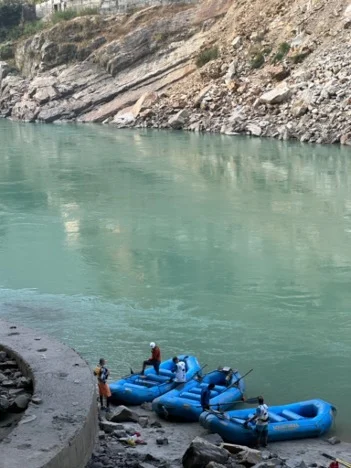
For ten days, the focus remained on the Ganga. The training sessions were characterized by a robust exchange of technical skills. WRI’s curriculum was implemented alongside the local guides’ existing knowledge base, creating a collaborative environment.
The training modules were comprehensive, covering:

- Universal Risk Management: Establishing upstream and downstream safety protocols and formal emergency response plans.
- Active Water Skills: Intensive practice in aggressive and defensive swimming techniques.
- Rescue Infrastructure: Mastery of throw-bag deployment, inflow rescue scenarios, and mechanical advantage systems.
The instructors noted that the guides from Aquaterra were not novices; many had spent their entire lives living on tributaries of the Ganga. This innate connection to the water, combined with the extreme topography of the Himalayas, produced a cohort of guides with world-class skill sets. The goal was to ensure that the WRI curriculum could be synthesized into the local culture, enabling these professionals to continue training and certifying other enthusiasts throughout India.
The Brahmaputra: The Ultimate Test
Following the training in the north, the team moved eastward to the Brahmaputra River. The logistics for this transition were significant, facilitated by Aquaterra owner Vaibhav Kala. His expertise was instrumental in navigating the complex travel requirements of the region, from flight scheduling to crucial local health advice—specifically avoiding the common ailment known colloquially as “Delhi belly.”

The journey to the Brahmaputra involved a two-day drive into the remote Arunachal Pradesh province. Upon arrival, the team joined a group of seasoned river professionals, each with deep roots in the region. The expedition on the Brahmaputra was a shift from pedagogical training to extreme performance. Navigating rapids with 30-foot faces and laterals the size of buses, the team experienced water speeds exceeding 20 miles per hour. Under the leadership of veteran guide Rana G, who was completing his 23rd descent of the river, the team navigated the sheer power of the Brahmaputra, marking a high point in their professional careers.
Supporting Data and Observations
The success of the expedition can be measured by both technical progress and qualitative cultural integration.

| Metric | Detail |
|---|---|
| Duration | 10 days of formal training on the Ganga; 5+ days of expedition on the Brahmaputra. |
| Safety Focus | Implementation of WRI-standardized emergency plans for commercial expeditions. |
| Environmental Context | High-altitude, high-volume river environments requiring specific technical gear and decision-making. |
| Knowledge Exchange | Integration of local traditional river navigation with Western swiftwater rescue theory. |
The technical data provided by personal tracking devices (Garmin) confirmed the extreme nature of the Brahmaputra, recording consistent speeds of 20 mph, which highlights the necessity of the rescue training provided. Furthermore, the collaborative nature of the campfires—where the history of the Brahmaputra expeditions was recounted—solidified the social foundation upon which the safety training was built.
Official Perspectives and Professional Synergy
Reflecting on the experience, Sam Johnston of WRI highlighted the humility required to work alongside the Aquaterra team. "Their knowledge, river skills, and experience were impressive and humbling," Johnston noted. "It stands to reason that guides who grow up near the biggest mountains and the biggest whitewater in the world develop world-class skills."

Vaibhav Kala, the architect of the logistical success, viewed the collaboration as a milestone for the Indian outdoor industry. By inviting WRI to train their staff, Aquaterra Adventures reaffirmed its position as a leader in the field, prioritizing the safety of their clients and the professional development of their staff. This partnership represents a shift toward a standardized, globalized approach to river safety in India, where the risks are as immense as the rewards.
Implications for the Future of Whitewater Safety
The WRI-Aquaterra collaboration holds significant implications for the global whitewater community.

1. Standardization of Safety Practices
The primary implication is the creation of a cross-pollinated safety standard. By combining WRI’s systematic approach to rescue with the intuitive, local knowledge of Indian guides, a new, more effective methodology is emerging. This hybrid approach is likely to become the benchmark for other companies operating in high-volume, high-consequence river environments.
2. Stewardship and Environmental Awareness
The expedition highlighted the importance of being stewards of wild places. The interaction with local populations—such as those harvesting beetles along the Brahmaputra—reinforced the reality that river-running is not merely a sport but a way of interacting with an ecosystem. The instructors emphasized that as human activity increases on these rivers, the responsibility to promote sustainable and safe practices grows exponentially.

3. Personal Transformation
Perhaps the most profound implication is the psychological impact on the river professionals involved. Johnston concluded that the journey was not about "conquering the river," but about "conquering something within yourself." This shift in perspective is essential for the longevity of the industry. Professionals who view the river with respect rather than as an adversary are statistically less likely to take unnecessary risks, leading to a safer industry overall.
4. Cultural Diplomacy
The success of this mission demonstrates the power of outdoor adventure as a form of cultural diplomacy. By sharing meals, stories, and technical skills, the instructors and guides bridged a divide that transcended nationality. As the global outdoor industry continues to expand, these types of international exchanges will be vital in ensuring that the spirit of adventure remains coupled with the highest standards of safety and mutual respect.

Conclusion
The collaboration between the Whitewater Rescue Institute and Aquaterra Adventures stands as a testament to the power of shared knowledge. From the sacred, turquoise waters of the Ganga to the thundering, massive rapids of the Brahmaputra, the mission achieved its goal of elevating safety standards while fostering profound personal and professional growth.
As the world continues to grow more connected, the ability for international experts and local specialists to work in concert will remain the gold standard for success. For Schmidt and Johnston, the journey home to Montana was marked by the realization that while the rapids they paddled were vast, the connections they forged were even more significant. Within every rapid and every river bend, the story of this collaboration will continue to ripple outward, shaping the future of swiftwater rescue for years to come.