For decades, the narrative surrounding Finnish forestry has been one of national pride—a pillar of the economy, a champion of green transition, and a model of sustainable management. However, beneath this polished exterior lies a complex web of economic interests, institutional inertia, and, according to critics, a systematic exploitation of forest owners that prioritizes industrial profit over long-term ecological and financial value.
A year ago, former Prime Minister and state councilor Matti Vanhanen lamented in Helsingin Sanomat that the increasingly heated public discourse regarding forests was threatening the "long-term development and investment" of the forestry sector. Vanhanen’s sentiment reflects the established consensus of the industry elite: that any questioning of the status quo is an obstacle to progress. Yet, this narrative is increasingly being challenged by economists, researchers, and novelists alike, who argue that the "long-term development" touted by the industry is little more than a relentless drive for pulp production.
The Anatomy of a Market Disconnect
At the heart of the critique is a fundamental misalignment of interests between the buyer (the forest industry) and the seller (the forest owner). While proponents of the current system often suggest that the interests of both parties are aligned, authors like Teemu Kaskinen, whose 600-page novel Yö ja usva (Night and Fog) delves into the mechanics of the industry, argue otherwise.
In a recent interview with Kulttuuritoimitus, Kaskinen highlighted how the entire Finnish forestry system has been "tuned" to produce pulpwood from the moment a seedling is planted. The conflict of interest is structural: the buyer seeks to minimize costs, while the seller seeks to maximize value. Yet, the power dynamic in Finnish forestry is heavily skewed in favor of the industrial buyer.
The Hidden Impact of Stem Bucking
One of the most significant, yet poorly understood, aspects of a timber sale is the "bucking" process—the way a tree is cut into logs. In Finland, the final price of a sale is often not determined until after the trees have been felled and measured. Kaskinen notes that this process is where the real manipulation occurs.
A sawlog—used for high-value construction timber—can fetch three times the price of pulpwood. However, if a company is primarily invested in the pulp business, it has a direct financial incentive to cut the stems in a way that minimizes the volume of sawlogs and maximizes the volume of pulpwood. Because the average forest owner is often removed from the site during the cutting process and relies on the industry’s own measurements, they are frequently left in the dark about how much potential revenue was lost in the "bucking" phase.
Chronology of a Systemic Shift
The current state of Finnish forestry is not an accident of nature, but the result of decades of policy and institutional guidance.
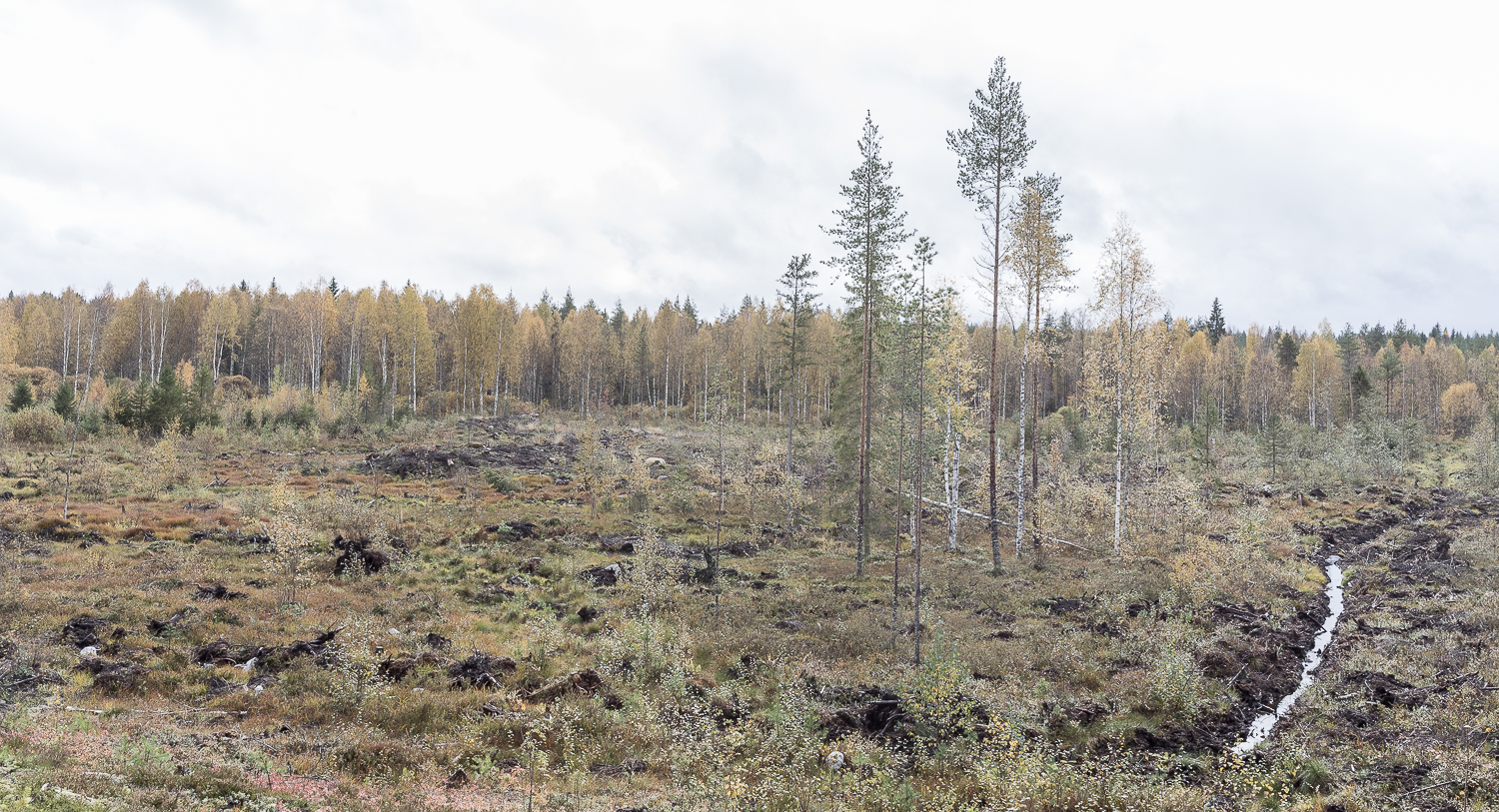
- Post-War Era: The expansion of the pulp and paper industry became the engine of Finland’s post-war economic miracle. The "clear-cut and replant" model was established as the gold standard.
- The 1990s and 2000s: Consolidation within the industry led to fewer, larger players dominating the market. Simultaneously, the influence of industry-aligned bodies like the Finnish Forest Centre (Metsäkeskus) solidified the "jaksollinen kasvatus" (periodic/even-aged management) as the only legitimate way to manage a forest.
- 2010s to Present: As climate change has moved to the forefront of the political agenda, the industry has successfully rebranded itself as a leader in the "green transition." By highlighting innovations in wood-based textiles, medicines, and bioplastics, the industry has maintained its social license to operate, despite these sectors still representing a tiny fraction of total production compared to traditional pulp.
Supporting Data: The Reality of Thinning
The critique of the current management style extends to "thinning" operations. Studies conducted over the past few years suggest that only about 20 percent of initial thinning operations in Finland follow the recommendations set by Tapio, the state-owned expert organization for sustainable forestry.
When a forest is thinned too heavily or incorrectly, the owner loses not just the wood removed, but the "growth potential" of the remaining trees. The stunted growth of the remaining stand can never recover the financial losses incurred by improper early-stage management. Yet, for a pulp-hungry industry, these early thinnings are an ideal source of low-cost raw material.
The Role of Institutional Gatekeepers
A major question remains: why have Finnish forest owners, who pride themselves on their independence, so readily accepted this model? The answer lies in a combination of convenience and institutional pressure.
The Forest Management Association Influence
Approximately three-quarters of private forest owners in Finland belong to a Forest Management Association (Metsänhoitoyhdistys). Many have effectively outsourced the management of their land to these associations via power of attorney. These organizations, in turn, often advocate for clear-cutting as the primary management tool.
Emeritus Professor Timo Pukkala, a vocal proponent of continuous-cover forestry, argues that this adherence to clear-cutting is partly due to a lack of professional agility—it is easier to mark an entire area for clear-cutting than to selectively choose trees. However, there is a clearer financial motive: associations generate significant revenue from the cycle of planting, thinning, and soil preparation. In continuous-cover forestry, these labor-intensive, billable services are largely unnecessary.
Official Responses and the "Green" Paradox
The official response from the forestry sector remains defensive. When challenged on issues like biodiversity loss or carbon sequestration, the industry points to the "growth of the forest" and the role of managed forests as carbon sinks.
They argue that by planting, fertilizing, and harvesting quickly, they are maximizing the carbon sequestration rate of the forest. This logic, however, ignores the emissions generated by the production, transport, and application of fertilizers, as well as the immediate release of carbon stored in the soil during intensive soil preparation. Furthermore, the industry frequently characterizes clear-cutting as a natural part of forest succession—a framing that critics argue is a form of "intellectual dishonesty."
The "Pulp Capitalism" Critique
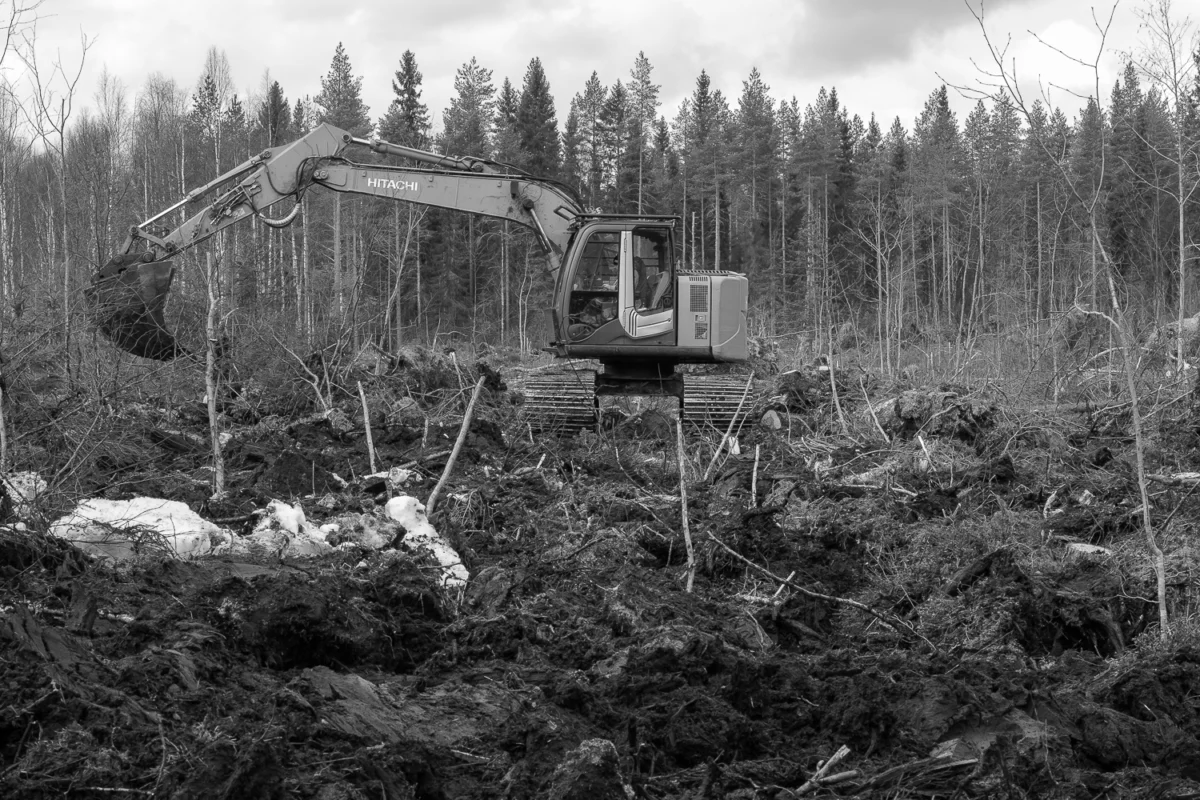
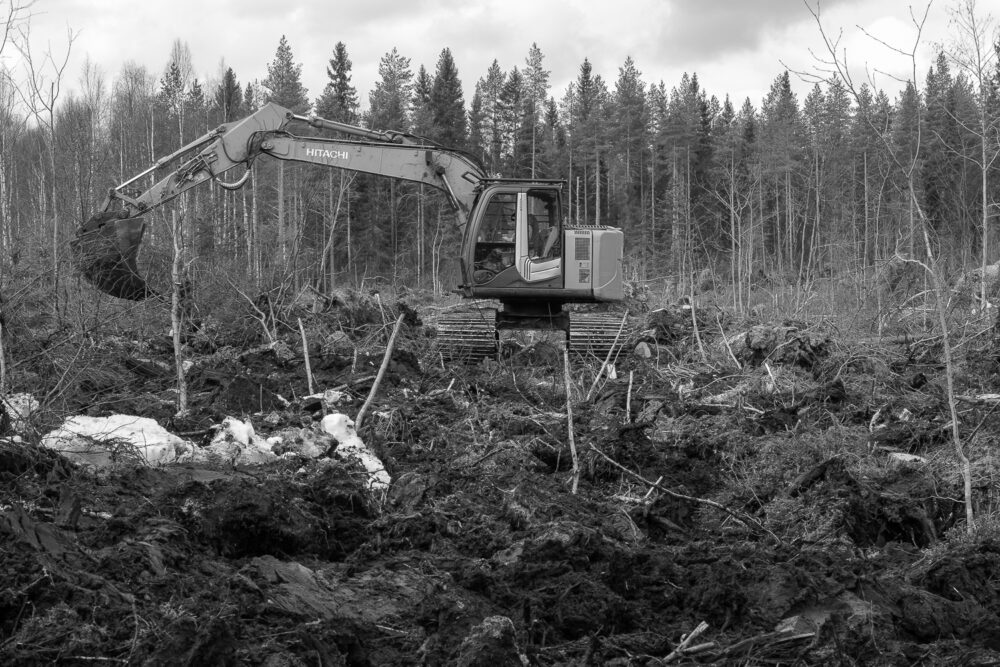
The industry’s push into peatland forests is another point of contention. The "restoration" of old drainage ditches, which essentially facilitates the clear-cutting of carbon-rich peatlands, is often presented as a forest management improvement. In reality, scientists warn that this practice exacerbates water eutrophication and turns these forests into significant carbon sources rather than sinks.
The Economic Implications
For the individual forest owner, the promise of a large, one-time payout from a clear-cut is often the primary driver of the decision. It is the path of least resistance—a way to receive a substantial sum of money without needing to walk into the woods or engage in complex, long-term decision-making.
However, the systemic implications are profound:
- Lowered Value: By prioritizing short-term pulp extraction, the industry potentially devalues the forest asset for future generations.
- Loss of Biodiversity: The homogenization of forests through even-aged management has created an "ecological desert" in many regions, directly threatening the resilience of the ecosystem against climate change.
- Market Distortion: When a few large companies set the standards and the prices, the "market" ceases to be a fair exchange. It becomes a extraction mechanism disguised as a service.
Conclusion: A Call for Transparency
The discourse surrounding Finnish forests is currently caught in a cycle of "self-deception." By labeling industrial clear-cutting as "sustainable forestry" and prioritizing the needs of the pulp mills over the long-term health of the forest and the financial interests of the owner, the sector risks losing the trust of the very people it relies upon.
As the pressure for a truly green economy mounts, the gap between the industry’s marketing and the reality on the ground will become increasingly difficult to bridge. Whether it is through the lens of a novel or the hard data of a research paper, the message is clear: the era of unquestioned, pulp-driven forestry is facing a reckoning. For the Finnish forest owner, the lesson is becoming increasingly apparent—"professional" advice is not always neutral, and the most profitable path may not be the one that the industry is so eager to sign them up for.
True sustainability, it seems, may require a radical shift away from the "sell-everything" model of pulp capitalism and toward a more diverse, selective, and locally-owned approach to forest management. Only then will the forest truly be a long-term asset, rather than a short-term resource for the pulp mill.