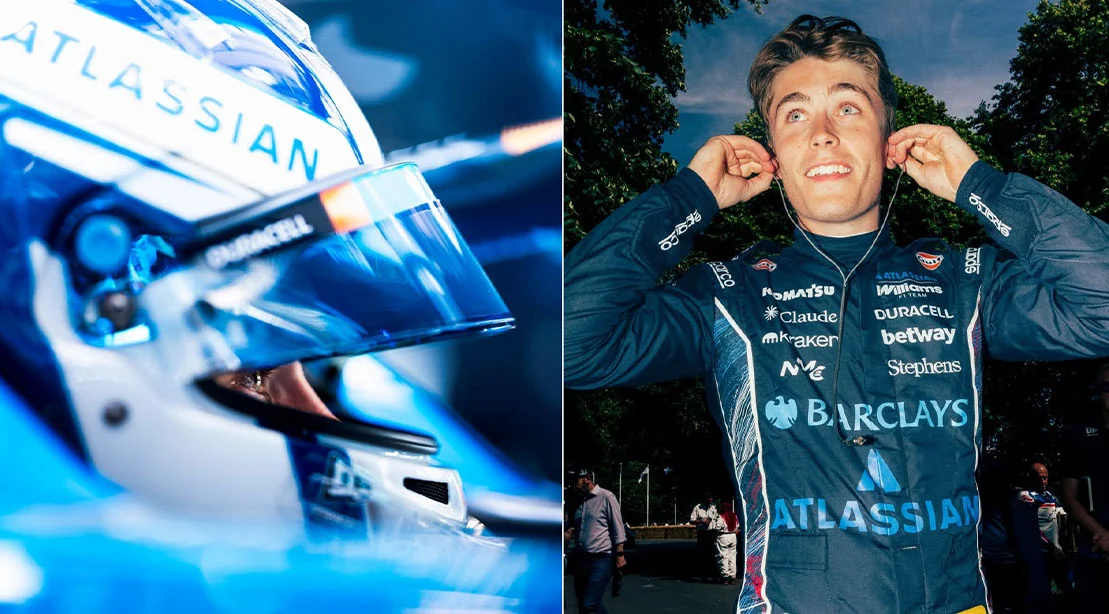
In the high-octane world of professional motorsport, the difference between a podium finish and a DNF (Did Not Finish) is often measured in milliseconds. For 24-year-old British racing sensation Luke Browning, those milliseconds are the culmination of a lifelong obsession, a grueling physical regimen, and the strategic support of the Atlassian Williams Formula One team. As the team’s first reserve driver, shadowing stalwarts Alex Albon and Carlos Sainz, Browning occupies a unique position in the paddock—one that demands the readiness of a veteran and the hunger of a rising star.
The Foundation: A Legacy of Competition
Browning’s journey did not begin in a professional paddock, but in the driveway of his childhood home in Liverpool. "Everything was a race since I was four or five years old," Browning recalls. His competitive nature was forged by his father, a man whose uncompromising approach to parenting ensured that victory was never a gift, but a commodity to be earned.
"My dad is the most competitive man in the world, and he never let me win anything growing up," Browning shares. This "sink or swim" environment acted as an early catalyst for his development. By his teenage years, the dynamic had shifted; the student had eclipsed the master. This early, raw intensity formed the bedrock of his career, teaching him that talent is merely a starting point—tenacity is the engine that drives success.
Chronology of a Rising Star
Browning’s ascent through the junior formulae has been nothing short of meteoric. His path demonstrates a rare ability to adapt to varying vehicle dynamics and high-pressure environments:
- 2016: Recognized for his raw potential as a junior saloon driver, Browning claimed the "Teen Racer of the Year" award, marking his first significant step into the spotlight.
- 2020: Browning secured the F4 British Championship, proving his dominance in entry-level open-wheel racing.
- 2022: He was awarded the prestigious Aston Martin Autosport British Racing Driver’s Club (BRDC) Award, a distinction reserved for the most promising young British talent in the sport.
- 2023: A landmark year. Browning conquered the GB3 Championship and secured victory at the historic Macau Grand Prix, one of the most challenging and dangerous circuits in the world.
- 2023/2024: Browning joined the Atlassian Williams Driver Academy, transitioning into a professional reserve role while simultaneously testing his mettle in the high-downforce, physically demanding Super Formula series.
From Two Wheels to Four: A Shift in Strategy
Before he became a household name in single-seaters, Browning’s early competitive spirit found an outlet in motocross. However, the inherent volatility of the sport led to an inevitable intervention. "My mum said, ‘get that bike sold,’ and the bike was sold within a week," he recounts.
Forced to pivot, Browning chose the most daunting path available: motorsport. "I chose the sport that was arguably the most difficult to get into, and the most expensive," he says. The transition from motocross to karting and eventually to formula cars was not merely a change in machinery, but a shift in philosophy. The "want and desire" to be the best became a singular focus, driving him through the financial and logistical hurdles that characterize the brutal world of junior racing.
Engineering the Human Machine: Fitness for Pole Position
Formula One is often misunderstood as a sport where the car does all the work. In reality, the driver is a high-performance athlete subjected to G-forces that would incapacitate an average person. Browning’s training methodology, which he breaks down for Muscle & Fitness, is built on the pillars of endurance, stability, and injury prevention.
The Neck and Shoulder Stability Protocol
The most critical physical vulnerability for an F1 driver is the neck. At high speeds, the combination of a heavy helmet and intense cornering creates immense lateral pressure. Browning avoids "ego lifting" in favor of functional stability.
"There are a lot of muscles in the neck," he explains. "I wouldn’t do high loads." Instead, he focuses on time-under-tension and endurance. By utilizing cable extensions and rotator cuff exercises, he prepares his body to withstand sustained G-forces. Exercises like the Pallof press and low-weight, high-rep dumbbell shoulder presses are staples of his routine. The goal is to facilitate rapid recovery; by strengthening these specific muscle groups, he can effectively clear lactic acid during the race, maintaining peak focus long after his competitors might begin to fatigue.
The Cycling Advantage
Despite his childhood motocross bike being sold, cycling remains a cornerstone of his fitness. Browning utilizes the "aero position"—tucking his head and keeping elbows tight—to mimic the endurance requirements of a cockpit. "If you’re sat in an aero position for a long time, like an hour, or an hour and a half, this builds up massive endurance down the back of your neck," he notes. Beyond the physical, cycling provides the mental clarity necessary for the high-stress environment of the paddock, acting as a form of active meditation.
Karting and Hydration
Browning continues to use karting as a training tool, often opting for a heavier helmet to increase the strain on his neck and shoulders. Furthermore, he treats hydration with scientific precision. By pre-loading electrolytes long before the visor goes down, he ensures that his cognitive function remains sharp—a critical advantage when making split-second decisions at 200 mph.
The Atlassian Williams Driver Academy: A Mentorship Model
Browning’s integration into the Atlassian Williams team has been pivotal. Serving as a reserve for F1 veterans like Alex Albon and Carlos Sainz provides him with a front-row seat to the pinnacle of the sport. "They’ve really looked after me and nurtured me," he says.
This role is not ceremonial. It requires constant readiness. Browning must be prepared to step into the FW48 at a moment’s notice, turning simulator data and practice sessions into real-world results. His upcoming participation in the Italian Grand Prix at Monza, where he will take part in an official practice session in Alex Albon’s car, serves as a litmus test for his readiness to transition from the Academy to a full-time grid seat.
Implications: The Future of the Grid
Browning’s philosophy on motivation is refreshingly pragmatic. He admits that the daily grind of strict dieting and specialized training isn’t always enjoyable. "I don’t particularly enjoy having to maintain this sort of stuff to be here," he admits. "But what I do enjoy is the feeling, when I get in the car, that I’m just as fit as anyone else, if not fitter."
This perspective highlights the mindset required to survive in modern F1. It is a sport of margins. For Browning, the payoff for his discipline is the competitive edge—the knowledge that when his rivals are fading in the final ten laps of a Grand Prix, he will still have the capacity to push.
As he prepares for the Monza circuit, the eyes of the motorsport world are firmly on the young Briton. In an era where data-driven performance is king, Browning represents a blend of old-school grit and modern athletic science. Whether he earns a full-time seat in the coming seasons will depend on his ability to convert his extensive preparation into results on the tarmac. However, given his track record of overcoming the odds—from his father’s early tests to the transition from two wheels to four—few would bet against him.
Luke Browning is no longer just a prospect; he is a fully realized racing athlete, waiting for the signal to accelerate into his future.