For the modern angler, the transition from paddle-powered navigation to motorized propulsion represents more than just a quest for speed. It is a fundamental shift in strategy. A motor on a fishing kayak is a tactical advantage—a tool that grants the angler the ability to maintain position against aggressive wind, navigate challenging currents, and reach distant, untouched honey holes without exhausting the energy required for the day’s real objective: fishing.
However, the market is flooded with "motor-ready" claims that often fail to hold up under the weight of real-world application. From unstable hulls to poorly conceived battery placements, the wrong setup can turn a dream rig into a logistical nightmare. This report examines the current state of motorized kayak fishing, the top-tier platforms defining the market, and the critical technical considerations every angler must evaluate before investing.
The Evolution of the Motorized Platform
The chronology of kayak fishing has moved rapidly from simple sit-on-top plastic hulls to sophisticated, vessel-like platforms. Historically, kayak fishing was defined by physical exertion. Over the last decade, however, the integration of pedal drives and, subsequently, electric trolling motors has changed the demographic of the sport.

As of 2024, the industry has reached a point of maturity. Manufacturers are no longer just "bolting on" motors to existing designs; they are engineering hulls specifically to accommodate the torque, weight distribution, and electronic requirements of electric propulsion.
Top-Tier Fishing Kayaks: A Comparative Analysis
1. Point 65 Sweden Kingfisher: The Modular Solution
The Point 65 Sweden Kingfisher stands as an anomaly in the market. Its defining feature is a modular construction that allows the hull to be broken down into individual sections.
Supporting Data:
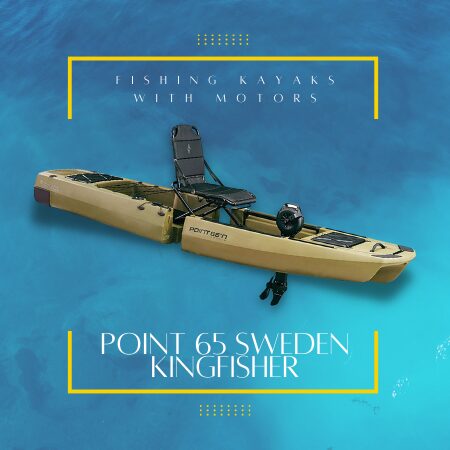
- Dimensions: 11 feet in length, 31 inches in width.
- Weight: Approximately 70 pounds.
- Capacity: 287 pounds.
Implications: The Kingfisher is the ultimate choice for the urban angler. By solving the "transportation bottleneck"—the inability to store a 12-foot plastic vessel—it opens the sport to apartment dwellers and those with compact vehicles. However, the 287-pound capacity is a strict ceiling. When factoring in the weight of a heavy-duty lithium battery, a 55lb-thrust motor, and a full tackle arsenal, larger anglers may find the vessel approaching its limits. The trimaran-style hull provides exceptional primary stability, allowing for a narrow profile that handles better than traditional, barge-like fishing kayaks.
2. Reel Yaks: Prioritizing Compact Efficiency
Reel Yaks caters to the angler who values the hands-free benefit of a motor but requires a footprint that fits into a daily lifestyle.
Official Perspective: The company emphasizes a W-shaped hull design, which acts as a force multiplier for stability. While this design inherently increases drag—meaning it will never win a race against a touring kayak—it provides the "standing confidence" necessary for sight fishing in shallow, weed-choked environments.

Supporting Data: The integration of frame-style seating is a major ergonomic upgrade. Unlike molded plastic seats, these elevated, breathable chairs allow for circulation and comfort during five-to-eight-hour sessions. For those considering this unit, the primary implication is trade-off: you sacrifice top-end speed for the convenience of a compact, highly maneuverable, and ultra-stable platform.
3. Wilderness Systems ATAK 120: The Professional Grade
If the Kingfisher is a commuter vehicle, the Wilderness Systems ATAK 120 is the heavy-duty truck of the industry.
Technical Overview: The "Advanced Tactical Angling Kayak" (ATAK) is designed for the serious angler who views their kayak as an extension of their tackle box.

- Dimensions: 12 feet, 3 inches long; 35 inches wide.
- Weight: 86 pounds (bare hull).
- Capacity: 400 pounds.
Implications: The ATAK 120 thrives because of its "Flex Pod" system, which allows for seamless integration of fish finders, transducers, and motor drives. This minimizes the "rat’s nest" of cables that often plague amateur builds. While it requires a more robust transport strategy—likely necessitating a trailer or a heavy-duty roof rack—the increased capacity allows for larger batteries, enabling longer range and more consistent motor performance.
Critical Considerations: The "Systems" Approach
A motor is only as effective as the environment it is built into. Prospective buyers must view their purchase as a system, not an accessory.
1. The Power-to-Weight Ratio
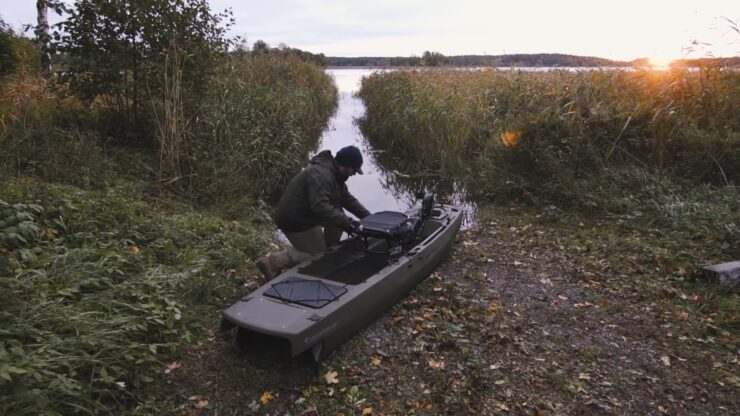
Many beginners ignore the "all-up" weight of their craft. When calculating capacity, you must aggregate:
- The dry weight of the kayak.
- The weight of the motor (15–30 lbs).
- The weight of the battery (10–50 lbs depending on chemistry).
- Your body weight.
- The weight of gear (tackle, anchors, electronics, safety kit).
If your combined total exceeds 80% of the manufacturer’s max capacity, your kayak will sit lower in the water, increasing drag and decreasing the efficiency of the motor.
2. Battery Chemistry and Placement
The industry has largely moved away from heavy lead-acid deep-cycle batteries in favor of Lithium Iron Phosphate (LiFePO4). Lithium batteries offer significantly higher energy density, meaning they provide more "run time" for half the weight.
- Implication: Balanced weight distribution is paramount. A 30lb battery placed at the stern will significantly alter the trim of the boat, causing the bow to lift and making the vessel susceptible to wind-steering (weather-cocking).
3. Legal and Regulatory Compliance
The transition to a motor changes the legal status of your craft in many jurisdictions.

- Registration: Many states require any vessel with an electric motor to be registered and display decals.
- Safety Equipment: Once motorized, you are often legally required to carry specific items, such as a whistle, a life jacket (PFD) that is worn at all times, and, in some jurisdictions, navigation lights for low-light conditions.
Implications of Field Usage: Saltwater vs. Freshwater
The choice of motor and hardware must be dictated by the water chemistry. Saltwater is an aggressive corrosive agent that will seize aluminum mounts and degrade unsealed electrical connections in a single season.
Best Practice:
- Saltwater: Prioritize hardware with high-grade stainless steel or sacrificial anodes. Post-trip, a thorough freshwater rinse of the entire drivetrain—not just the propeller—is mandatory.
- Freshwater: The primary concern is vegetation. A motor with a high-torque, weedless prop is more valuable here than raw horsepower.
Conclusion: Making the Right Choice
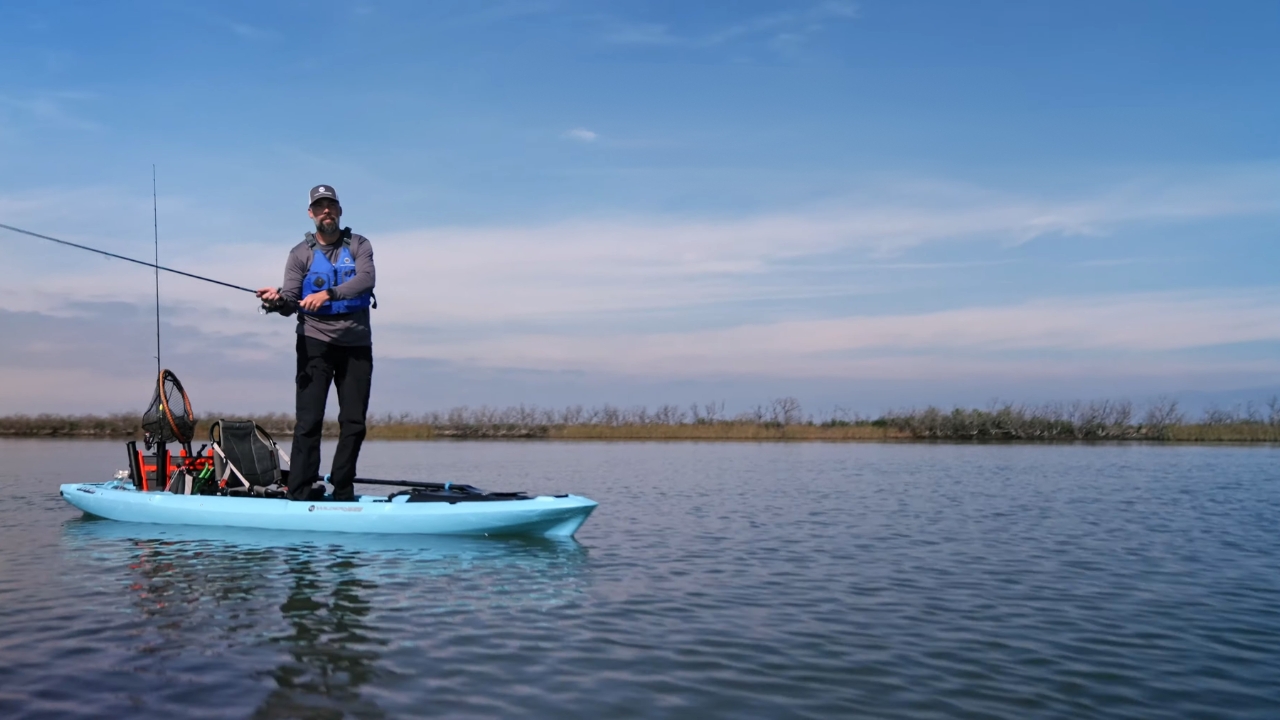
The "best" motorized kayak is not necessarily the most expensive one; it is the one that fits your specific workflow. If your launch is a steep, muddy bank, a 90-pound rig like the ATAK 120 will eventually stay in the garage. If you fish vast, open reservoirs where wind is a constant variable, a lightweight modular kayak may struggle to maintain course.
Summary Recommendation:
- For the Urban/Modular Angler: Point 65 Sweden Kingfisher.
- For the Calm Water/Short-Range Angler: Reel Yaks.
- For the Serious/Long-Range Angler: Wilderness Systems ATAK 120.
As you finalize your decision, remember that a motor should serve to enhance your time on the water, not dictate your logistics. A well-rigged motorized kayak should feel like a natural extension of your body, allowing you to focus on the strike, not the setup. Before committing to a full-day excursion, perform a "shake-down" cruise in shallow, calm water to ensure that your weight distribution is balanced, your steering is responsive, and your emergency protocols are clearly defined. Life is, after all, too short for dry land—and the best fishing stories always start with a successful launch.