As the sweltering heat of summer begins to dissipate, the television landscape undergoes a familiar, tectonic shift. September marks the professional return to form for the entertainment industry; the tentpole summer finales have concluded, the prestige dramas are emerging from their production cocoons, and streaming platforms are aggressively competing for your attention. While the market remains saturated with reboots and legacy IP, this month offers a surprisingly robust selection of programming that balances high-concept intellectual property with bold, original storytelling.
Rather than chasing the fleeting metrics of mass-appeal hits like Reacher, our focus this month is on the intersection of culture, technology, and the evolving nature of human experience. From political satires that have caught the attention of the White House to the return of spy thrillers that redefine the workplace comedy, these are the shows that demand a place in your queue.
The Chronological Streaming Calendar: September 2026
To help navigate the influx of content, we have compiled a timeline of the most anticipated releases:
- September 9: The Paper (Season 2)
- September 16: South America (formerly South Park, Season 29)
- September 16: Slow Horses (Season 6)
- September 16: City of Blood (Miniseries Premiere)
- September 18: MobLand (Season 2)
- September 18: Outlander: Blood of My Blood (Season 2)
- September 26: American Horror Story (Season 13)
- Ongoing: Lego Star Wars: The Mandalorian (Streaming Now)
The Evolution of Journalism and Satire
The Paper: The Survival of the Printed Word
In a media environment dominated by algorithmic feeds and rapid-fire digital content, Greg Daniels and Michael Koman’s The Paper serves as a poignant, albeit comedic, examination of local journalism. Following the staff of the Toledo Truth Teller, the series explores the existential crisis facing traditional print media.
Domhnall Gleeson, stepping into the role of the idealistic editor-in-chief Ned Sampson, provides the emotional anchor for a show that is fundamentally about the preservation of truth in a digital-first economy. Season 2, which premiered on September 9, pivots from the initial struggle for survival to the more complex challenge of growth. The show poses a biting question: in an era of polarized content, who is left to shape the narrative of our communities?
South America: The Satirical Juggernaut
Perhaps no show has been as disruptive to the American cultural fabric as South Park. Entering its 29th season—now cheekily rebranded as South America—creators Trey Parker and Matt Stone continue to utilize their long-running animated platform to dissect the current political zeitgeist.
Following a season that targeted high-profile figures such as JD Vance, Pete Hegseth, and Donald Trump, the show has officially transcended the boundaries of traditional television. The recent Emmy win for Outstanding Animated Program solidifies its status as a critical darling. By adopting the rhetoric of its political targets, Parker and Stone are ensuring that the series remains as controversial as it is influential. The premiere on September 16 promises to continue this trajectory of high-stakes, uncompromising satire.
Prestige Dramas and Genre Defiance
Slow Horses: The Spy Thriller as Workplace Comedy
Entering its sixth season on September 16, Slow Horses has cemented itself as a masterclass in tone. By blending the grim, high-stakes world of MI5 espionage with the mundane, often petty frustrations of office politics, the series manages to be one of the most consistently funny shows on television.
Gary Oldman’s portrayal of Jackson Lamb remains a tour de force of character work, capturing the essence of a man who is both a brilliant operative and an irredeemable wreck. Beyond the comedy, the show has real-world implications: it has successfully shifted the public perception of the "next James Bond," with co-star Jack Lowden emerging as a leading candidate in the eyes of betting markets and industry insiders.
City of Blood: Climate Dystopia and Vampire Lore
Debuting on September 16, the German miniseries City of Blood offers a grim look at a future defined by climate catastrophe. Set in a sweltering, unstable Berlin, the narrative functions as a social allegory, contrasting the lives of those within a climate-controlled dome against those left to survive the environmental and societal decay outside. The introduction of a vampire population serves to heighten the tension, transforming blood into a literal and figurative commodity. It is a dense, atmospheric study of power dynamics, resource scarcity, and the fragility of human cooperation.
MobLand: The Criminal Empire Returns
The return of MobLand on September 18 brings with it significant off-screen intrigue. Despite reports of friction between stars Tom Hardy and Pierce Brosnan, the production has continued at a breakneck pace, with Hardy already committed to a third season. The series, which focuses on the Harrigan family’s struggle to maintain their criminal enterprise, distinguishes itself through its aesthetic and its use of modern technology—namely the character of Zosia, a tech-savvy fixer who modernizes the family’s old-school operations. The show’s inclusion of Fontaines D.C.’s "Starburster" as a theme song underscores its commitment to a gritty, contemporary atmosphere.
Legacy Reimagined: Nostalgia and Innovation
Lego Star Wars: The Mandalorian
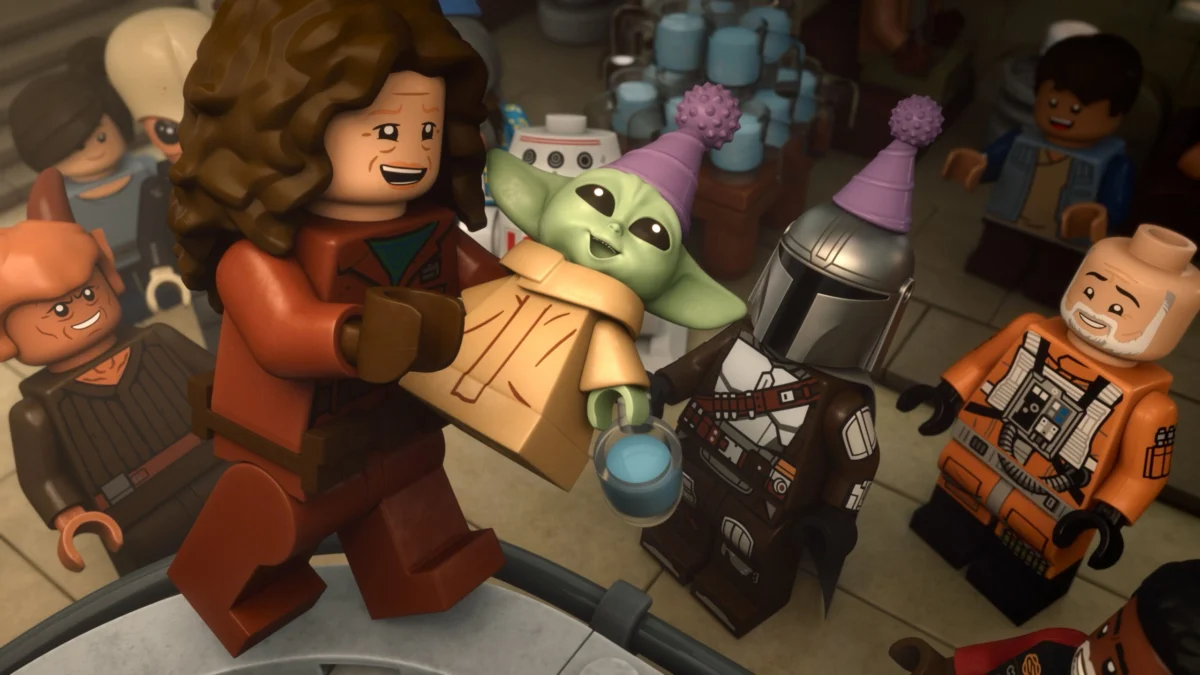
Following the underwhelming box office performance of the live-action The Mandalorian and Grogu film, Lucasfilm is pivoting back to its animated roots. By condensing three seasons of the Pedro Pascal-led hit into a 49-minute Lego-animated special, the studio is betting on the appeal of simplified, high-energy storytelling. For viewers who have felt overwhelmed by the sprawling, often dense lore of the Star Wars universe, this condensed format provides an accessible entry point and a refreshing, lighthearted take on the bounty hunter and his charge.
Outlander: Blood of My Blood
The Outlander franchise continues to prove its resilience. Season 2 of this prequel series deepens the narrative by simultaneously tracking the romantic developments of Jamie Fraser’s parents in 18th-century Scotland and Claire Beauchamp’s parents in WWI-era England. By weaving together disparate time periods, the show maintains its signature blend of historical romance and time-travel intrigue, ensuring that the existing fanbase remains engaged while providing enough context for new viewers to join the fray.
Implications: The Industry at a Crossroads
The sheer variety of programming hitting streaming services this September highlights a significant shift in how content is curated. We are seeing a distinct split between "Event Television"—such as the 13th season of American Horror Story, which promises a massive crossover event involving iconic characters from across the franchise—and "Curation-Driven Television," exemplified by the Criterion Channel’s decision to re-release the original Neon Genesis Evangelion.
The return of the classic English dub of Evangelion is particularly significant. By offering both the original Japanese audio and the vintage dub, the Criterion Channel is acknowledging the long-standing debate within the anime community regarding localization and preservation. This move serves as a nod to the fact that television is no longer just about the "new"; it is about the stewardship of the "classic."
As American Horror Story prepares to bring back legends like Jessica Lange and Kathy Bates for a season that leans into the fan-favorite "Coven" lore, the industry is clearly leaning on its own history to secure engagement. This "endgame-level" approach to anthology storytelling reflects a broader trend: as streaming services struggle to retain subscribers, they are increasingly relying on nostalgia and established intellectual property to create "must-watch" cultural moments.
In summary, September 2026 offers a diverse, if occasionally contradictory, slate of television. Whether through the lens of political satire, climate-conscious horror, or the reimagining of classic anime, the common thread is a concerted effort to adapt to a changing media landscape. For the viewer, the takeaway is clear: the era of passive consumption is over; in its place is a season that requires active engagement with the stories that define our complex, rapidly shifting reality.