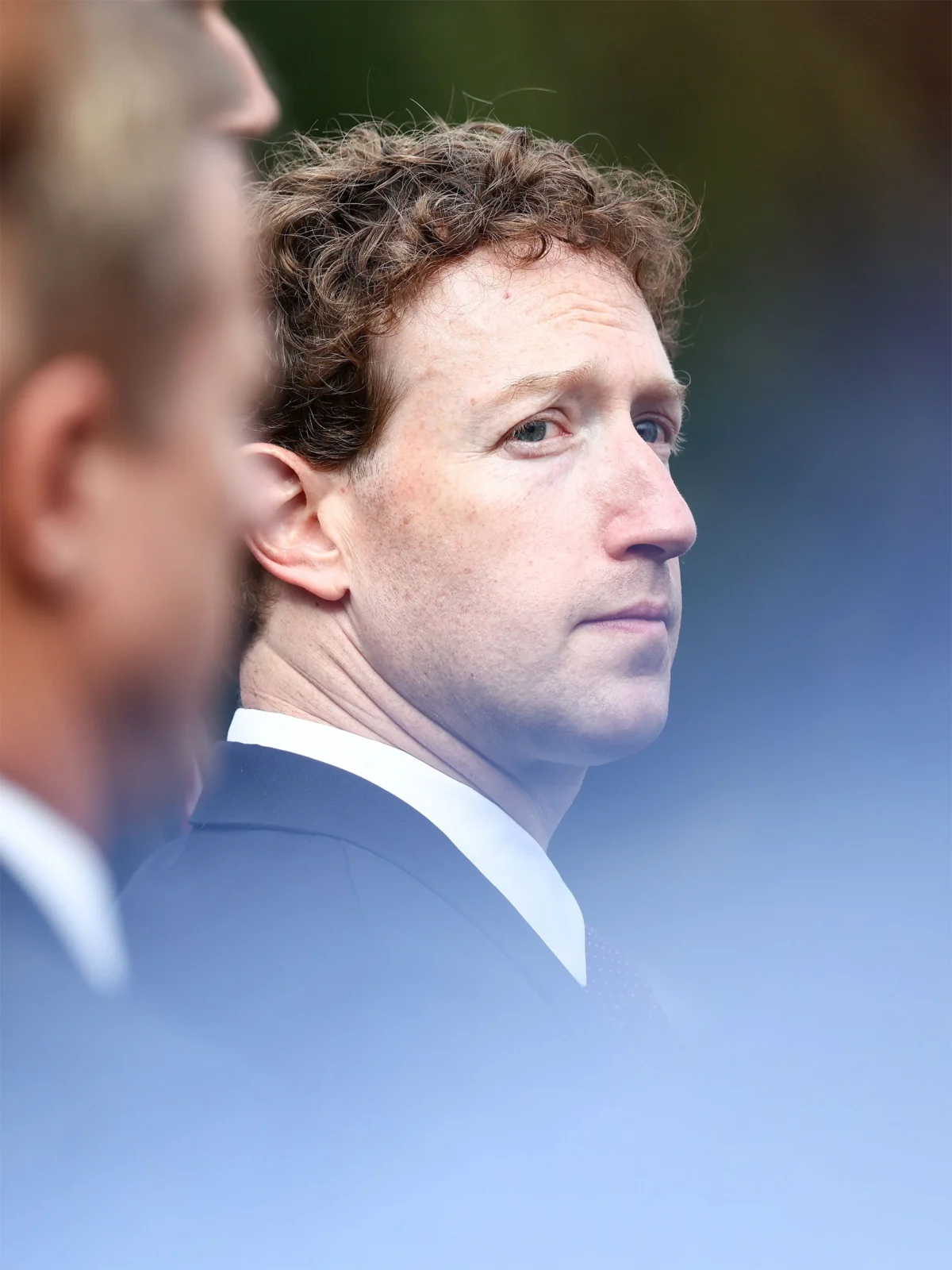
In a high-stakes move that underscores the fragile relationship between California’s tax-burdened tech giants and the state’s legislative future, Meta CEO Mark Zuckerberg has committed to maintaining his residency in Silicon Valley for the next eight years. The agreement, disclosed in a sweeping 109-page regulatory filing released Wednesday, reveals the extraordinary lengths to which Meta’s board of directors went to prevent their founder from fleeing the state—and the potential tax implications that drove the CEO to consider an exodus in the first place.
The Looming Threat of Proposition 40
At the heart of this corporate drama is Proposition 40, a contentious ballot measure that has sent shockwaves through the upper echelons of California’s billionaire class. If approved by voters next month, the proposal would levy a one-time 5 percent tax on stock and other assets held by the state’s wealthiest residents as of January 2026.
For a billionaire like Zuckerberg, whose wealth is inextricably tied to his massive holdings in Meta stock, the tax represents a staggering potential liability—potentially amounting to billions of dollars. The prospect of such a massive, one-time wealth transfer has prompted a wave of quiet anxiety across the Bay Area, with several high-profile figures, including Google cofounders Sergey Brin and Larry Page, reportedly eyeing exits to tax-friendlier jurisdictions like Texas or Florida.
Chronology of a Corporate Crisis
The tension reached a breaking point on September 9, during a private dinner between Zuckerberg and Meta’s board of directors. According to the regulatory filing, Zuckerberg candidly informed the board that he was actively considering relocating out of California. To underscore his seriousness, he revealed that he planned to list his long-time Palo Alto residence for sale just four days later.
This revelation triggered immediate alarm within the boardroom. The Meta board, represented by a special committee—including attorney Robert Kimmitt, venture capitalist Charlie Songhurst, and DoorDash CEO Tony Xu—recognized that a departure of the founder could severely destabilize the company’s leadership structure.
The committee’s concerns were rooted in recent history: the COVID-19 pandemic. During the height of the global lockdowns, Zuckerberg’s inability to be physically present with his management team created operational friction that the board was desperate to avoid repeating. "The special committee was mindful about the difficulties the company faced during the COVID-19 pandemic when Zuckerberg could not be physically present with the company’s management team and did not want the company to face similar challenges going forward," the filing noted.
Within days of that dinner, frantic negotiations commenced. By the following week, the board and the CEO had reached a formal "Founder Alignment Agreement." This deal effectively ties Zuckerberg’s financial flexibility to his physical presence in California, creating a golden handcuff arrangement designed to ensure his proximity to the company’s core decision-making hub.
The Strategy: Nonvoting Shares and AI Dominance
To facilitate the agreement and address the financial concerns surrounding potential tax liabilities, Meta has moved to restructure its equity. The company plans to introduce a new class of shares that hold no voting power.
This move serves a dual purpose. First, it allows Meta to raise capital to fund its massive, multi-billion-dollar investments in AI data centers—an area where the company is currently engaged in an arms race with Microsoft, Google, and OpenAI—without diluting Zuckerberg’s ironclad voting control. Second, it provides the mechanism through which Zuckerberg can pay his potential tax bills.
Under the terms of the agreement, all existing shareholders will receive these new nonvoting shares in proportion to their current holdings. Zuckerberg is permitted to sell 20 percent of his new allotment to cover any taxes stemming from Proposition 40. However, the remaining 80 percent are subject to a strict, eight-year vesting schedule tied directly to his California residency. If he attempts to sell these shares early, he would be forced to divest some of his precious voting shares—a penalty designed to discourage any premature departure.
Implications for Silicon Valley’s Future
The "Founder Alignment Agreement" contains a crucial loophole: Zuckerberg is required to reside wherever Meta maintains its headquarters. This suggests that while he is currently anchored to the Bay Area, a collective relocation of the entire company remains a possibility.
In recent years, the "exodus" narrative has become a staple of Silicon Valley lore. Companies like Tesla, Oracle, and Hewlett Packard Enterprise have already moved their headquarters to states like Texas and Nevada, citing high taxes and regulatory environments as primary motivators. However, Meta’s situation is unique due to the nature of its current work.
The company is currently pouring resources into its "Superintelligence Labs," the engine behind its Muse AI models. The board maintains that the physical proximity of the CEO to these laboratories is essential for the company’s competitive advantage. "The goal is to keep Zuckerberg continuing to lead the company from California and in close proximity to Meta Superintelligence Labs," the filing emphasized. The board views the Silicon Valley ecosystem—its concentration of talent, academic partnerships, and venture capital—as a critical asset that cannot be easily replicated elsewhere.
The Paradox of the Taxpayer
The irony of the situation is not lost on political observers. While Zuckerberg and other billionaires take aggressive steps to avoid California taxes—often by borrowing against their stock rather than selling it, or by accepting a symbolic $1 annual salary—they remain deeply embedded in the state’s economy.
The current debate surrounding Proposition 40 highlights the growing tension between the state’s progressive tax aspirations and its reliance on the economic activity generated by tech titans. For the average California voter, the image of a billionaire threatening to move over a tax hike is a frequent political flashpoint. Yet, the corporate reality is that even if Proposition 40 passes, the state may struggle to collect the revenue it envisions if the people responsible for those assets simply pack their bags.
The Likely Outcome: Much Ado About Nothing?
Despite the frantic maneuvering and the 109-page document that has captured the attention of Wall Street, the entire ordeal may ultimately prove unnecessary.
Recent polling indicates that Proposition 40 is struggling to gain traction with the California electorate. The campaign against the measure has been nothing short of historic, with over $129 million spent by various interest groups to ensure its defeat. If, as current trends suggest, the proposal fails to garner enough votes, the immediate threat to Zuckerberg’s personal wealth will vanish, rendering the "Founder Alignment Agreement" a preemptive measure that highlights the sheer volatility of California’s tax landscape.
For now, the status quo remains intact. Mark Zuckerberg stays in Silicon Valley, the AI labs continue their work in Menlo Park, and Meta continues to navigate the thin line between maintaining its founder’s autonomy and satisfying its regulatory obligations. The eight-year agreement stands as a testament to the fact that even in an era of global, cloud-based operations, the physical location of a CEO still carries immense weight in the boardroom—and the ballot box.