Introduction: The Sweat Paradox
During periods of intense physical exertion, the human body operates as a sophisticated cooling engine, producing liquid sweat at rates that often outpace the ambient evaporation capacity. When this happens, liquid moisture accumulates on the skin, necessitating a garment capable of moving that water away from the body through one or more layers of clothing.
For decades, the outdoor industry has marketed base layers under the umbrella of "moisture management." However, a recent, rigorous series of tests reveals that the label is often misleading. After evaluating a broad spectrum of fabrics, it becomes clear that there is a fundamental disconnect between how we perceive "wicking" and how fabrics actually behave when saturated.
The core question remains: When your skin is wet, where does the water actually go? To answer this, I developed a specialized liquid transfer test designed to track moisture as it migrates through a simplified clothing system, measuring how much water remains on the “skin,” how much is retained by the base layer, and how much successfully migrates to the outer layer.
Chronology of the Investigation
The investigation began several months ago as a simple comparison of three common base-layer garments. Upon discovering significant, unexplained performance variances, the scope was expanded to include eight distinct fabrics. This wider sample set allowed for the identification of consistent physical patterns.
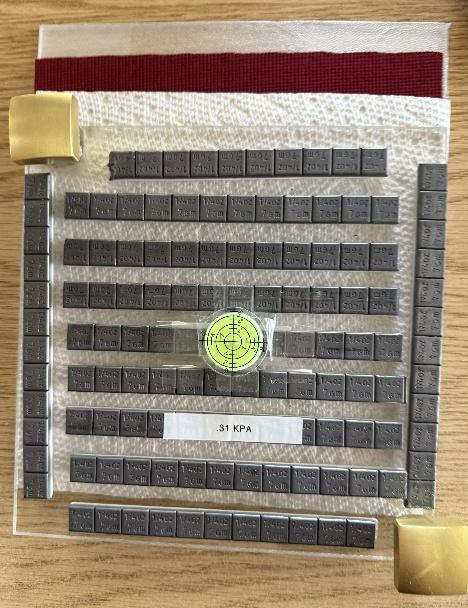
Testing involved a custom-built apparatus (Figure 1) designed to simulate the interaction between a wet surface and a textile interface. By controlling for variables such as pressure and initial saturation, the study tracked the "tug-of-war" for moisture. The findings suggest that the industry’s reliance on vague terms like "wicking" masks a complex, binary reality: some fabrics are engineered for storage, while others are engineered for transport.
Supporting Data: The Physics of Moisture Transport
The study relies on foundational physical principles first articulated in the early 19th century by Young and Laplace (1805) and later formalized by Washburn (1921). These studies describe the capillary physics that govern how liquids move through fibrous materials.
Hydrophobic Fabrics: The Myth of Dryness
Hydrophobic base layers—often constructed from synthetic materials like polyester or polypropylene—are frequently marketed as "staying dry." In a narrow sense, this is true; the fibers themselves are chemically inert to water, meaning they do not absorb moisture into their internal structure.
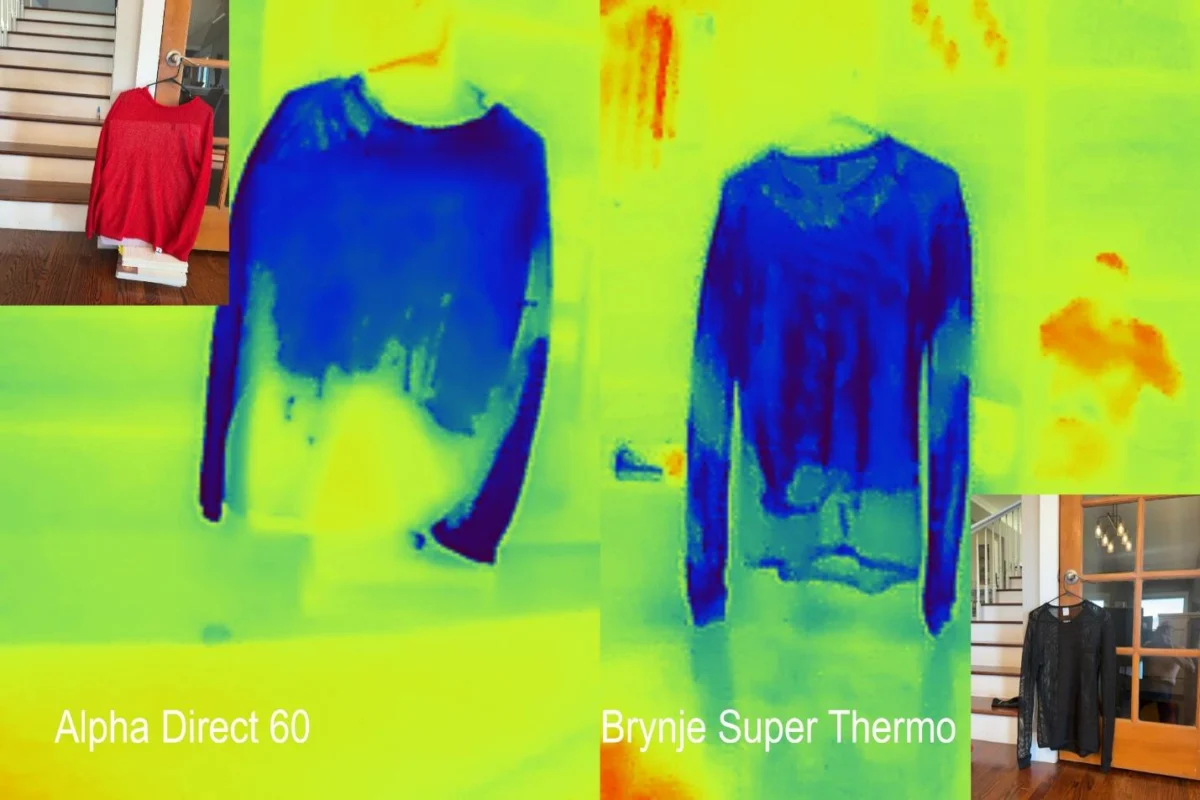
However, as the data illustrates, "not absorbing" is not the same as "not holding." Fabrics are composed primarily of empty space. When liquid sweat is produced at high volumes, it collects within the interstitial pore spaces of the garment. In infrared imaging (Figure 2), hydrophobic garments often show significant water retention—sometimes up to 87g of sweat, or 65% of the garment’s dry weight—despite the fibers remaining water-repellent.
The key determinant of performance here is "breakthrough pressure." Because hydrophobic fibers lack hydrogen bonding sites, they do not pull water via capillary action. Instead, water only moves through them if external pressure—such as a backpack strap, body movement, or the weight of accumulated sweat—forces it into the pore structure. Once the breakthrough pressure threshold is reached, the water can move. If the sweat input rate exceeds the transfer rate, the fabric becomes a reservoir of cold, heavy, trapped liquid.
Hydrophilic Fabrics: The Trap of Absorption
Conversely, hydrophilic fabrics (such as wool or treated cotton blends) behave in a way that is initially more comfortable but ultimately more restrictive. These fibers attract water molecules, pulling them into the fiber structure.
The data reveals a critical, often-overlooked limitation: the same capillary forces that make these fabrics excellent at absorbing sweat also make them reluctant to let it go. Once a hydrophilic fabric is saturated, the water is held within the fibers. Transferring that water to an outer layer requires a "competition" between the base layer’s internal capillary hold and the outer layer’s ability to pull that moisture away. As the outer layer becomes damp, its capacity to pull moisture drops, effectively trapping the water against the skin.
Official Perspectives and Scientific Framework
The author’s research aligns with established fluid dynamics. The breakthrough pressure of a fabric is a function of its pore-opening size and the contact angle of the fiber.
- Contact Angle: This measures the resistance to wetting. A drop of water on a surface with a contact angle below 90° will spread out (hydrophilic), whereas an angle above 90° causes the water to bead up (hydrophobic).
- Pore Dynamics: While a microscope can show pore size, the 3D pathway of the textile is what dictates flow. Constrictions where yarns cross act as natural flow regulators, determining whether a fabric acts as a conduit or a barrier.
Implications for Athletes and Manufacturers
The implications for the outdoor industry are significant. The study suggests that consumers are currently choosing base layers based on material composition (e.g., "wool vs. synthetic") rather than the functional requirement of their activity level.
1. The Saturation Threshold
For high-exertion, cold-weather activities, the goal is to prevent the "wet-out" of the base layer. If an athlete moves fast enough to create high sweat volume, they are effectively pushing against the breakthrough pressure of their hydrophobic gear. If they wear a hydrophilic layer, they are essentially wearing a sponge that will eventually reach its limit.
2. Redefining "Moisture Management"
Manufacturers must move toward reporting "liquid transfer efficiency" rather than mere breathability or wicking claims. A fabric that is "breathable" in terms of water vapor may be a complete failure in terms of liquid transport.
3. Practical Takeaways for the Consumer
- Layering Strategy: If you are prone to sweating, the "wicking" layer is only as good as the layer above it. If your mid-layer is saturated, the base layer will cease to transport moisture, regardless of how well it is engineered.
- The Weight of Comfort: Do not assume a hydrophobic base layer will keep you dry. If the pores are filled with liquid due to low pressure (lack of tight fit or external force), you are effectively wearing a wet shirt that simply refuses to absorb the liquid into its fibers.
- The Pressure Factor: Tight-fitting base layers generally perform better at liquid transfer because they maintain the consistent pressure required to overcome the breakthrough threshold of synthetic fibers.
Conclusion
The "tug-of-water" is an inevitable reality of human exertion. By moving away from the simplistic binary of "hydrophobic vs. hydrophilic" and toward an understanding of breakthrough pressure and capillary retention, we can better predict how our gear will perform in the field.
Base layers are not magical conduits that evaporate sweat into thin air; they are complex physical systems. Understanding the threshold at which they transition from a transport layer to a storage reservoir is the final frontier in optimizing athletic comfort. Future iterations of gear, informed by this data, will likely focus on gradient pore structures—engineered to ensure that water always faces a one-way street, moving from the skin to the outer atmosphere with minimal resistance.
For the hiker, climber, or runner, the lesson is clear: your next garment choice should not be based on the marketing fluff of "moisture-wicking" technology, but on the specific physics of how that fabric handles the transition from liquid sweat to atmospheric vapor.