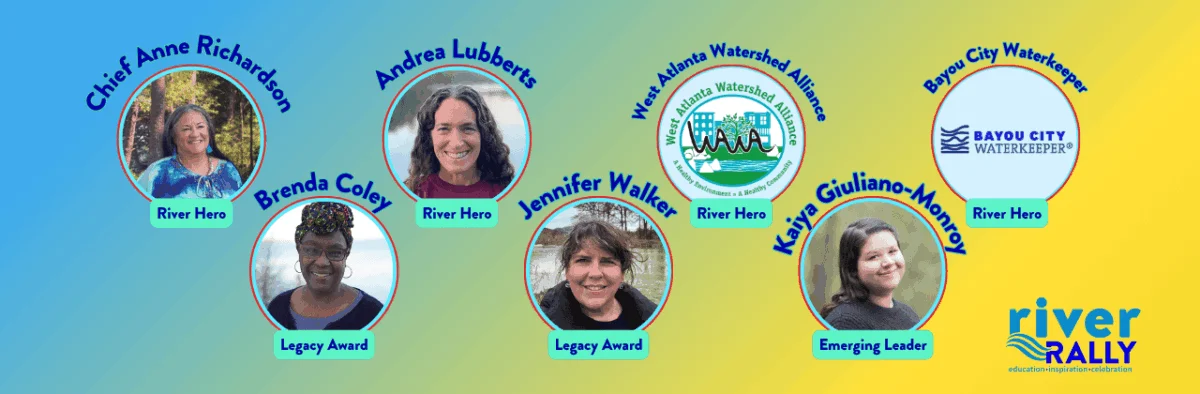
As the global community faces an accelerating crisis of water access, public health, and environmental displacement, the necessity for grassroots leadership has never been more urgent. River Network, the national organization dedicated to empowering clean water advocates, is proud to announce its 2026 award recipients—seven extraordinary individuals and organizations whose persistence is charting a new, equitable course for our most vital resource.
The Call to Action: Joining the Movement
As of this week, fewer than 100 spots remain for the upcoming River Rally, the industry’s premier gathering for water advocates. Attendees will have the unique opportunity to meet these awardees in person, learning firsthand how they have bridged the gap between policy, ecology, and community care.
Defining the Equitable Water Future: Main Facts
The 2026 River Network awardees represent a diverse spectrum of advocacy, ranging from ancestral stewardship and urban watershed restoration to legal battles for infrastructure equity. Their work shares a common denominator: the recognition that water is not merely a utility, but the lifeblood of human connection and cultural survival. By prioritizing nature-based solutions and centering the voices of those most impacted by environmental injustice, these champions are redefining what it means to be a guardian of the watershed.
A Chronology of Advocacy: From Ancestral Knowledge to Modern Policy
The stories of this year’s winners are not sudden flashes of success; they are the results of years, and sometimes generations, of patient, disciplined work.
The Ancestral Foundation: Chief Anne Richardson
For Chief Anne Richardson, the fight for water is a fight for cultural survival. "The river culture is two generations gone," Chief Richardson remarked in the 2020 film Return to the River. Her recognition of this loss triggered an immediate, structural response: the creation of a youth program designed to reconnect the Rappahannock Tribe with their ancestral shorelines. Today, tribal youth are not just learning ecology; they are reclaiming the fishing traditions and ecological stewardship that define their history.
Grassroots Power: The West Atlanta Watershed Alliance (WAWA)
Long before their official incorporation as a 501(c)3, the team at WAWA was already shaping the physical landscape of Atlanta. Their early successes—most notably the preservation of 400 acres of green space—set a high bar for environmental protection. By focusing on the intersection of displacement, equitable development, and urban ecology, WAWA has proven that local advocates can successfully challenge the status quo to protect the health of their residents.
Youth Empowerment and Social Inclusion
The torch of stewardship is being passed to a new generation through leaders like Andrea Lubberts and Kaiya Giuliano-Monroy. Lubberts, whose leadership with high school "Green Teams" provides paid, hands-on experience in environmental justice, proves that career development and ecological health are inextricably linked.
Similarly, Kaiya Giuliano-Monroy of the Coastal Watershed Council has dismantled barriers by creating the River Stewards program. By offering job training and support to her unhoused neighbors, Giuliano-Monroy has transformed both the river’s ecology and the public perception of unhoused individuals, proving that a healthy river is one that cares for all its neighbors.
Supporting Data: The Impact of Bold Action
The effectiveness of these awardees is evidenced by tangible, systemic change:
- Policy Wins: Through aggressive grassroots advocacy, Bayou City Waterkeeper in Houston has successfully shifted the dial on infrastructure spending. By emphasizing "nature-based solutions," they are ensuring that funds are directed toward projects that prioritize equity and justice rather than traditional, grey-infrastructure solutions that have historically harmed marginalized communities.
- Cultural Legacy: The impact of Brenda Coley, a 2026 Legacy Awardee, extends beyond specific policy wins. Her work with Milwaukee Water Commons has built a multi-racial, anti-racist movement that has permanently altered how the region approaches water-based community care.
- Systems Change: Jennifer Walker, also honored with a Legacy Award, serves as the standard-bearer for Texas water advocacy. Her work, often occurring behind the scenes in a notoriously challenging political landscape, has provided a roadmap for how to balance conservation with the needs of a rapidly growing population.
Official Responses and Testimonials
The influence of these awardees is felt deeply by those within the water sector. Dr. Mel, a River Network Board Member, spoke movingly of Brenda Coley’s impact:
"All of our work in the water sector has been influenced by Brenda’s multi-cultural movement building. Brenda’s commitment to social and environmental justice, organizing, advocacy, and community care has shaped how I approach my work and relationships; she is a visionary mentor beloved by so many of us."
Emily Warren Armitano, also a member of the River Network Board, underscored the vital, often unseen work of Jennifer Walker:
"Jennifer Walker is who people turn to for anything related to Texas water. She has spent years advocating for both people and nature, often without the recognition she deserves. Jennifer has proven that meaningful change is possible with a steadfast commitment to equity and conservation in a challenging political landscape. Her legacy will benefit Texas for generations to come."
Implications: A Shift Toward Non-Extractive Stewardship
The primary implication of this year’s awards is a fundamental shift in the definition of "watershed management." For too long, the water sector has operated under an extractive model, viewing rivers and aquifers as resources to be managed, consumed, or mitigated.
The 2026 awardees offer a different path. As Chief Anne Richardson suggests, the goal is to teach children—regardless of their cultural background—a form of non-extractive resource management that respects the limits of the natural world.
Bridging the Rift
The throughline of these winners’ work is a deep concern for the growing separation between humans and their local waters. By repairing these rifts through job training, youth education, legal action, and community art, these leaders are proving that the future of water management is not found in a laboratory or a government office alone—it is found in the connection between people and the places they call home.
The Power of Joy and Connection
Perhaps the most significant takeaway from this year’s cohort is the role of joy and human connection in environmental work. Whether it is a youth Green Team learning to test water quality, or unhoused neighbors working as river stewards to restore their local habitat, the success of these programs is predicated on dignity and community belonging.
Conclusion: A Future Built on Courage
As River Network prepares to celebrate these seven awardees at the 2026 River Rally, we invite the broader community to reflect on their own relationship with their local watersheds. The challenges ahead—from climate-induced flooding to systemic water insecurity—are immense. However, the path forward is illuminated by the work of these pioneers.
Through their courage, determination, and profound love for their communities, these awardees have shown us that a different future is not only possible; it is already being built. We look forward to gathering in person to honor their contributions and to continue the essential work of ensuring that every community, regardless of status or geography, has a safe, clean, and equitable water future.
For those interested in attending the 2026 River Rally, please visit the River Network website immediately to secure one of the final remaining registrations.