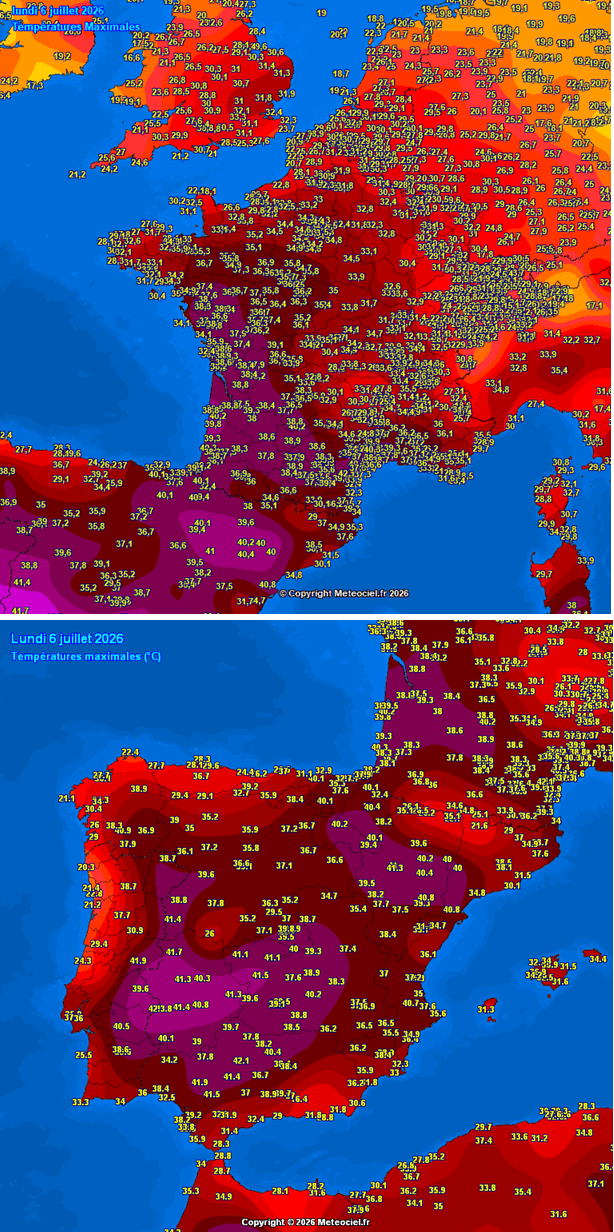
As July progresses, Europe finds itself gripped by an unrelenting and potentially historic weather phenomenon. A massive, stable upper-level ridge has locked into place over Western and Southwestern Europe, creating what meteorologists describe as a "Heat Dome." This atmospheric trap is not only driving temperatures to record-breaking highs but is also blocking the arrival of cooler maritime air from the Atlantic, effectively baking the continent in a sustained, high-pressure oven.
The crisis, which began with severe thermal stress in Spain and Portugal, is now expanding northward and eastward, threatening to rewrite meteorological history across France, the British Isles, and into Central Europe.

The Science of the "Heat Dome"
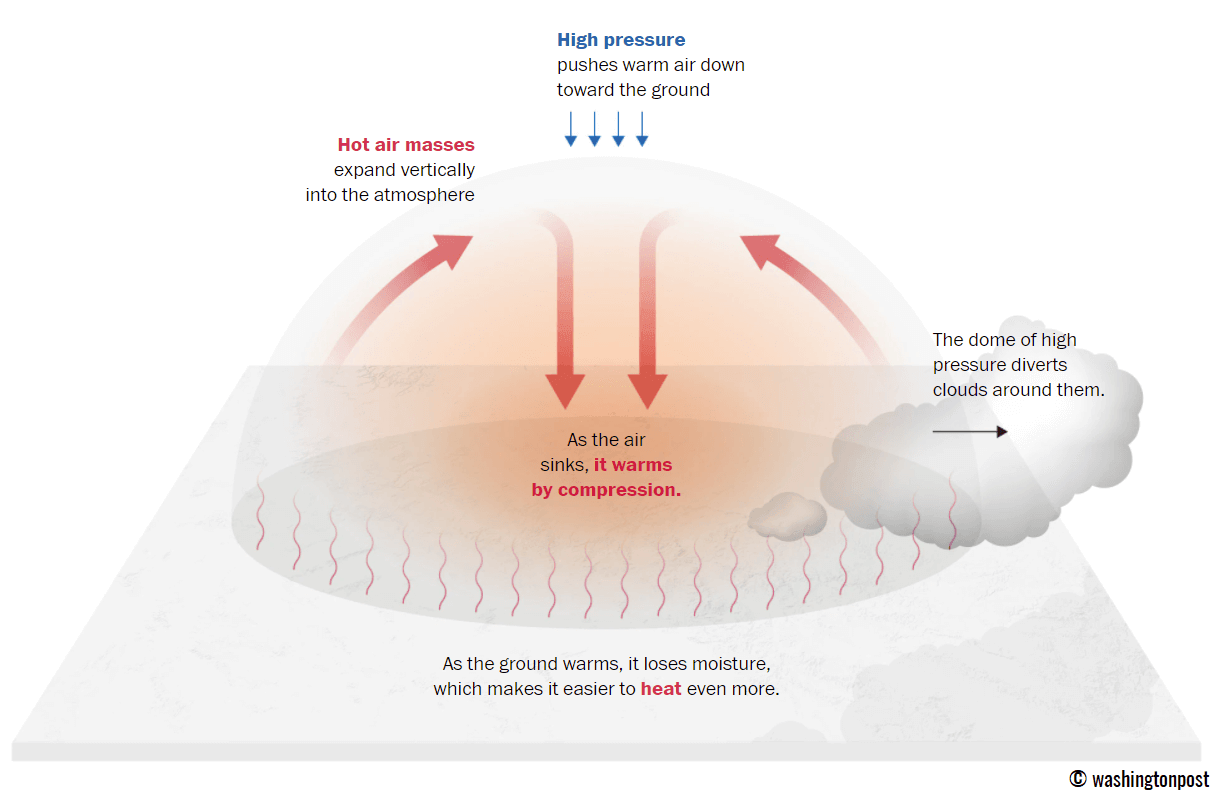
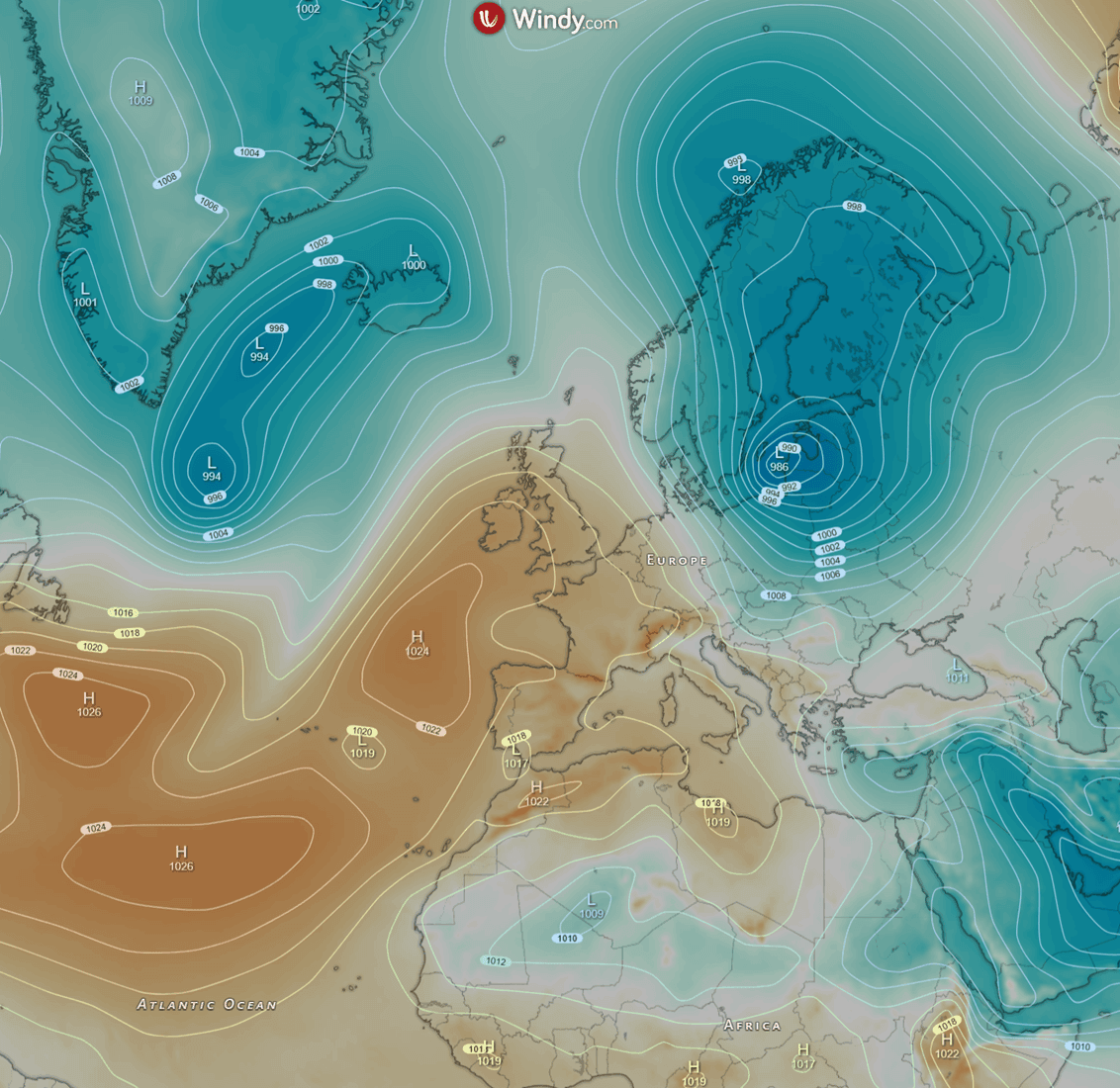
To understand the severity of the current situation, one must look at the mechanics of a heat dome. It functions much like a lid on a boiling pot. When a high-pressure system becomes stationary over a large geographic area, it traps warm air at all levels of the atmosphere.
As the air sinks toward the ground, it compresses, further increasing the temperature. Because the system is "blocked"—meaning it lacks the necessary atmospheric flow to push it along—it can remain anchored over a region for days or even weeks. This leads to an accumulation of heat that prevents the atmosphere from cooling down, even overnight. In urban centers like Madrid, Paris, and London, this has resulted in "tropical nights," where temperatures refuse to drop, offering no respite to human physiology or infrastructure.
A Chronology of the 2026 July Heatwave
The current disaster follows a pattern of extreme heat that has defined the summer of 2026.
- Late May: The continent experienced a record-breaking hot spell that shattered hundreds of all-time station records.
- Late June: A historic heatwave swept through the region, depleting soil moisture and setting the stage for the current drought.
- Early July: The present heat dome solidified. By mid-week, temperatures in the Iberian Peninsula and southern France began testing the 40°C to 45°C threshold.
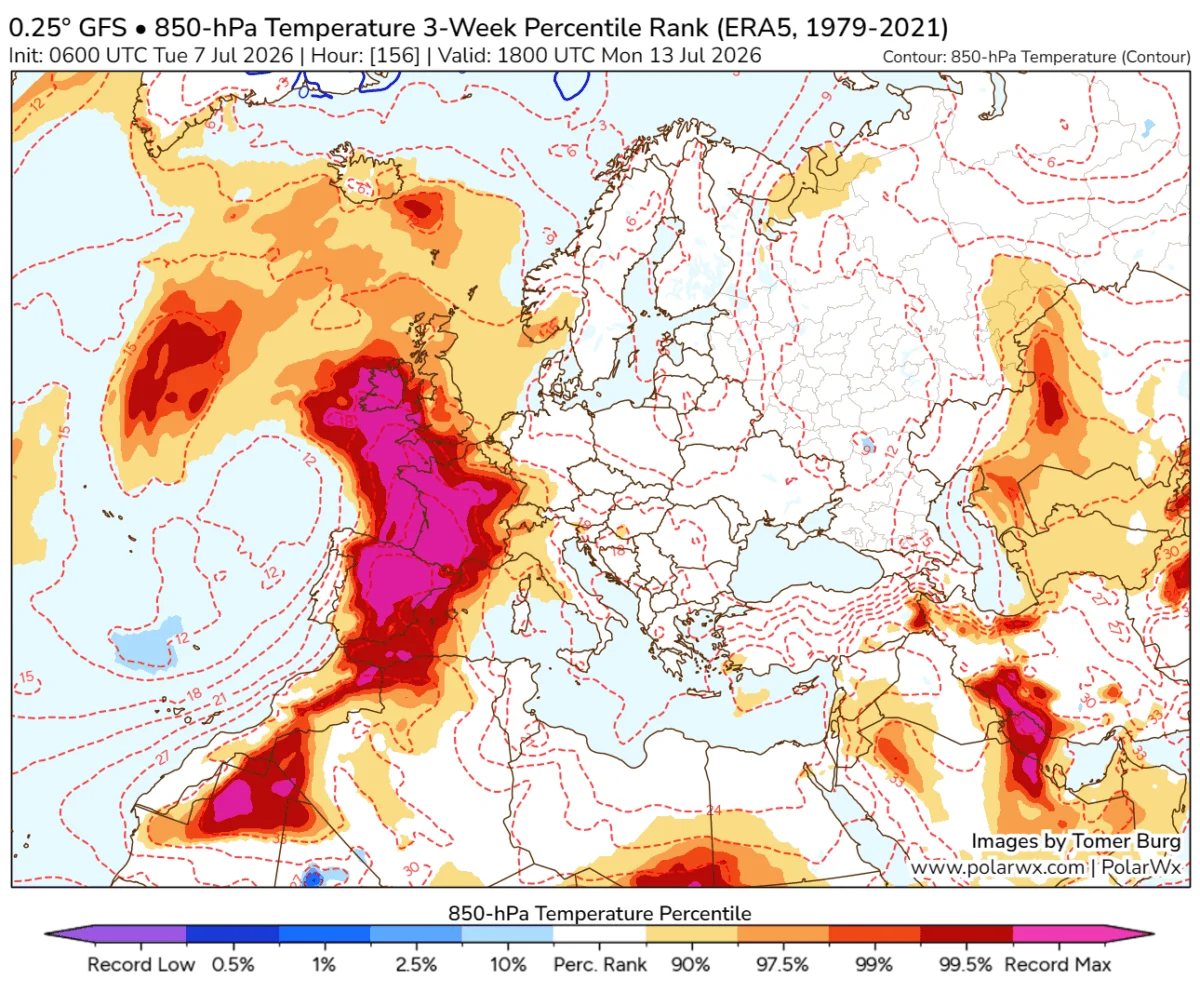
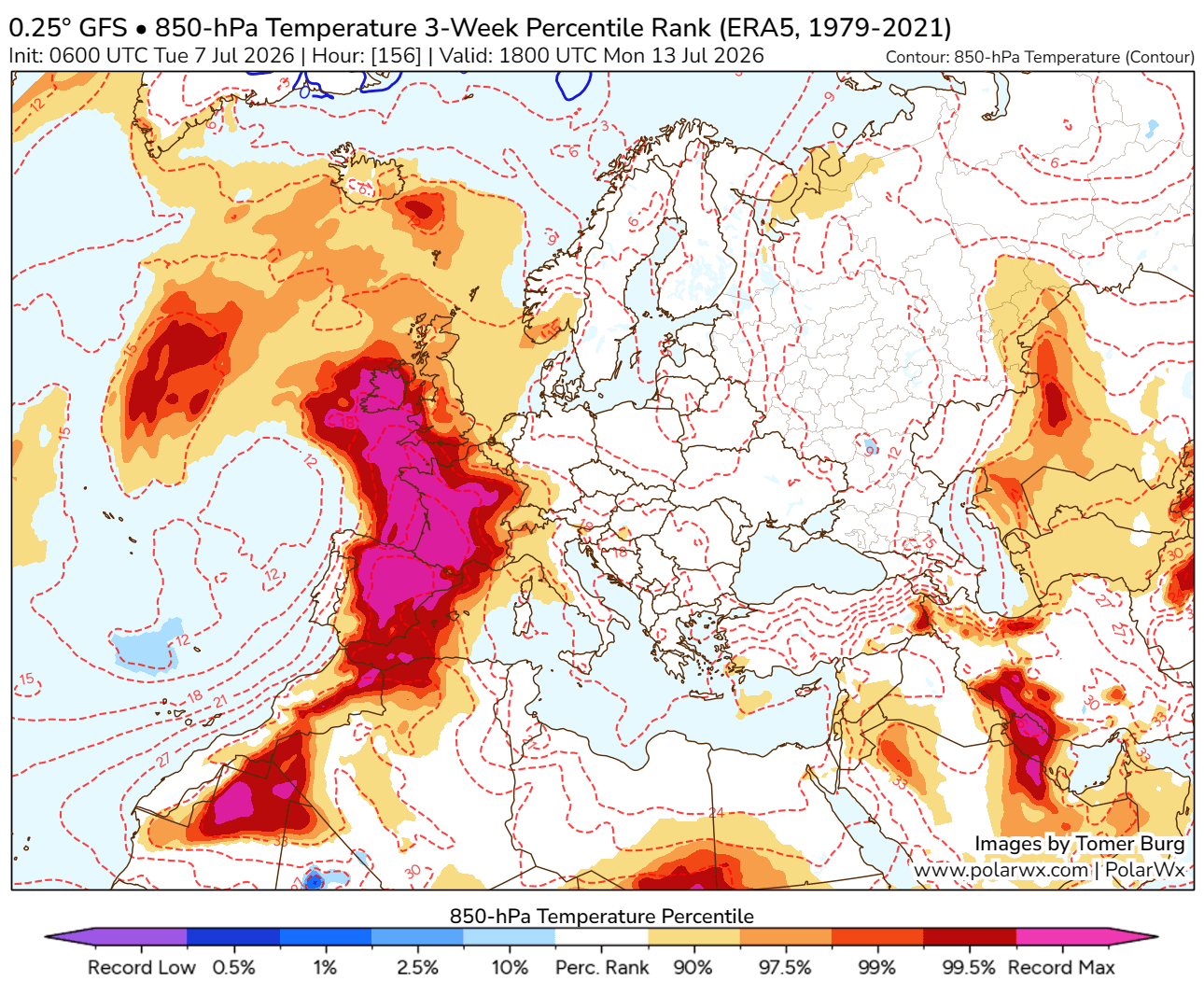
- Mid-July Projection: Forecast models from the European Centre for Medium-Range Weather Forecasts (ECMWF) and the Global Forecast System (GFS) indicate that this pattern will persist for at least another week, with the heatwave expanding its reach toward Germany, Italy, and the Balkan Peninsula.
Supporting Data: By the Numbers
The meteorological data supporting this forecast is stark. Across Southwestern Europe, daytime highs are consistently 10°C to 15°C above historical averages for the month of July.
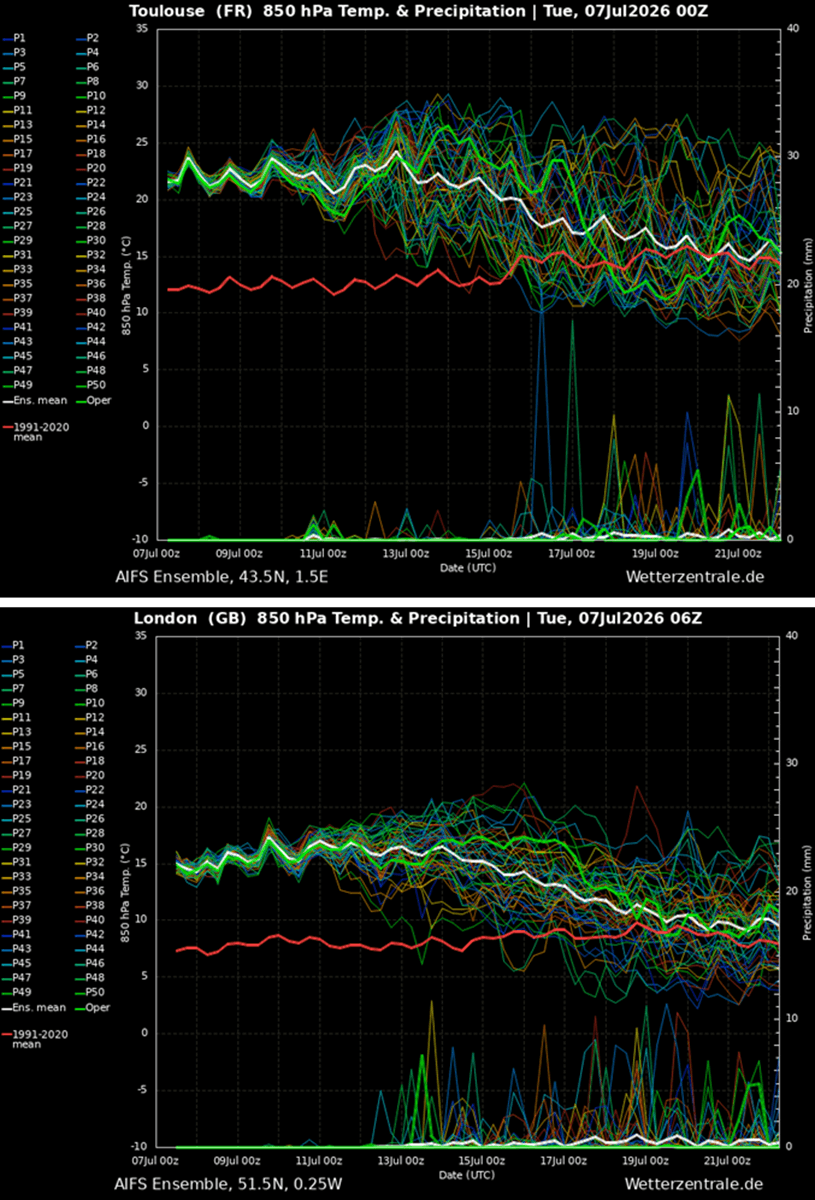
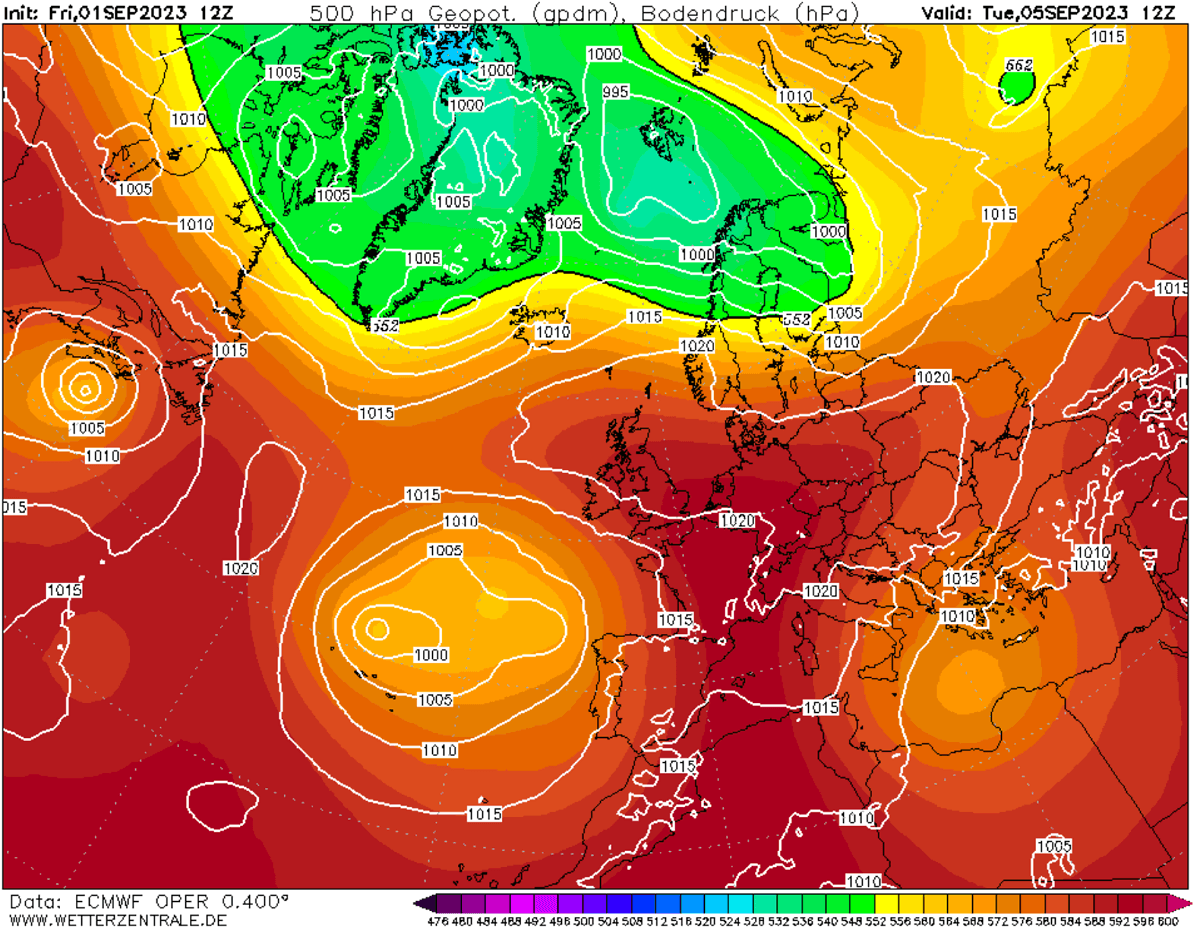
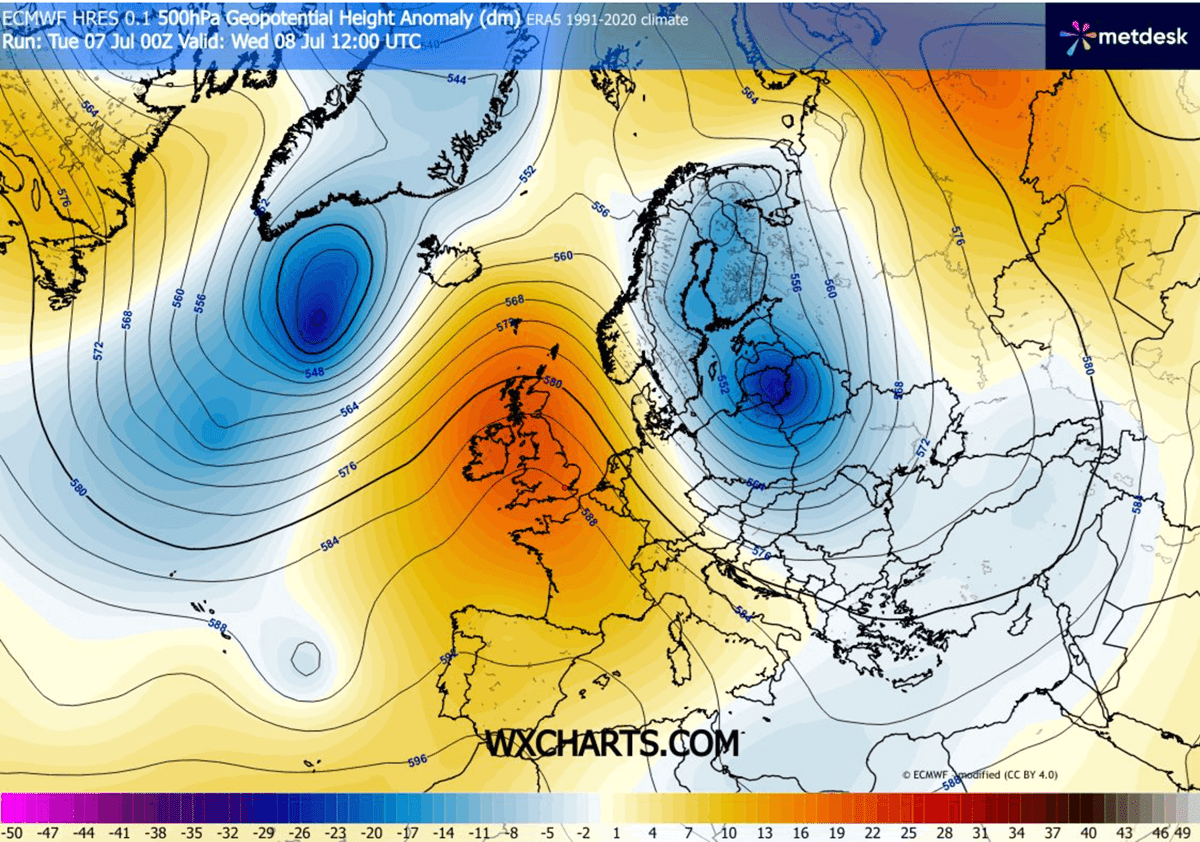
Geopotential height anomalies at the 500 mbar level are reaching near-record values, indicating an exceptionally thick, warm tropospheric column. Surface temperatures are not merely hitting 40°C; they are sustaining those levels for multi-day stretches. In France, some models suggest that peak afternoon temperatures could flirt with 45°C as the system reaches its maximum intensity this coming weekend.
While the British Isles are not expected to hit the 40°C mark, the forecast for the mid-30s in south-central England and Wales represents a significant departure from seasonal norms, causing widespread alarm for public health officials and transit authorities.
Socio-Economic and Health Implications
The "Heat Dome" is not merely a meteorological curiosity; it is a public health emergency. The lack of nighttime cooling is particularly dangerous for vulnerable demographics, including the elderly, children, and those with pre-existing cardiovascular or respiratory conditions.
The Human Cost
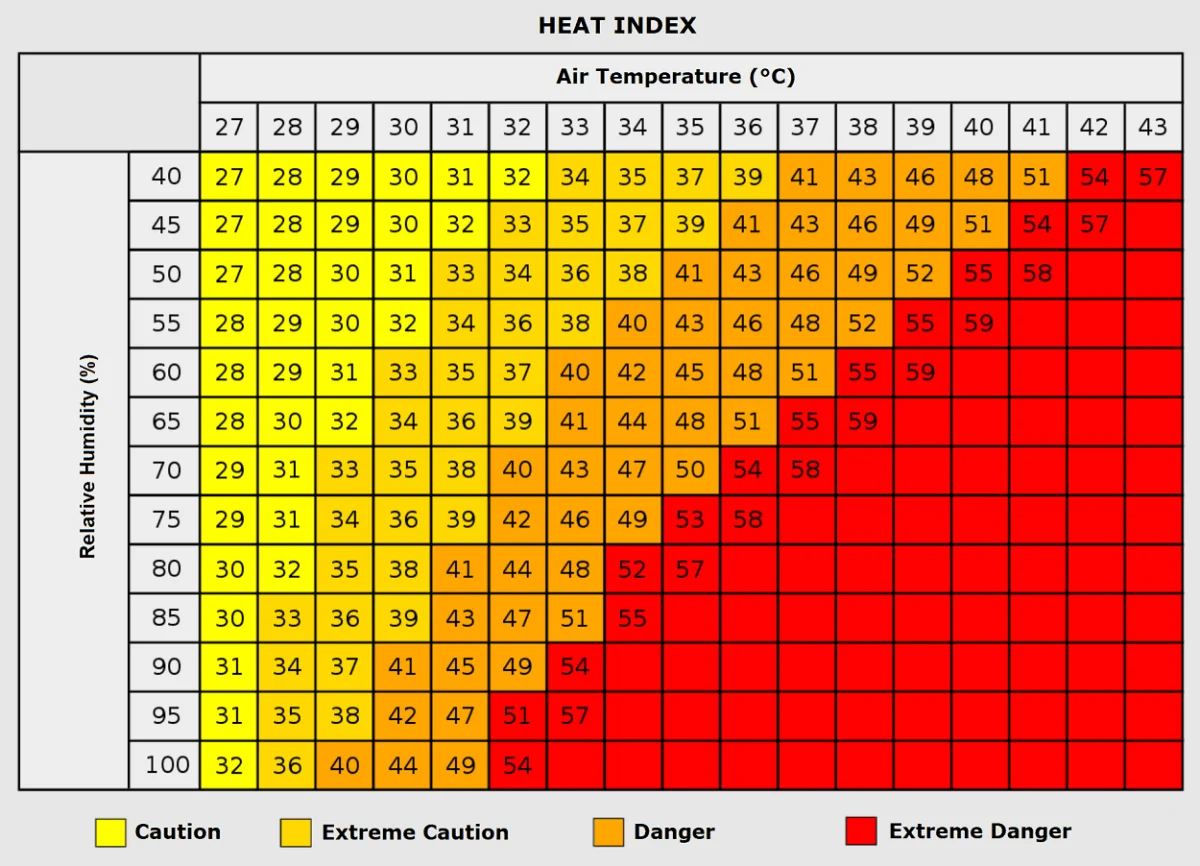
Heat exhaustion, characterized by dehydration and dizziness, is quickly becoming a widespread concern. If left unmanaged, these conditions can escalate into heat stroke—a life-threatening medical emergency. Outdoor workers, including farmers and construction crews, are at the highest risk. Furthermore, the structural design of many European cities—characterized by concrete, asphalt, and, in some cases, older materials that retain heat—acts as an "urban heat island," amplifying the ambient temperature and making indoor environments potentially as dangerous as the outdoors.
Environmental and Agricultural Impact
The lack of precipitation, combined with the rapid evaporation rates driven by the heat, has pushed soil moisture levels into a critical deficit. This is a "compound event": the heat kills crops and dries out vegetation, which in turn fuels the wildfire risk vector.
Large-scale, destructive wildfires are already reported in Portugal, Spain, and southern France. Firefighters are battling these blazes under conditions of extremely low relative humidity, which renders traditional suppression tactics less effective. The economic toll on agriculture is expected to be severe, as drought-stressed crops struggle to survive the mid-summer peak.
Infrastructure and Energy Demands
The prolonged nature of this heatwave places immense stress on Europe’s energy grid. As households and businesses turn to air conditioning to cope with the extreme temperatures, peak energy demand is soaring. In many regions, the aging infrastructure is being tested to its limits, raising concerns about potential rolling blackouts or grid failures.
Transportation infrastructure is also under threat. Extreme heat causes metal rail lines to expand and buckle, while road surfaces can soften, leading to significant travel disruptions. Authorities in France and the UK have already issued "Red" and "Amber" warnings, advising citizens to restrict travel and stay indoors during the peak hours of 11:00 AM to 6:00 PM.
Official Responses and Future Outlook
Government agencies across the continent have activated emergency heat-health protocols. These include the establishment of "cool centers" in major cities, increased staffing for emergency medical services, and public awareness campaigns urging residents to stay hydrated and check on elderly neighbors.
Meteorologists emphasize that while the ridge is currently strongest over the West, the "warm plume" originating from Northwest Africa is dynamic. As the ridge shifts slightly, the Balkans and Italy should prepare for their own surge in temperatures next week.
"The heat dome is not just an event; it is a structural change in our weather pattern," notes one climatologist monitoring the event. "We are looking at a sustained period where the normal atmospheric ventilation of the continent is completely absent."
As of now, there is no immediate "breaking" of the pattern in sight. The medium-range guidance suggests that the stagnant high-pressure system will maintain its grip through mid-July. For a continent already reeling from a record-breaking May and June, this July represents a harrowing extension of a summer that will likely be remembered for its record-shattering statistics and its profound impact on European life.
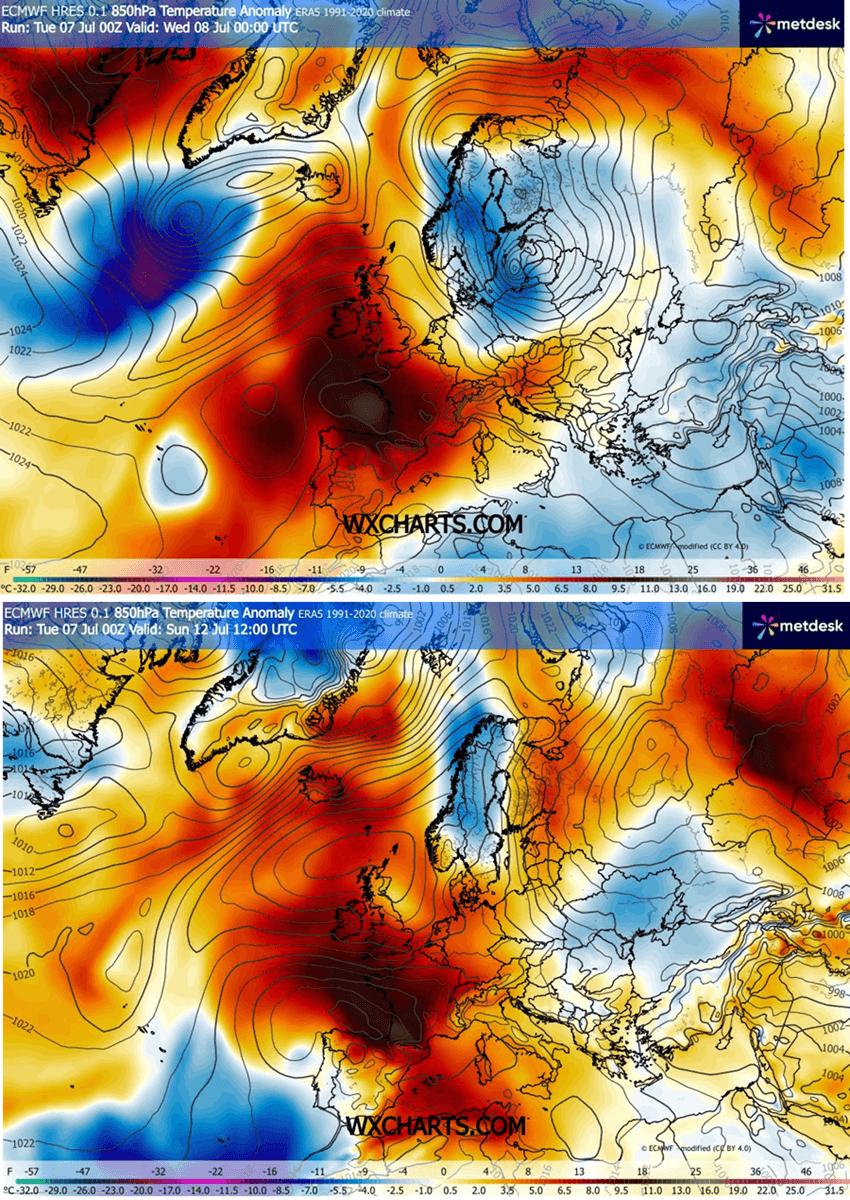
The scientific community continues to monitor the 500 mbar geopotential heights and the 850 mbar temperature anomalies, which serve as the "heartbeat" of this heat dome. As the situation evolves, residents are encouraged to monitor local weather authorities and adhere strictly to heat-safety guidelines. With the soil already parched and the atmosphere effectively locked, the coming days will prove to be a significant test of European resilience against the realities of a warming climate.