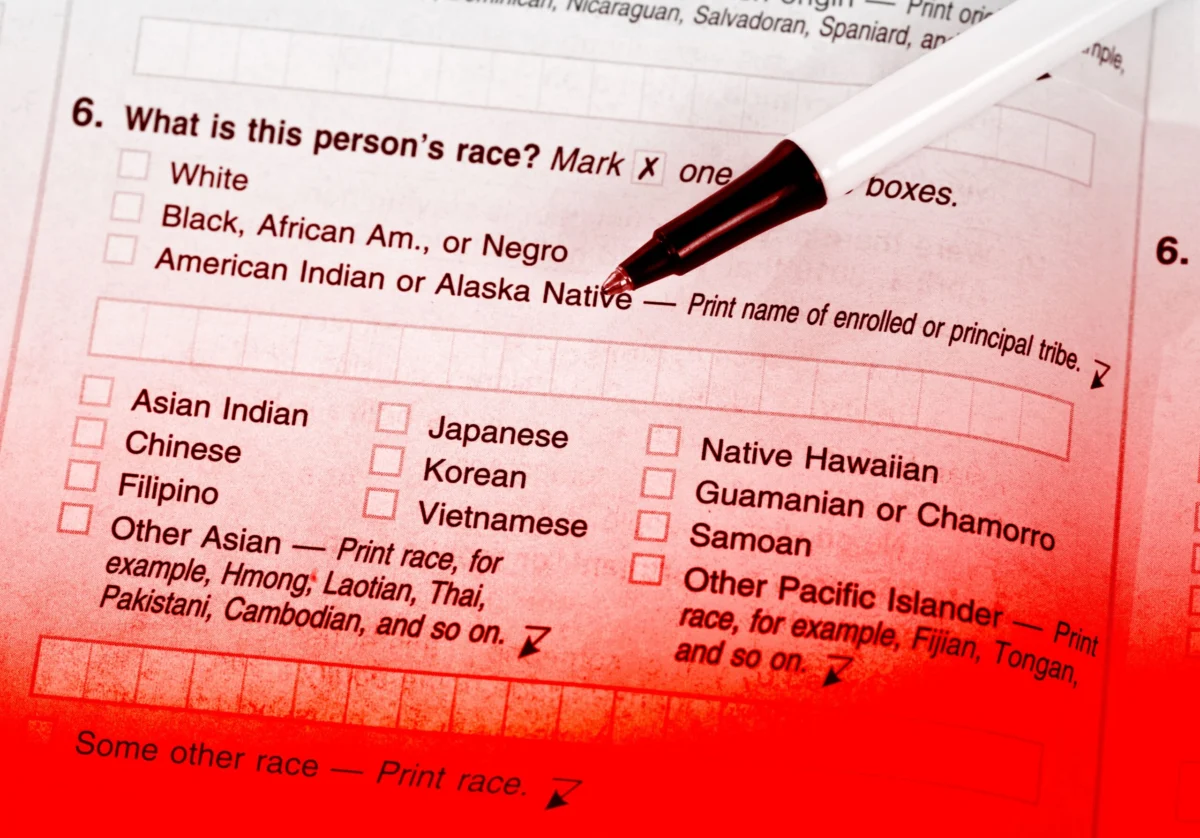
The U.S. Department of Commerce is currently circulating a controversial proposed rule that would fundamentally reshape the decennial census, the most critical statistical instrument in American democracy. According to internal documents viewed by WIRED, the proposal seeks to eliminate the collection of demographic data regarding racial minorities and LGBTQ+ individuals, while simultaneously barring undocumented immigrants from being counted in the 2030 census apportionment.
This policy pivot, if enacted, would represent the most significant alteration to the census in modern history, triggering intense scrutiny from civil rights advocates, data scientists, and political analysts who warn that the move could erode the foundations of federal funding allocation and political representation.
The Proposed Shift: A New Definition of "Inhabitant"
The core of the proposed rule rests on a restrictive interpretation of the constitutional mandate to count the population. The memo currently under review across government agencies argues that the census should eliminate questions regarding race and sexual orientation to “protect from any distortions created from the inclusion of personal questions.”
More provocatively, the document explicitly challenges the long-standing precedent of counting every person residing within the United States. It states: “Illegal aliens (among others) should not be included in the apportionment count, they are not true inhabitants, members of the body politics, or persons with ‘usual residence’ in the United States.”
To operationalize this, the administration would likely be forced to reintroduce a citizenship question—a move that failed during the first Trump administration and faced significant legal obstacles at the Supreme Court. By redefining who constitutes a "true inhabitant," the proposal aims to exclude millions from the data used to draw congressional districts and distribute federal resources.
Chronology of the Census Conflict
The effort to alter the census is not a new development, but rather the latest chapter in a long-running campaign by conservative lawmakers to influence how the American populace is counted.
- 2018–2019: The Trump administration attempted to include a citizenship question on the 2020 census. The effort culminated in the Supreme Court case Department of Commerce v. New York. In a 5-4 ruling, the Court blocked the inclusion of the question, with Chief Justice John Roberts writing that the government’s stated justification for the addition was “contrived.” Crucially, the Court did not rule the question inherently unconstitutional, leaving the door ajar for future attempts.
- 2020–2024: Conservative criticism shifted toward "differential privacy," a statistical method used by the Census Bureau to protect the anonymity of individual respondents. Critics argued that the process—designed to prevent the reidentification of individuals in an era of massive data aggregation—introduced unacceptable levels of inaccuracy into the final counts.
- August 2025: Representative August Pfluger formally introduced the "COUNT Act," a legislative effort aimed at mandating a citizenship question on future census iterations.
- October 2025: Senator Jim Banks of Indiana escalated the political pressure by sending a letter to Commerce Secretary Howard Lutnick. Banks argued, “There is a credible argument that the framers of the Constitution designed the Census to cover lawful inhabitants and not those who are present illegally.”
- Present Day: The Department of Commerce is now circulating the draft rule that would institutionalize these preferences, setting the stage for a massive legal and legislative showdown ahead of the 2030 count.
The Strategic Importance of Demographic Data
The potential elimination of racial and sexual orientation data is viewed by experts as a calculated move to dismantle the infrastructure used to enforce civil rights protections. Danah Boyd, a professor at Cornell University and a prominent researcher on census methodology, argues that the move is inextricably linked to the broader erosion of the Voting Rights Act.
“This is about the Voting Rights Act,” Boyd says. “If we don’t know certain things, we can’t challenge them politically. If we don’t know that certain peoples live in a particular geography, we can’t say, ‘Oh my gosh, here’s some massive inequality.’”
By removing these categories, the administration would effectively blind federal agencies and civil rights organizations to disparities in voting power, health outcomes, and economic access. Without granular data on racial demographics, demonstrating that a congressional district has been gerrymandered to disenfranchise minority communities becomes significantly more difficult, if not impossible.
Official Responses and Administrative Silence
The Department of Commerce has maintained a policy of silence regarding the internal documents, having declined multiple requests for comment. This lack of transparency has fueled speculation that the administration is fast-tracking the rule to bypass the standard public comment periods often associated with major regulatory shifts.
While the Department remains silent, proponents of the change—such as Senator Banks and Representative Pfluger—frame the move as a return to "originalist" constitutional principles. They argue that the census should reflect only the "body politic" of citizens and legal residents. Conversely, critics within the government fear the move is a direct attempt to consolidate political power by shifting resources and representation away from diverse, urban, and immigrant-heavy jurisdictions.
Deep Implications: Funding and Representation
The implications of these changes extend far beyond political map-making. The census is the primary engine for the distribution of hundreds of billions of dollars in federal funding, ranging from Medicaid and SNAP benefits to infrastructure grants and tribal support.
The Impact on Federal Funding
An anonymous employee at the Department of Health and Human Services (HHS) expressed deep concern over the proposal’s ripple effects. “Many HHS programs use Census data to appropriate funding,” the employee stated. “Removing undocumented individuals from the census will cause localities with high numbers of those populations to lose critical federal funding.”
The loss of this funding would not only penalize undocumented populations but would also cause collateral damage to the public infrastructure of the cities and counties where they reside—impacting hospitals, school districts, and social services that serve all residents.
Threats to Tribal Sovereignty
The elimination of racial categories also poses a direct threat to Indigenous populations. Many federal programs are specifically earmarked for Tribal entities based on census counts of Native Americans and Alaska Natives. The removal of these specific identifiers could lead to the unintended, or perhaps intended, consequence of making these groups "invisible" to federal grant-making algorithms, potentially cutting off vital resources for tribal nations.
A Future Under Uncertainty
As the 2030 census approaches, the window for finalizing survey questions is rapidly closing. Historically, census questions are locked in two to three years in advance to allow for logistical testing and public outreach. By pushing these changes now, the administration is effectively trying to force a new definition of the American population into the bedrock of the country’s legal framework.
Legal scholars expect that if the rule is finalized, it will face immediate challenges in federal court. Plaintiffs will likely argue that the mandate of the census is to count all "persons" in the United States—a requirement grounded in the 14th Amendment—and that the administration’s narrow interpretation of "inhabitant" is an unconstitutional overreach.
The battle over the 2030 census is not merely a debate over survey methodology or data privacy. It is a fundamental contest over who constitutes the American public and what rights are afforded to those who live, work, and contribute to the nation’s economy. As the Department of Commerce proceeds with its internal deliberations, the scientific community, advocacy groups, and the public are bracing for a transformative conflict that will define the American demographic landscape for decades to come.
If the data collected by the census is narrowed to suit a specific political vision, the ability of the government to understand, serve, and protect its diverse population will be permanently altered, potentially leaving the country with a skewed, incomplete, and deeply contested picture of itself.