For decades, the photography industry has been governed by an unwritten law: you can have a tripod that is portable, or you can have one that is stable—rarely both. Most photographers begin their journey with entry-level, budget-friendly legs, only to discover their limitations during a windy landscape shoot or while attempting a long-exposure shot with a heavy telephoto lens. Eventually, they graduate to professional-grade gear.
Peak Design, a brand that disrupted the market with its original Travel Tripod, is now aiming to bridge the gap between "travel-friendly" and "studio-grade" with the launch of the Pro Tripod series. Having spent several weeks putting the "Pro Tall" model through its paces—from train commutes to rugged coastal photography—it is time to assess whether this premium offering truly justifies its significant price point.
Main Facts: The Evolution of the Pro Series
The Peak Design Pro Tripod represents a distinct shift in the company’s engineering focus. While the original Travel Tripod redefined compact support, the Pro series is designed for those who refuse to compromise on rigidity.
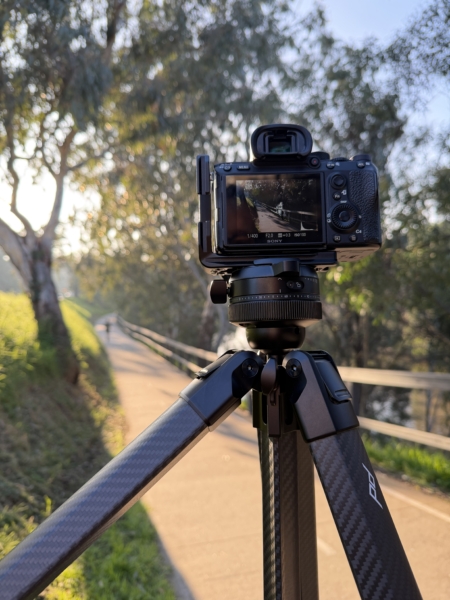
Available in three configurations—Pro, Pro Lite, and the Pro Tall—this lineup is intended to supplement, not replace, the original Travel Tripod. The Pro Tall, the model reviewed here, offers a maximum height of 197.4 cm, providing a substantial 30% increase in height compared to its predecessor. With 3K Weave Carbon Fiber legs, 6061-T6 CNC-machined aluminum components, and a robust 18.1 kg payload capacity, the tripod is positioned as a serious tool for landscape, wildlife, and hybrid videography professionals.
Chronology: From Concept to Rigorous Field Testing
The journey of this product began long before it reached the field. Peak Design first made waves in 2011 with the launch of the "Capture" clip. Over the years, the company developed a reputation for "obsessive" design, where every bolt and hinge is scrutinized for efficiency.
Following the initial announcement of the Pro series, I subjected the Pro Tall to a rigorous two-week testing period. This involved:

- Transit Testing: A three-hour journey via public transport to coastal locations to evaluate how the folded footprint translates to real-world travel.
- Dynamic Usage: Testing the tripod at both extreme low angles and maximum height to check for flex or vibration.
- Component Analysis: Evaluating the new Pro Ball Head, specifically its fluid panning capabilities, and the effectiveness of the updated Arca-compatible quick-release system.
Unlike many reviews written immediately upon unboxing, this assessment focuses on how the gear performs after the "new product" luster has worn off, ensuring that the build quality holds up under repeated stress.
Supporting Data and Technical Specifications
For the professional photographer, technical specs are more than just numbers—they are the constraints of their craft. The Pro Tall is engineered to handle heavy glass without the instability typically associated with "tall" tripod models.
| Feature | Specification |
|---|---|
| Max Height | 197.4 cm |
| Min Height | 17.3 cm |
| Folded Length | 58.2 cm |
| Weight | 2.04 kg |
| Load Capacity | 18.1 kg |
| Leg Material | 3K Weave Carbon Fiber |
| Leg Sections | 4-section with flip locks |
| Head Type | Integrated Pro Ball Head (360° Panning) |
| Warranty | Peak Design Lifetime Guarantee |
The decision to use flip locks rather than traditional twist locks is a deliberate engineering choice. Given the non-circular leg profile—which is essential for the tripod’s slim, packable shape—twist locks would be impractical. The flip locks provide visual confirmation of security, which is critical when supporting expensive camera bodies and telephoto lenses.

Implications of Height and Stability
One of the most persistent issues for tall photographers (such as myself, standing at 6’3”) is the "stoop." When using standard travel tripods, one is often forced to extend the center column to reach eye level, which significantly compromises stability.
The "Tall" designation in the Pro series is not merely a marketing label. By incorporating the extra length into the legs themselves rather than the center column, Peak Design has created a much more stable shooting platform. When the center column remains retracted, the tripod is at its most rigid. This allows for long-exposure photography in challenging wind conditions, a scenario where traditional travel tripods often fail.
Furthermore, the integration of the Pro Ball Head addresses common criticisms of the original Travel Tripod. The inclusion of 360° fluid panning with an independent lock is a boon for photographers, though it is important to note that full fluid pan-and-tilt functionality for serious cinema work requires the separate "Tilt Mod" accessory.

Official Perspective and User Experience
Peak Design has positioned this tripod as a "buy once" investment. At a price point of approximately AU$1,799, it is clearly not an impulse buy for a hobbyist, but rather a strategic acquisition for a working professional.
The Learning Curve
The Arca-compatible quick-release system has been significantly refined. The introduction of a secondary safety lock provides the "peace of mind" that many users felt was missing from previous iterations. During my testing, I found that once the workflow of engaging the safety toggle became second nature, the speed of setup was comparable to much faster, less secure systems.
Note for users: While the system is highly compatible with most Arca-Swiss plates, some specialized lens feet—such as those on certain Tamron telephoto lenses—may require the included Peak Design plate to engage the safety mechanism correctly.

Final Verdict: Is It Worth the Premium?
The Peak Design Pro Tall Tripod is a triumph of industrial design, effectively closing the gap between the compact portability of travel gear and the performance requirements of studio equipment.
Strengths:
- Unmatched Portability: Despite its size, it packs down into a remarkably slim profile.
- Exceptional Rigidity: The increased leg diameter and robust hub construction minimize vibration.
- Ergonomics: Flip locks are easy to operate, even in cold weather with gloves.
- Professional Height: It finally allows taller photographers to shoot at eye level without relying on a shaky center column.
Considerations:

- Price: It is a significant financial commitment.
- Video Requirements: For those requiring advanced video movements, the additional cost of the Tilt Mod should be factored into the total budget.
Conclusion:
If you are a photographer who has spent years "graduating" through cheap, unstable tripods, the Peak Design Pro Tall is likely the final support system you will need to purchase. It is a purpose-built tool that respects the user’s time, physical comfort, and, most importantly, the safety of their gear. For those working in landscape, wildlife, and hybrid environments, this tripod offers the perfect synthesis of modern engineering and traditional stability. As the old adage goes, "Buy well, buy once." In the case of the Pro Tall, that investment seems well-placed.