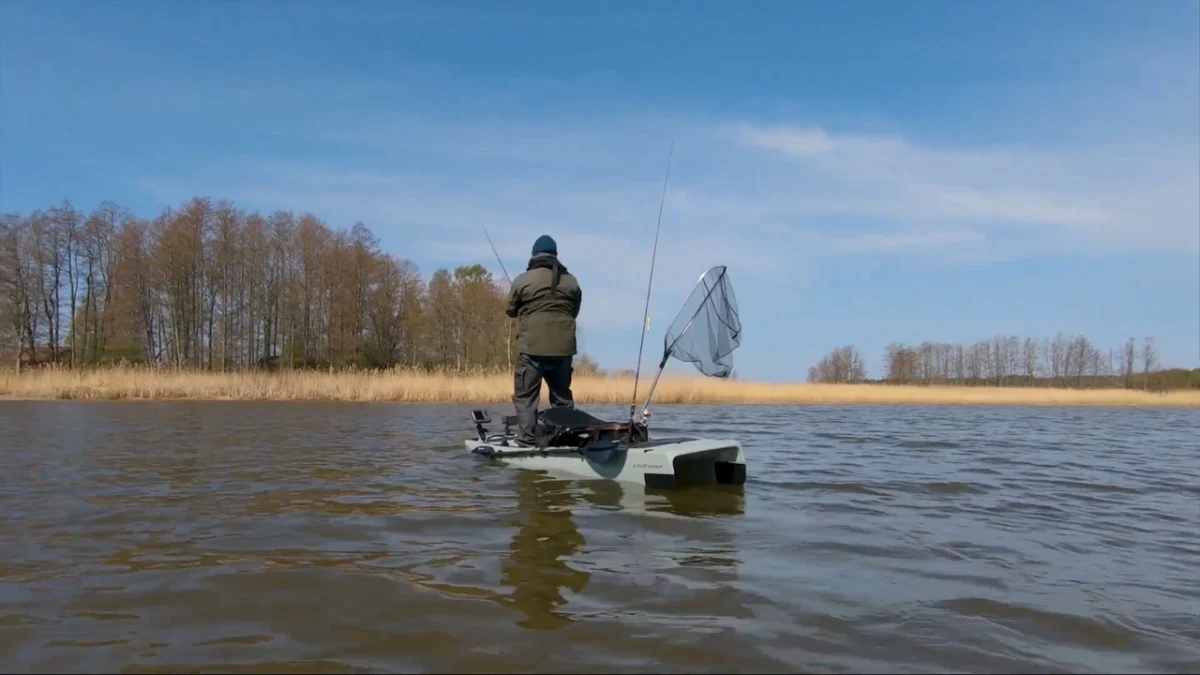
The integration of motorized propulsion into the world of kayak fishing has fundamentally shifted the sport from a test of physical endurance to a refined pursuit of tactical positioning. For many anglers, a motor is no longer a luxury—it is an essential tool for overcoming environmental variables. Whether it is battling a persistent headwind, fighting a stubborn current, or traversing miles of water to reach a secluded honey hole, a motor allows the angler to reserve their physical energy for the most critical aspect of the day: the catch.
However, the rapid growth of this niche market has created a "buyer beware" landscape. Not every kayak marketed as "motor-ready" offers the stability or structural integrity required to handle the torque and weight of an electric motor. As the industry matures, choosing the right vessel requires a deep dive into engineering, load capacity, and ergonomic design.

The Core Fundamentals of Motorized Kayaking
Understanding the "System" Approach
A common mistake among newcomers is treating the kayak and the motor as separate entities. In reality, a successful motorized setup must function as a cohesive system. When you add a motor, you are also adding a heavy battery, complex wiring, a mounting bracket, and, often, a suite of electronic fish finders.
The primary implication of this transition is load management. If a kayak is rated for 300 pounds, and the angler weighs 200, the addition of a 40-pound motor, a 30-pound lithium battery, and 50 pounds of gear leaves virtually no margin for safety or performance. Before committing to a purchase, anglers must calculate the "fully rigged weight" to ensure the hull remains balanced and responsive.
Chronology of the Motorized Shift
The evolution of the motorized kayak has occurred in three distinct phases over the last decade:
- The Retrofit Era (2010–2015): Anglers largely relied on DIY modifications, bolting trolling motors to the sterns of standard recreational kayaks. This often resulted in poor weight distribution and unstable steering.
- The Pedal-Drive Integration (2015–2020): Manufacturers began designing hulls specifically for pedal systems (like MirageDrives or prop drives), which provided a foundation for easier motor adaptation.
- The Factory-Ready Era (2020–Present): Today, we see purpose-built platforms like the Wilderness Systems ATAK 120, designed from the keel up to house transducers, battery boxes, and motor mounts in factory-integrated channels.
Top Fishing Trolling Motor Kayaks: Performance Profiles
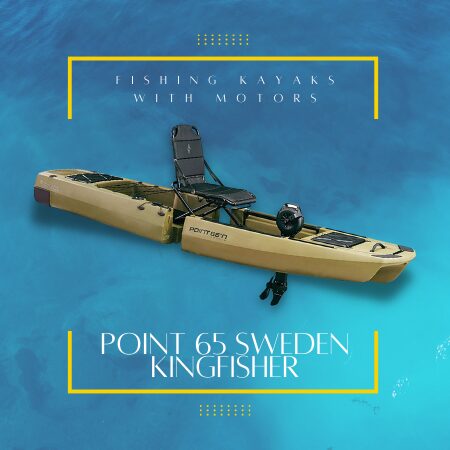
1. Point 65 Sweden Kingfisher: The Modular Solution
For the urban angler or those with limited storage, the Kingfisher is a marvel of engineering. Its modular, breakdown design allows it to be transported in the back of a standard sedan rather than requiring a dedicated roof rack or trailer.
- Design Philosophy: The Kingfisher utilizes a trimaran-style hull. By distributing buoyancy across three contact points, it provides high primary stability—essential for standing—without the massive surface drag of a traditional wide-beam barge.
- Performance Implication: Because it breaks into sections, it is lighter for the solo user to handle. However, the modularity introduces potential weak points; users must ensure that all connection points are tightened and inspected regularly, especially when using high-thrust motors that exert significant pressure on the hull.
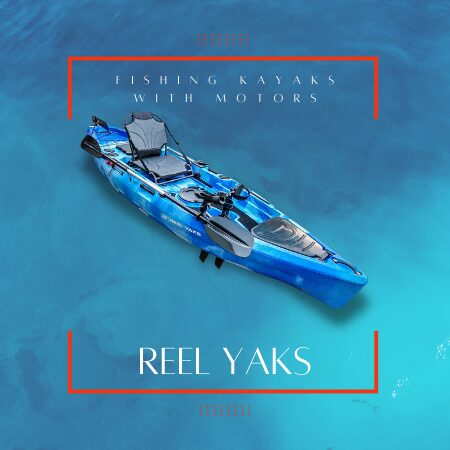
2. Reel Yaks Fishing Kayak: Stability in Compact Form
Reel Yaks caters to the angler who prioritizes a "hands-free" experience. Their designs focus on the W-shaped hull, which acts as a stabilizer in choppy, unpredictable waters.
- Ergonomics: The brand emphasizes a raised, frame-style seat. This is a critical consideration for motorized fishing, where the angler may sit in a stationary position for hours. A low-profile seat often leads to lower-back fatigue and restricted movement, whereas a raised seat provides a better vantage point for scanning weed lines and structure.
- Best Use Case: These models excel in lakes and slow-moving rivers where the primary objective is maneuvering around structure. They are not intended for heavy, offshore swells.
3. Wilderness Systems ATAK 120: The Professional Platform
The "Advanced Tactical Angling Kayak" (ATAK) 120 is arguably the gold standard for serious hobbyists. It is a purpose-built vessel designed to accommodate the full weight of a high-end setup.
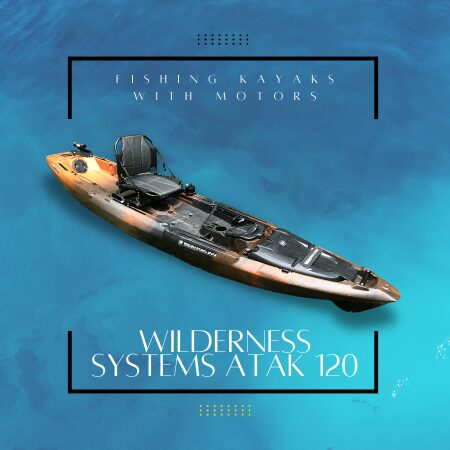
- Rigging Capability: Unlike lighter, budget-friendly options, the ATAK 120 features the "Flex Pod" system, which allows for clean, integrated mounting of fish-finder transducers and motor components. This eliminates the "spaghetti wiring" issue that plagues many DIY rigs.
- Structural Integrity: With an 86-pound base weight and a 400-pound capacity, this boat is built to handle the torque of larger electric motors without losing its tracking ability.
Supporting Data: The Physics of the Water
To understand the implications of adding a motor, one must consider the Drag-to-Power Ratio. As a kayak’s weight increases, the speed-to-power curve becomes steeper. According to recent industry testing, the difference between an 80lb setup and a 120lb setup can result in a 15–20% decrease in battery efficiency.
| Feature | Importance (1-10) | Impact on Performance |
|---|---|---|
| Battery Weight | 9 | Affects center of gravity and trim. |
| Hull Width | 7 | Affects stability vs. drag ratio. |
| Mounting Point | 10 | Directly impacts steering response and safety. |
| Accessory Rails | 6 | Critical for organization and cable management. |
Official Perspectives and Safety Implications
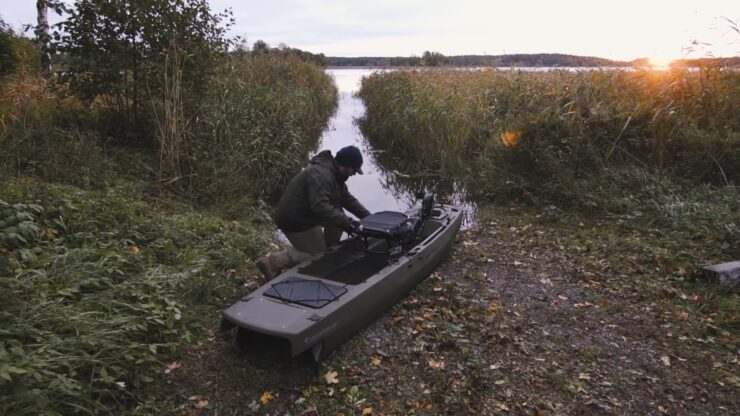
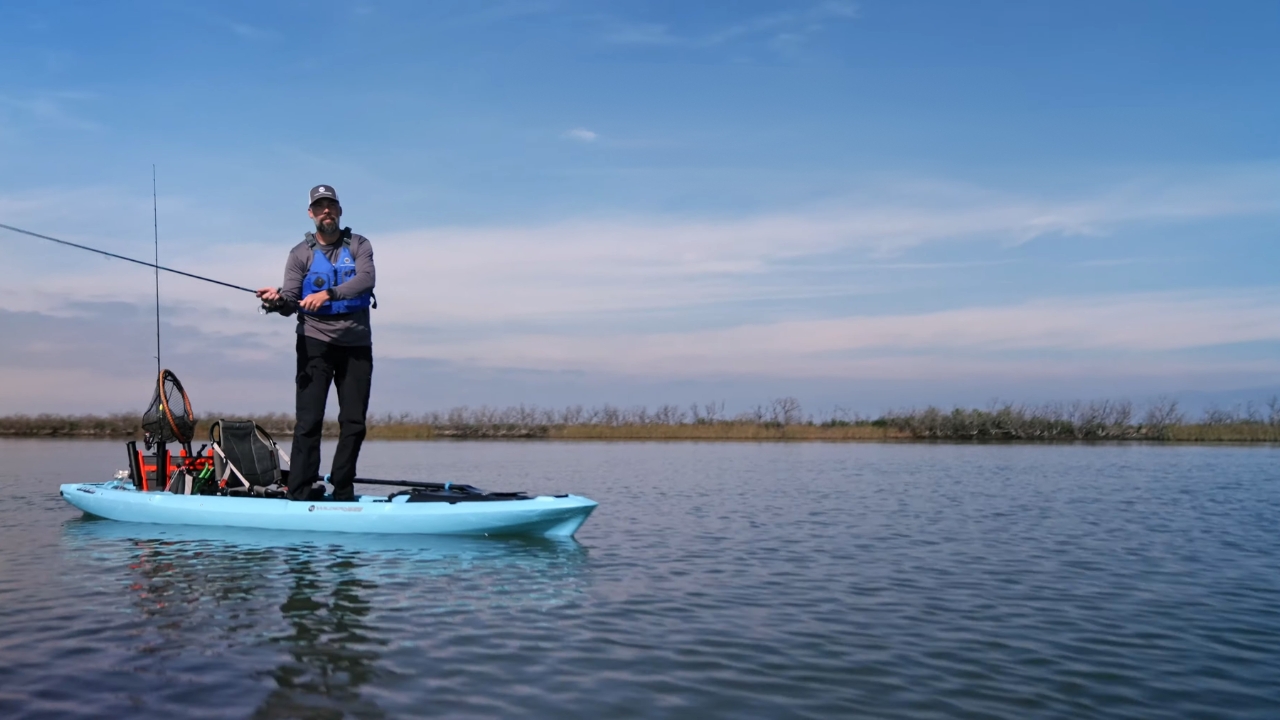
Manufacturers frequently issue warnings regarding the transition from paddle-powered to motor-powered vessels. The primary concern is Center of Gravity (CoG). When an angler stands in a kayak, the CoG rises; when an electric motor is mounted to the stern, the center of mass shifts backward.
Official Safety Guidelines:
- Battery Management: Always store batteries in a dry, sealed, and strapped-down battery box. A loose battery in a capsize event can become a dangerous projectile or a source of electrical short-circuiting.
- Legal Compliance: Many state wildlife agencies now classify any kayak with a motor (even an electric trolling motor) as a "motorized vessel." This may require formal registration, the display of hull identification numbers (HIN), and the inclusion of specific safety equipment, such as a whistle and a PFD (Personal Flotation Device), regardless of the water body type.
The Practicalities of Modern Angling
Saltwater vs. Freshwater: A Corrosion Reality
A critical implication often overlooked by beginners is the impact of salinity. Saltwater environments act as a catalyst for oxidation. If an angler chooses to use a trolling motor designed for freshwater in a saltwater bay, the internal seals and circuit boards will fail prematurely. Investing in "saltwater-grade" electronics and motors is not a suggestion—it is a financial necessity.
The Role of the Kayak Cart
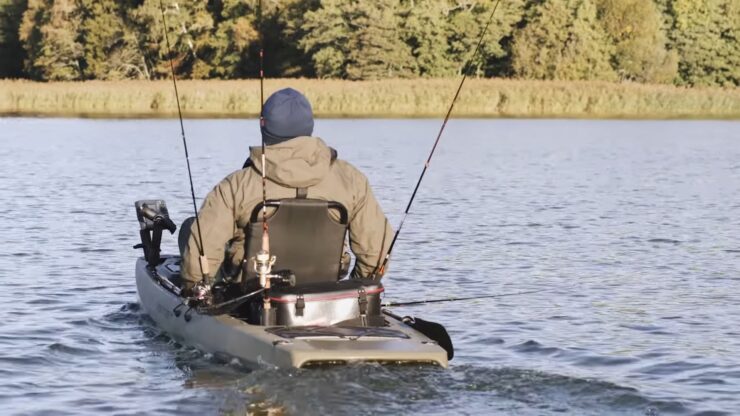
No matter how advanced the motor system is, you still need to launch the boat. A high-quality, puncture-proof cart is the most important accessory for a motorized kayak. Because these rigs often weigh upwards of 120 pounds when fully loaded, attempting to drag them across sand or rocks will inevitably result in hull abrasion, compromising the integrity of the plastic over time.
Conclusion: Balancing Performance and Utility
The journey toward a motorized fishing kayak should be treated with the same analytical rigor as buying a boat. The Point 65 Sweden Kingfisher offers the ultimate in modular convenience; the Reel Yaks series provides a balanced, stable platform for local lakes; and the Wilderness Systems ATAK 120 stands as the premier choice for those who view kayak fishing as a high-stakes, technical pursuit.
Final Advice for the Prospective Buyer:
- Start with the Water: If you fish deep, windy lakes, prioritize hull length and tracking. If you fish small, overgrown creeks, prioritize maneuverability and weight.
- The "Dry Test": Before you purchase, simulate the full setup in your garage. Place your battery, your tackle, your rods, and your motor. If the kayak feels cramped or the battery is not securely placed, reconsider the layout.
- Think Long-Term: A motorized kayak is a long-term investment in your time. A system that is difficult to launch will eventually lead to the kayak staying in the garage. A system that is easy to manage will get you on the water more often.
Ultimately, the goal of a motor is to facilitate better fishing, not to create more work. By selecting a hull that supports your specific style of fishing and properly integrating your power and accessory systems, you transform your kayak from a simple plastic boat into a precision fishing machine. Embrace the shift, respect the physics of your setup, and let the motor handle the distance so you can focus on the cast.