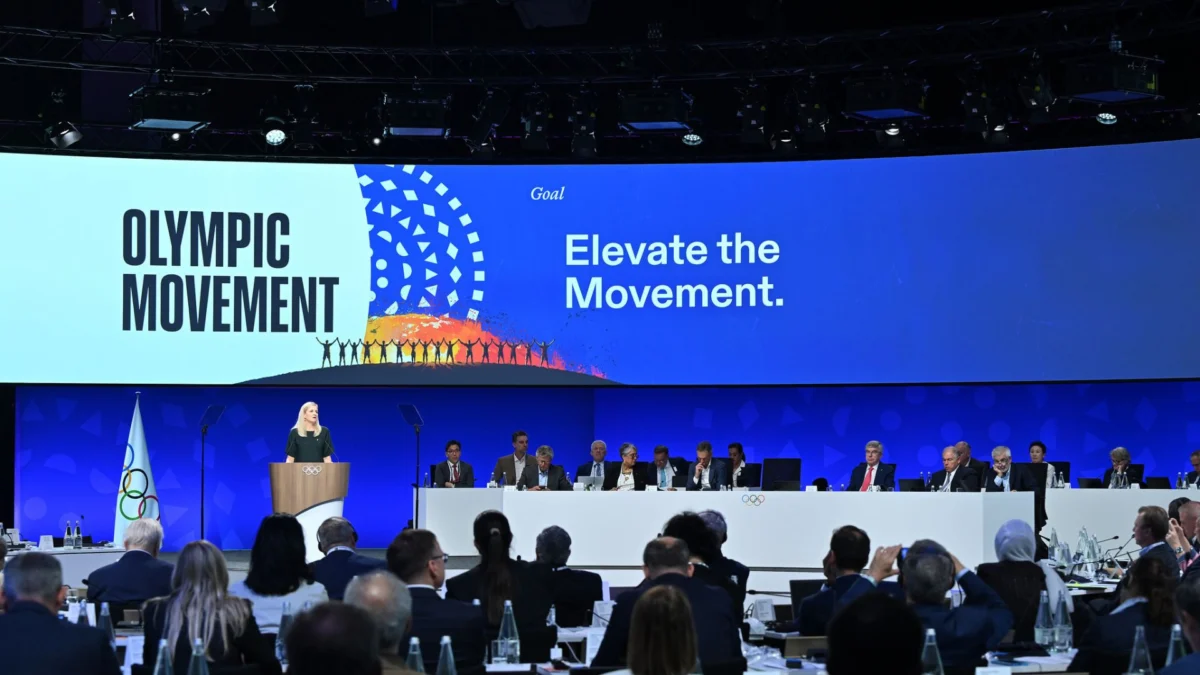
LAUSANNE, Switzerland – The Olympic Movement stands at a pivotal crossroads. On June 24, 2026, the International Olympic Committee (IOC) convened its 146th Session in Lausanne, Switzerland, marking the formal introduction of "Fit for the Future" (F4F), a comprehensive strategic roadmap designed to navigate the challenges of a rapidly evolving global sporting landscape.
Under the leadership of IOC President Kirsty Coventry, the two-day summit—concluding on June 25—serves as the blueprint for the organization’s operational and philosophical trajectory through the next decade. While the session represents an internal governance milestone for the IOC, its ripple effects are being felt across the globe, including in Finland, where the national sporting community is closely monitoring the shifts in policy and funding.
The Core Mandate: What is "Fit for the Future"?
The "Fit for the Future" program is not merely a policy update; it is a fundamental re-evaluation of how the Olympic Movement interacts with athletes, host cities, and global fans. President Kirsty Coventry, addressing the assembly, emphasized that the movement must remain agile. "We are not just maintaining the legacy of the Games; we are actively constructing a future where sport remains the most relevant and powerful force for social cohesion globally," Coventry stated during her keynote address.
The F4F framework rests on three primary pillars:
- Athlete-Centric Empowerment: Directly increasing financial and support resources for Olympians.
- Structural Agility: Modernizing the Olympic program and the bidding processes for host cities.
- Governance Transparency: Opening the doors to more inclusive dialogue with National Olympic Committees (NOCs) and athlete representative groups.
A Chronology of the 146th IOC Session
The events in Lausanne unfolded with high-level deliberations aimed at securing long-term institutional stability.
- June 24, 2026 (Day One): The session opened with a plenary focused on the "Fit for the Future" strategy. President Coventry presented the overarching vision, followed by thematic panels involving international sports federation heads and athlete representatives. The primary focus was the "Athlete Support Initiative," a landmark proposal to bolster direct funding.
- June 24, 2026 (Evening): Deliberations shifted toward the modernization of the Olympic sports program. Discussions centered on balancing traditional Olympic disciplines with the rising demand for youth-centric sports, such as those that gained prominence in the Paris 2024 and Los Angeles 2028 cycles.
- June 25, 2026 (Day Two): The focus turned to implementation strategies. IOC members voted on specific budgetary allocations to support the F4F initiatives. A key point of contention and debate was the integration of sustainable technologies in hosting future games, particularly in the context of the 2030 French Alps Winter Games.
Supporting Data: The Financial Shift
One of the most concrete takeaways from the Lausanne meeting is the formalization of the Olympic Solidarity Athlete Support Package. The IOC has pledged that every athlete qualifying for the Olympic Games will receive a direct $10,000 USD grant.
This move is designed to address the "inequality gap" that has historically plagued smaller delegations. By providing a baseline of funding, the IOC aims to ensure that an athlete’s financial standing does not dictate their ability to compete at the highest level.
Global Distribution of Olympic Solidarity Funds (Estimated Impact)
- Direct Grants: $10,000 per qualified athlete.
- Focus Areas: Training facilities, coaching salaries, and medical support.
- Objective: To widen the talent pool and reduce the reliance on erratic national government funding in emerging sporting nations.
The View from Helsinki: Implications for the Finnish Olympic Committee
While the International Olympic Committee serves as the governing body, it operates through a tiered structure where National Olympic Committees (NOCs) are essential partners. The Finnish Olympic Committee (Suomen Olympiakomitea), while not a voting member of the IOC, plays a critical role in the dissemination of these policies at the national level.
Riku Tapio, CEO of the Finnish Olympic Committee, has been vocal about the importance of these proceedings. "The Finnish Olympic Committee has maintained a consistent message throughout the F4F consultation process," Tapio noted. "Our stance is clear: we demand transparency, inclusivity, and, above all, a seat at the table where the future of our sport is decided. Even without a formal vote, our dialogue with the IOC is robust."
Tapio’s Assessment: Opportunities and Concerns
According to Tapio, the Finnish perspective is one of "cautious optimism." He identifies three critical areas of interest for Finnish sports:
- Transparency in Decision-Making: Tapio praised the IOC for being willing to look at its own operations through a "critical lens." For Finland, the move toward a more open bidding and programming process is a welcome change.
- The Athlete Support Package: The $10,000 grant is viewed as a significant step forward. "This is a concrete development that directly impacts our athletes," says Tapio. "It provides a safety net that aligns perfectly with our own internal goals of supporting Finnish talent."
- Program Balance: The most significant concern remains the future of the sport program. Tapio pointed specifically to the uncertainty surrounding the 2030 French Alps Games. "We have not yet received specific news on the sport program for 2030. Our position remains that there must be a harmonious balance between traditional sports—which form the bedrock of the Olympic tradition—and new, innovative disciplines that engage younger generations."
The Role of Individuals: Sari Essayah
The connection between the IOC and Finland is facilitated by Finnish IOC member Sari Essayah. Her role is instrumental in ensuring that the voice of the Finnish sporting community reaches the highest echelons of the IOC. As a former Olympian, Essayah brings a practitioner’s perspective to the F4F strategy, often advocating for the welfare of the athlete in a system that is increasingly dominated by commercial and political interests.
Implications: The Road Ahead for the Olympic Movement
The "Fit for the Future" strategy represents a massive institutional pivot. The IOC is effectively transitioning from a passive regulator to an active, direct sponsor of individual athletes. This shift has several long-term implications:
1. Increased Accountability
By creating a transparent framework for the Olympic program, the IOC is under pressure to justify the inclusion or exclusion of sports. The days of opaque decision-making regarding which sports make the cut are ending, as the F4F requires a data-driven justification for every addition to the Olympic docket.
2. A Shift in Power Dynamics
By empowering individual athletes with direct funding, the IOC is subtly shifting power away from national federations that have traditionally held total control over athlete resources. This could lead to a more independent athlete class, one that is less beholden to the political whims of their home countries.
3. Sustainability and the "2030" Challenge
The F4F program will face its first major stress test with the 2030 French Alps Games. The global climate crisis has made traditional winter sports hosting nearly impossible in many regions. The IOC’s ability to implement "Fit for the Future" will depend on whether they can prove that the Olympics can remain relevant in a world of limited environmental resources.
Conclusion
The 146th IOC Session in Lausanne marks the beginning of a new chapter. Through "Fit for the Future," the Olympic Movement is attempting to reconcile its rich history with the demands of the 21st century. For stakeholders like the Finnish Olympic Committee, the message is one of engagement and expectation.
As Riku Tapio concluded, "We are pleased with the direction, but we remain vigilant. The Olympic movement is a global family, and for it to be truly ‘fit for the future,’ every member—from the largest nation to the smallest delegation—must be heard."
The coming months will be critical as the F4F roadmap moves from the halls of Lausanne to the training grounds of the world. The world of sport is watching, waiting to see if these ambitious reforms will translate into a stronger, more equitable Olympic stage for the athletes of tomorrow.