By Samuli Haapasalo
September 29, 2026
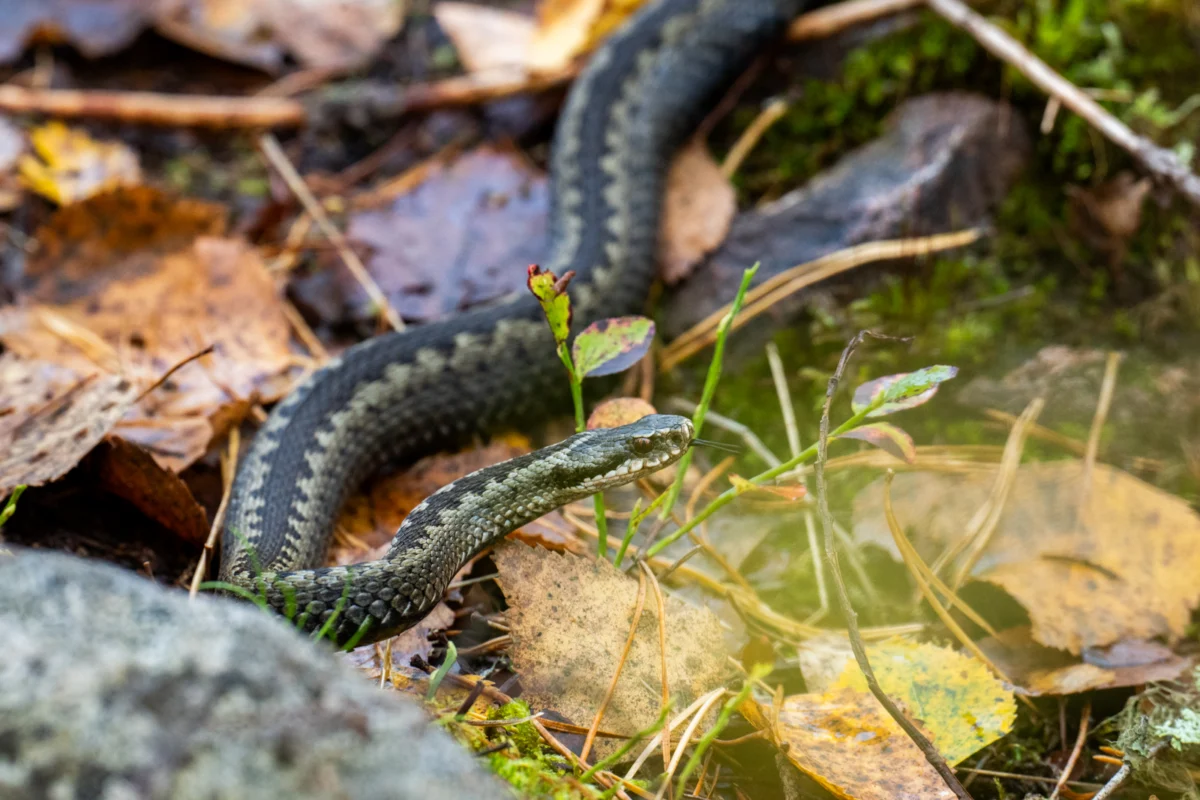
As the autumnal equinox approached on September 22, 2026, the Finnish wilderness began its slow, inevitable transition into the dormant silence of winter. Walking along a secluded forest trail in Sipoo, I found myself in a silent standoff with one of the most misunderstood and iconic residents of the Nordic landscape: the common European adder (Vipera berus).
This chance encounter serves as a poignant reminder of the fragile lifecycle of our ectothermic neighbors. While spring sightings of adders emerging from their winter burrows are common and widely celebrated, the "closing" of the season—the moment when these creatures vanish into the earth—is a more elusive phenomenon. As the nights grow longer and the mercury drops, the adder prepares for a battle for survival that lasts over half a year.
Main Facts: The Life of a Nordic Viper
The common European adder is the only venomous snake native to Finland. It is a creature of remarkable resilience, perfectly adapted to the harsh conditions of the subarctic. However, being cold-blooded, it is entirely dependent on external heat sources to maintain its metabolic functions.
When the sun’s warmth is no longer sufficient to maintain their body temperature, adders must seek refuge. In southern Finland, this period typically begins in late September. The strategy is simple but dangerous: find a location that remains frost-free throughout the winter. If the snake freezes, it dies; if it is too active, it burns through precious energy reserves that it cannot replenish until the spring.
These snakes are masters of community living during the winter months. A single, ideal hibernaculum—often located deep within the crevices of ancient shorelines or protected beneath deep, rocky fissures—can host hundreds of individuals. These locations are not exclusive to adders; they frequently share these subterranean shelters with other reptiles, such as grass snakes, and various amphibians.
Chronology: A September Encounter
On the eve of the equinox, the air in the Sipoo forest was crisp. The light, filtering through the thinning canopy, had that specific, amber quality of late September.
The Meeting
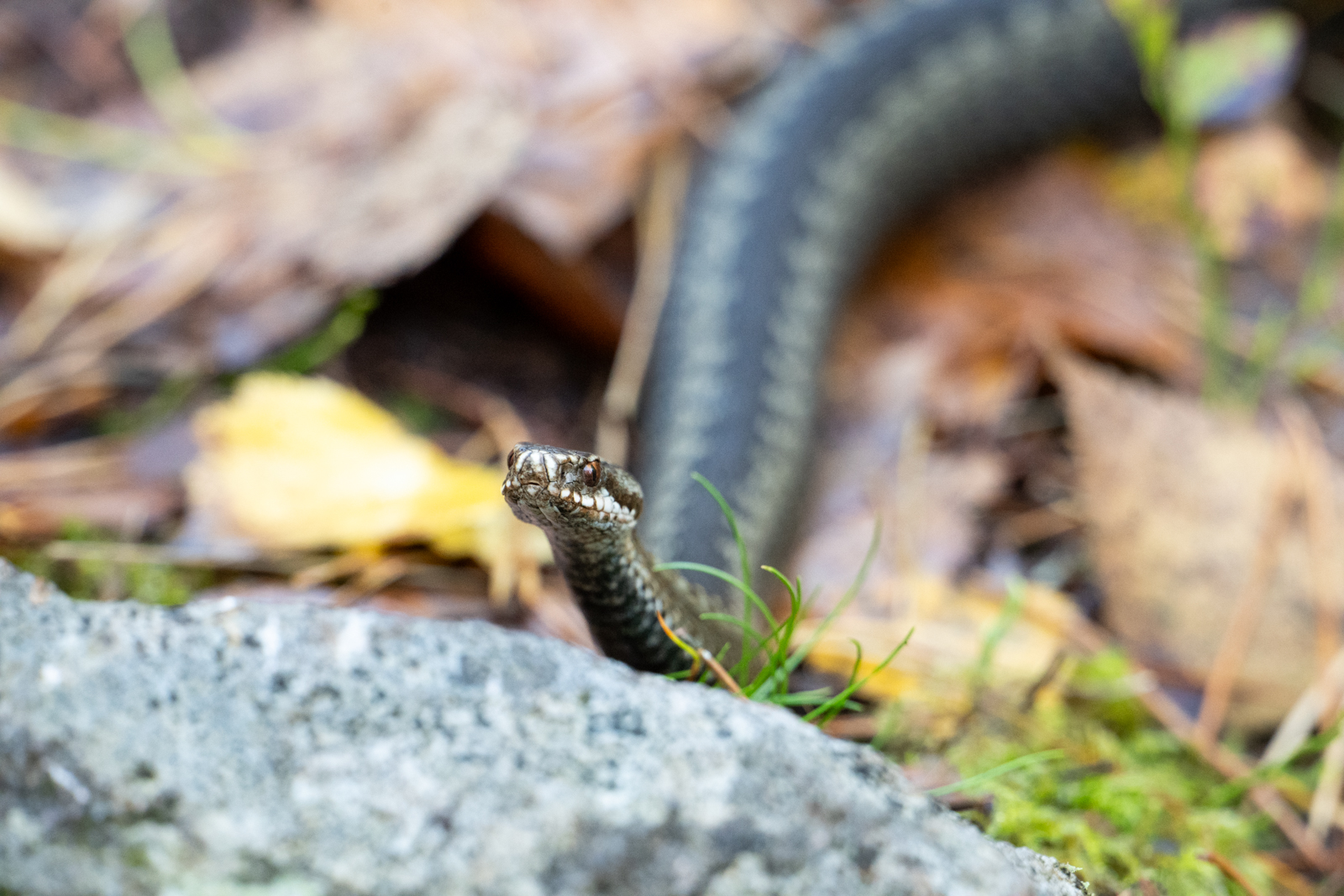
At approximately midday, I came upon the adder resting on the path. For a moment, the natural world seemed to freeze. The snake, a large and well-nourished male, had been basking in a rare patch of sunlight on the nearby rocky slope before moving onto the path.
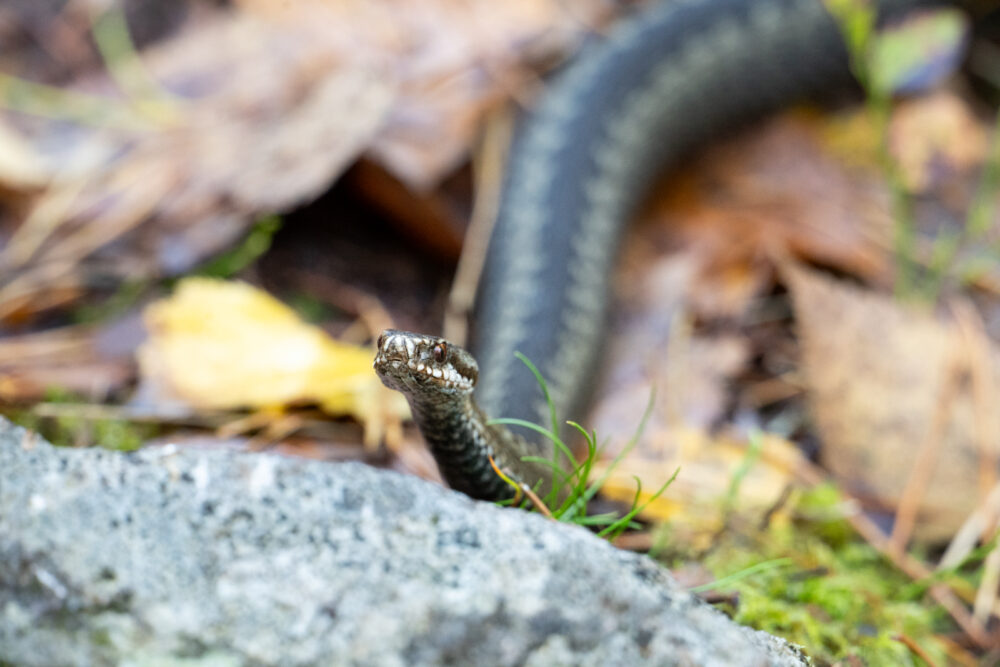
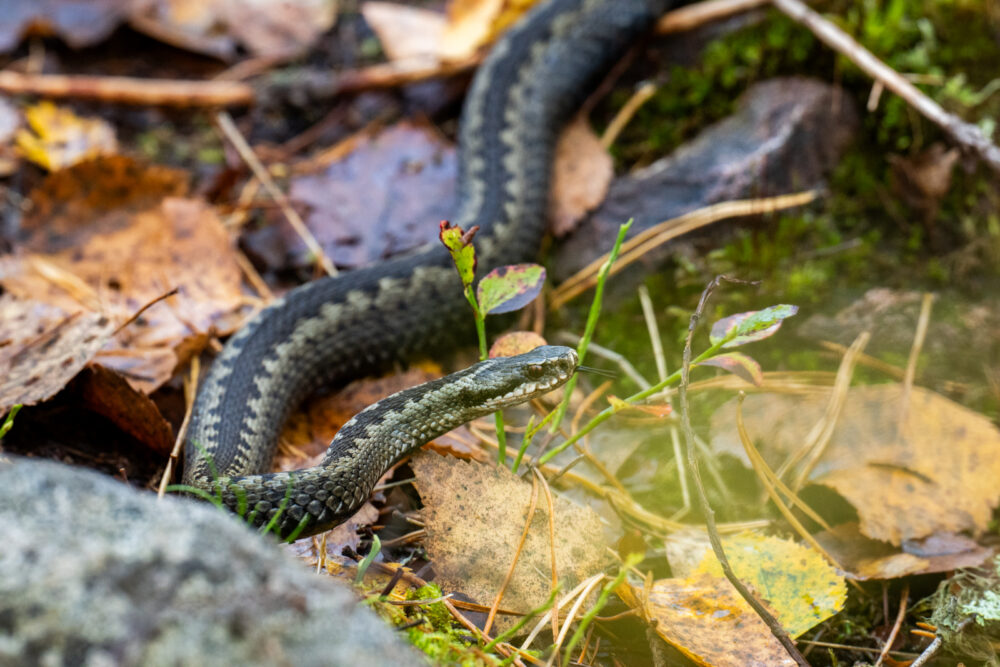
As we crossed paths, the snake demonstrated the classic behavior of its kind: caution mixed with tactical observation. It raised its head, leaning against a stone, and flicked its bifurcated tongue into the air—a sophisticated sensory probe analyzing the chemistry of the environment. I remained motionless, taking a few steps backward to adjust my telephoto lens.
The Retreat
The adder was notably sluggish compared to its mid-summer counterparts. Its movements were deliberate and cautious. It was not acting with aggression, but with the measured urgency of an animal transitioning into a long-term state of conservation. After observing me for several minutes, it slowly retreated into the dense undergrowth, likely returning to the comfort of its chosen winter den.
Supporting Data: Understanding Reptilian Ecology
To better understand the biological imperative behind this encounter, I turned to the expert resources provided by Niina and Joonas Gustafsson. Their project, Sammakkolampi, has been a cornerstone of Finnish herpetology since 1999.
The Science of Hibernation
According to the Gustafssons’ research, the metabolic state of the adder during winter is a feat of evolutionary biology. By lowering their heart rate and ceasing digestion, these snakes enter a state of true hibernation. The selection of the hibernaculum is the most critical decision a snake makes in its lifetime. If the site is too shallow, the snake risks freezing; if it is too humid, it may succumb to fungal infections.
The importance of preserving these sites cannot be overstated. As urban development encroaches on natural forests, the protection of rocky habitats and ancient moraine formations becomes vital for the survival of local viper populations. These sites are not just "holes in the ground"; they are life-support systems for the entire local ecosystem of reptiles and amphibians.
For those interested in the broader scope of Finnish biodiversity, I highly recommend visiting Sammakkolampi.fi. The site offers a comprehensive look at all of Finland’s herpetofauna, from common toads to the elusive smooth snake.
Implications for Biodiversity and Conservation
The sighting in Sipoo is more than just a photographic opportunity; it is a pulse check on the health of our local environment. The adder is an apex predator in its niche, playing a crucial role in controlling rodent populations. Its presence signifies a balanced, functioning ecosystem.
Climate Change and Hibernation
There is growing concern among biologists regarding how changing climate patterns in the Nordic region might affect hibernating species. Mild, wet winters can be more fatal than cold, dry ones for snakes. If the ground does not remain consistently frozen, or if winter thaws occur, snakes may wake up prematurely, wasting energy and starving before the spring food sources arrive.
The Need for Awareness
Public perception of the adder is often clouded by fear. Yet, the adder is a shy creature that avoids human contact whenever possible. The encounter on the path in Sipoo was only possible because I afforded the animal the respect of distance. Education is the best tool for conservation. When the public understands the lifecycle of the viper—specifically its vulnerability during the winter—we move from a culture of fear to one of coexistence.
Conclusion: A Silent Farewell
As I walked away from that patch of forest in Sipoo, I felt a deep sense of reverence for the small, cold-blooded traveler I had just encountered. It was preparing for a six-month sleep, a period of total darkness and stillness.
The cyclical nature of the Finnish year is what makes our wilderness so profound. From the frantic activity of spring to the golden abundance of summer, and finally to the quiet, protective embrace of the winter earth, the adder is a testament to the endurance of life in the north.
As we head into the colder months, I invite readers to reflect on the hidden lives beneath their feet. While we may retreat into our heated homes, the forest floor remains a bustling, if silent, city of hibernators. Respecting these boundaries, protecting their wintering grounds, and maintaining the biodiversity of our forests is the responsibility of every citizen who claims to love the Finnish luonto.
For further reading on the fascinating lives of Finnish reptiles and amphibians, please visit Sammakkolampi.
Quick Reference: Finland’s Reptiles and Amphibians
- Vipers: The common European adder (Vipera berus).
- Grass Snakes: Often found near water, known for their swimming ability.
- Slow Worms: Legless lizards that are often mistaken for snakes but are actually entirely distinct.
- Amphibians: Including various species of frogs, toads, and the northern crested newt.
Support independent environmental journalism. Consider subscribing to "Suomen Luonto" to help us continue documenting the wonders of our changing landscape.