
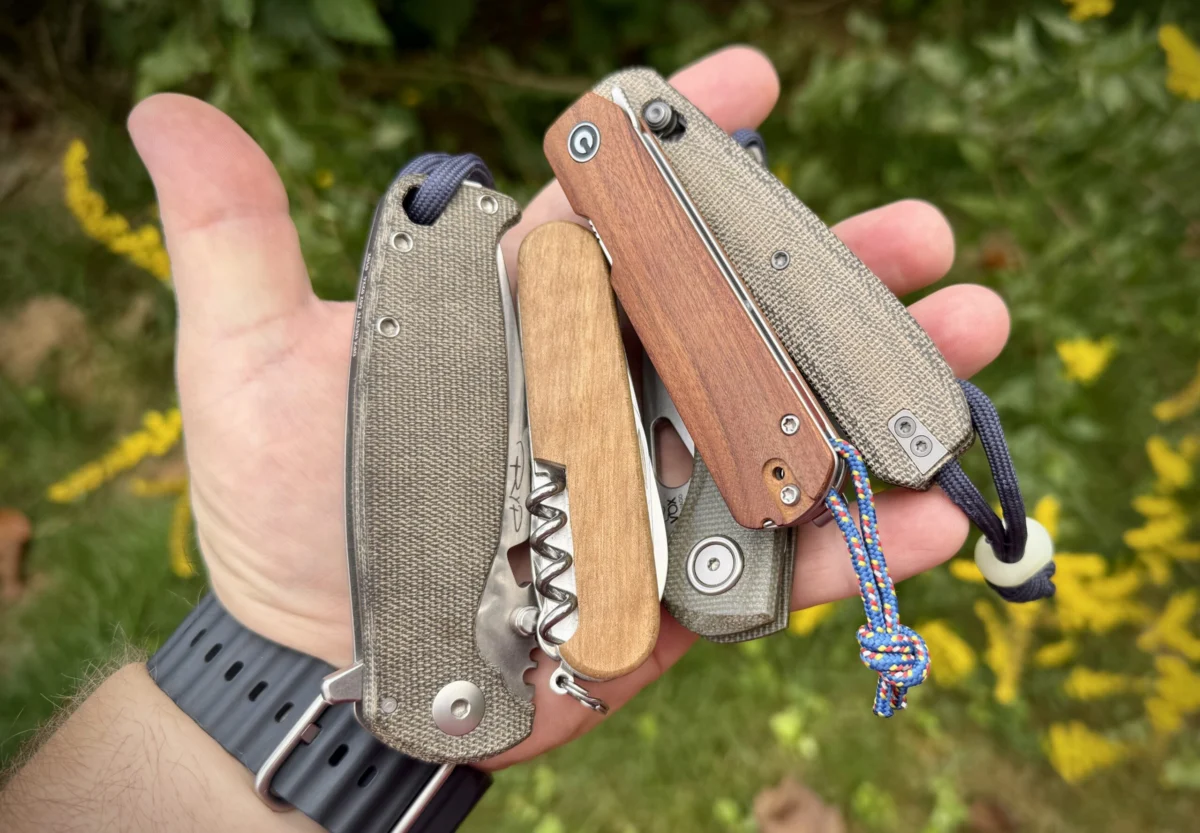
While pet-sitting for a close friend recently, I stumbled upon a curious domestic phenomenon: a full-blown "Opinel problem." Scattered with intentional nonchalance across his home were various iterations of the French classic—the iconic No. 8, the workhorse No. 10, and the dainty No. 6. They weren’t just decorative; they were integrated into the fabric of his daily life. A No. 8 sat ready on a bathroom shelf for quick tasks; a specialty No. 10 with an integrated corkscrew lived beside the kitchen wine rack; and a pair of No. 6s were deployed like sentinels—one on the fireplace mantle, another nestled in a cup of paintbrushes.
Despite having access to high-end custom blades, my friend’s reliance on these humble French folders was revealing. He had tapped into a truth that outdoor enthusiasts and craftsmen have known since 1890: when a tool is this perfectly designed, you don’t need to reinvent it. And now, with the release of the Néo6, Opinel has proven that even a century-old icon can evolve to meet the modern world’s legal and practical requirements.
The Evolution of an Icon: Chronology and Legacy
To understand the significance of the Néo6, one must look at the history of the Opinel workshop in Savoie, France. Joseph Opinel’s original design was born from a desire for simplicity and accessibility. By 1890, he had perfected a folding knife that was inexpensive to produce, easy to sharpen, and exceptionally lightweight. For over 130 years, the design has remained remarkably stagnant, a testament to its functional perfection.
The most significant deviation from the original recipe occurred in 1955, when Marcel Opinel introduced the Virobloc safety ring. This rotating collar allowed users to lock the blade in the open position, significantly increasing the knife’s versatility and safety. For decades, the Virobloc became the defining feature of the Opinel brand. However, as global knife laws tightened—particularly in European urban centers—the need for a non-locking or "legal-carry" option became apparent.

Enter the Néo6. Released in 2025, the Néo6 represents a strategic pivot for the brand. By replacing the traditional locking collar with the new "Opiflex" system, Opinel has created a tool that bridges the gap between traditional heritage and modern regulatory compliance.
Anatomy of the Néo6: Supporting Data and Technical Specs
The Néo6 is not merely a "No. 6 with a different ring." It is a reimagining of the compact folding knife for a 21st-century audience.
Technical Specifications
- Blade Length: 2.75 inches
- Overall Length: 6.5 inches
- Blade Material: Inox Stainless Steel
- Handle Material: Olivewood
- Locking Mechanism: Opiflex Detent System
- Tip Geometry: Blunted/Rounded Clip Point
The standout feature here is the Opiflex. Unlike the Virobloc, which physically captures the blade tang to prevent closure, the Opiflex uses a sophisticated detent mechanism. This provides a tactile "click" that holds the blade open during standard use. Crucially, it does not function as a traditional mechanical lock. This distinction is vital for international travelers or residents of jurisdictions with strict "no-lock" knife policies. While the blade might fold under extreme, intentional pressure, it is perfectly suited for the daily tasks for which the No. 6 was intended: slicing fruit, opening mail, or light whittling.
The choice of olivewood for the handle elevates the Néo6 from a mere utility tool to an aesthetic object. While the standard beechwood handles of the classic series are utilitarian, the olivewood grain offers a warmth and sophistication that makes the Néo6 feel like a premium EDC (Everyday Carry) item. At an approximate price point of $40, it remains an accessible luxury.

The Philosophical Shift: Why the Rounded Tip Matters
One of the most debated aspects of the Néo6 is the rounded, blunted tip. Traditionally, folding knives feature a sharp, piercing point. By intentionally rounding the Néo6, Opinel is signaling a shift in the knife’s intended purpose.
In many cultures, carrying a knife with a sharp point can be viewed with suspicion, or in some cases, can run afoul of "prohibited weapon" classifications. The Néo6 removes this ambiguity. It is a tool for the lunch table, the studio, and the garden—not the tactical arena. It is a "gentle" knife, designed to be used in public spaces without causing alarm. When I pulled the Néo6 out to slice an apple at a local park, the reaction of those nearby was nil. It lacked the aggressive, tactical aesthetic of modern spring-assisted folders. It was, in every sense, a tool of utility rather than a weapon of defense.
Implications for Modern EDC and Legal Compliance
For the modern knife enthusiast, the Néo6 represents a masterclass in compromise. We live in an era where knife regulations are becoming increasingly fragmented. A knife that is perfectly legal to carry in one city might be grounds for a citation in another.
The Regulatory Landscape
The Opiflex system is a brilliant workaround for European users, particularly in the UK and Germany, where locking blades are heavily regulated. By maintaining the "non-locking" status while providing a detent that mimics the security of a lock, Opinel has provided a solution that respects the spirit of the law while maintaining the functionality users demand.

Furthermore, the size of the Néo6—at 6.5 inches total—sits in the "sweet spot" of portability. It is large enough to handle a block of cheese or a sturdy piece of cardboard, yet small enough to disappear into a pocket, purse, or satchel.
The "Kid-Friendly" Factor
I have often struggled with what kind of knife to gift to my children. A standard locking knife can be dangerous for a beginner, and a non-locking slip joint can sometimes be too stiff. The Néo6, with its manageable size and the added security of the Opiflex detent, makes it an ideal "first knife." It teaches respect for the blade without the high-stakes potential for injury associated with more complex mechanisms.
Field Performance: A Different Kind of Utility
In the field, the Néo6 demands a shift in mindset. If you are looking for a bushcraft knife to baton through logs or build a log cabin, this is not your tool. The Inox stainless steel, while easy to maintain and highly corrosion-resistant, is not a "super steel." It is closer to kitchen cutlery in its performance. It takes a razor-sharp edge easily, but it requires more frequent honing than the high-carbide steels found in premium tactical blades.
During my testing, I put the Opiflex to the test with several puncture trials. I was pleasantly surprised to find that the detent held firm. It does not provide the "bank vault" feel of a frame-lock, but for the tasks a 2.75-inch blade is designed for—food prep, light hobby work, and package opening—it is more than sufficient.

Conclusion: A Heritage for the Next Generation
The Opinel Néo6 is a bridge between eras. It honors the 1890 roots of the company while acknowledging the realities of the modern world. It is not trying to compete with the latest ceramic-bearing, carbon-fiber tactical folders. Instead, it offers something that has become increasingly rare in the knife world: character.
When you carry an Opinel, you are carrying a piece of functional history. The Néo6 is a change of pace for the EDC community—a reminder that not every task requires a high-tech tactical solution. Whether you are buying it as a sophisticated gift for a teenager, a legal-carry solution for a city dweller, or simply as an elegant addition to your own collection, the Néo6 is a triumph of thoughtful, intentional design.
It is a knife that invites you to slow down, slice an apple, and appreciate the simple, enduring brilliance of a tool that has been refined, not redesigned, for over a century. In a world that is constantly asking us to upgrade to the next "best" thing, the Néo6 serves as a quiet, effective reminder that sometimes, the best tool is the one that has been with us all along.