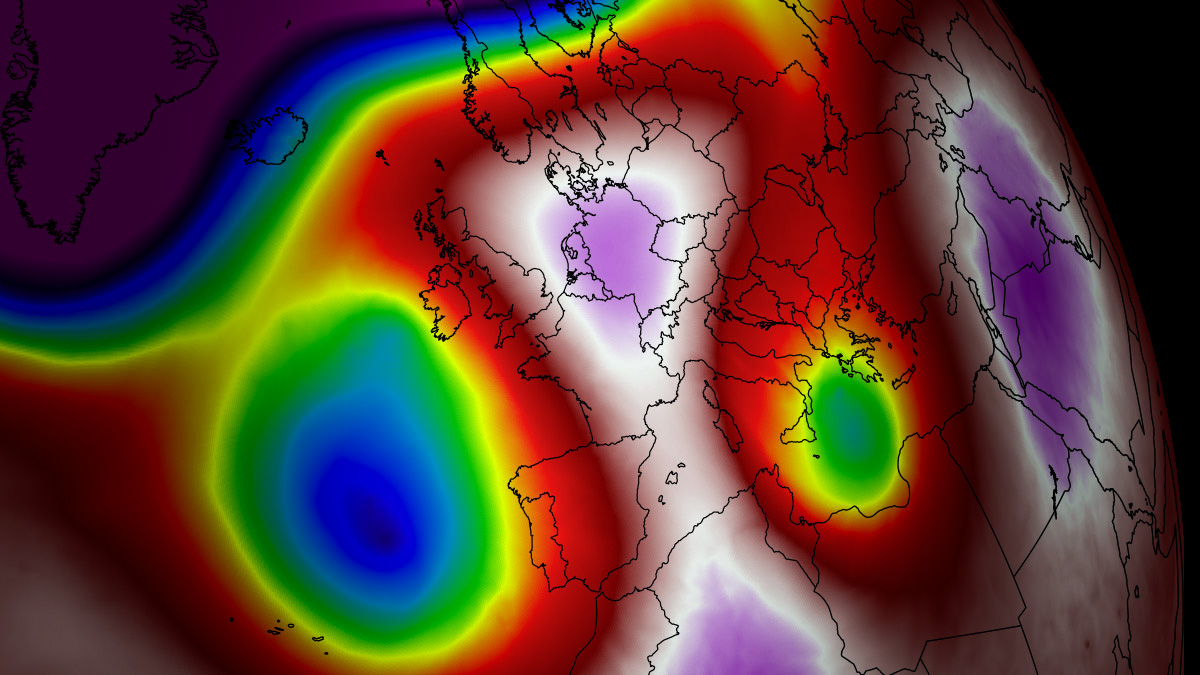
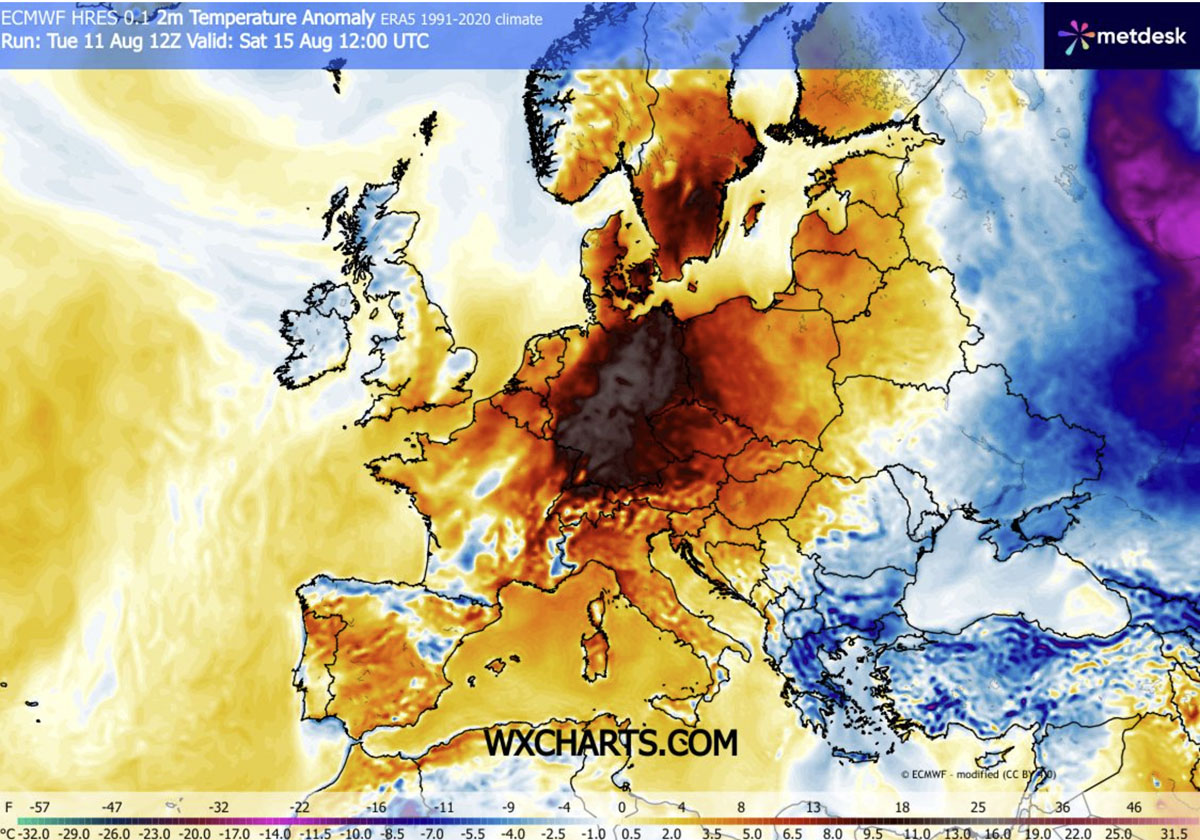
As the calendar turns to mid-August 2026, the European continent is once again under siege by an atmospheric phenomenon that has become the defining feature of this summer: a high-amplitude upper-level ridge that is locking the fifth major Heat Dome of the season over the heart of the continent. This persistent weather pattern is driving widespread, dangerous temperatures that are regularly shattering the 40°C threshold, forcing governments, energy grids, and health services into a state of high alert.
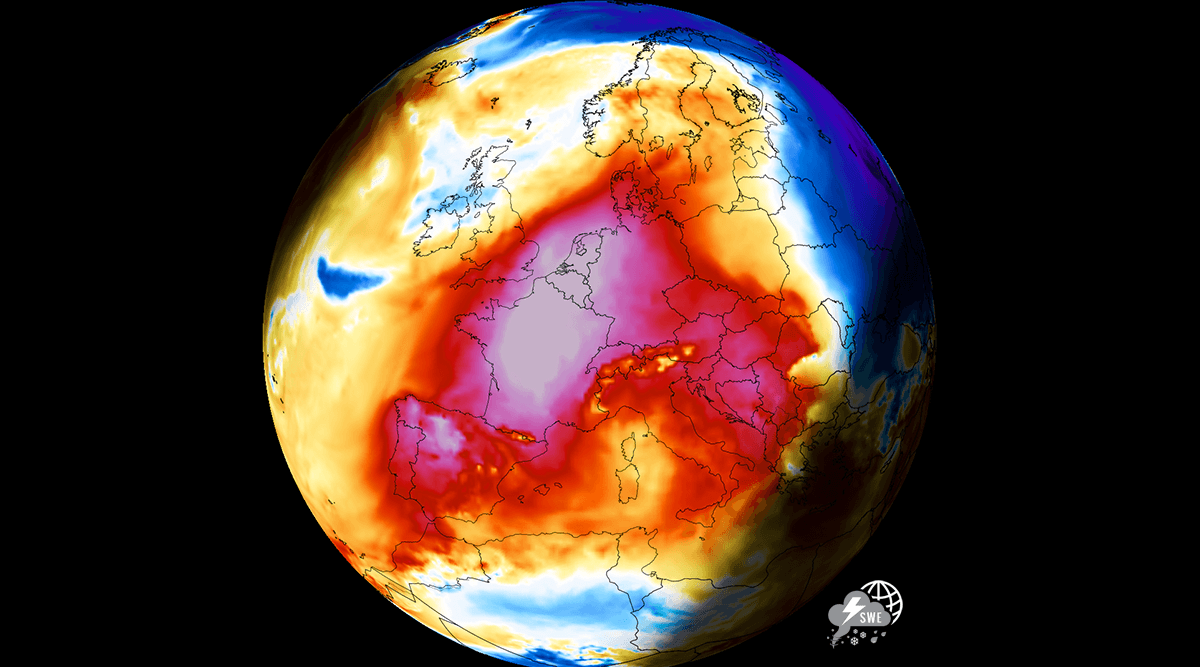
Driven by a powerful northward warm surge originating from the Sahara, upper-air thermal anomalies are climbing into the 99th percentile of historical records. This is not merely a transient heatwave; it is a structural, long-duration atmospheric event bringing severe, excessive heat across France, the United Kingdom, Italy, Central Europe, and the Balkan Peninsula.
The Atmospheric Engine: Anatomy of a Heat Dome
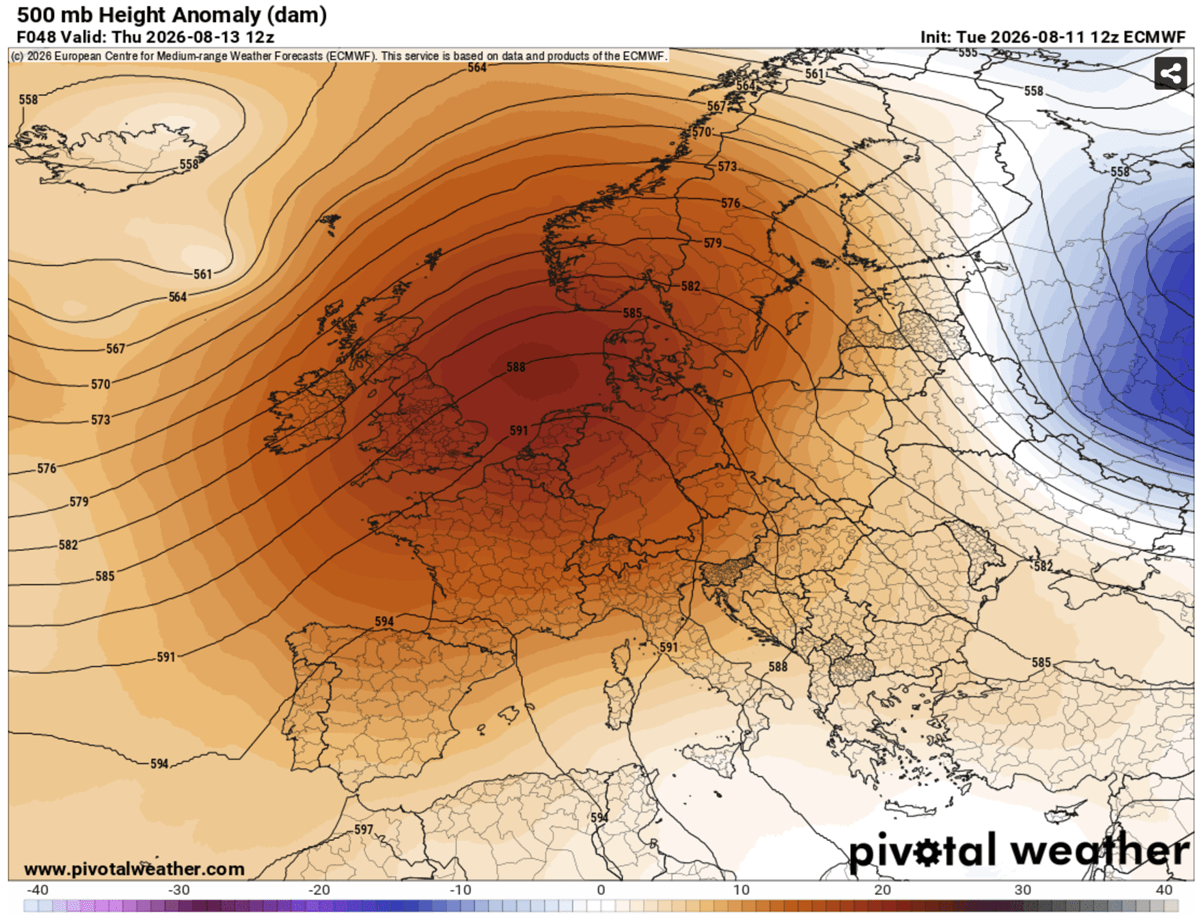
The primary driver behind this fifth thermal wave is a stubborn, stationary high-pressure ridge parked firmly over the continent. Meteorologically, a "Heat Dome" functions similarly to a lid on a boiling pot. As the high-pressure system settles, it forces air to sink toward the surface. Through the process of adiabatic compression, this sinking air warms rapidly, creating an intensifying cycle of heat that traps thermal energy in the lower troposphere.
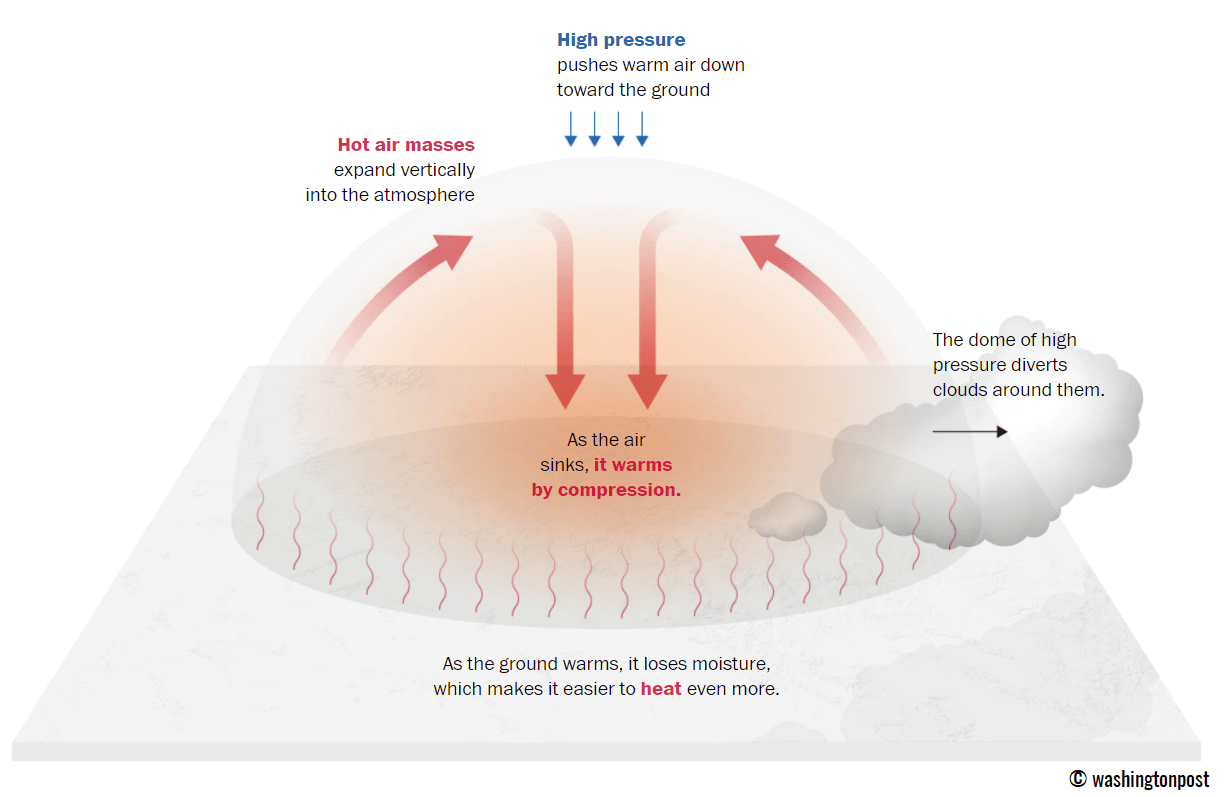
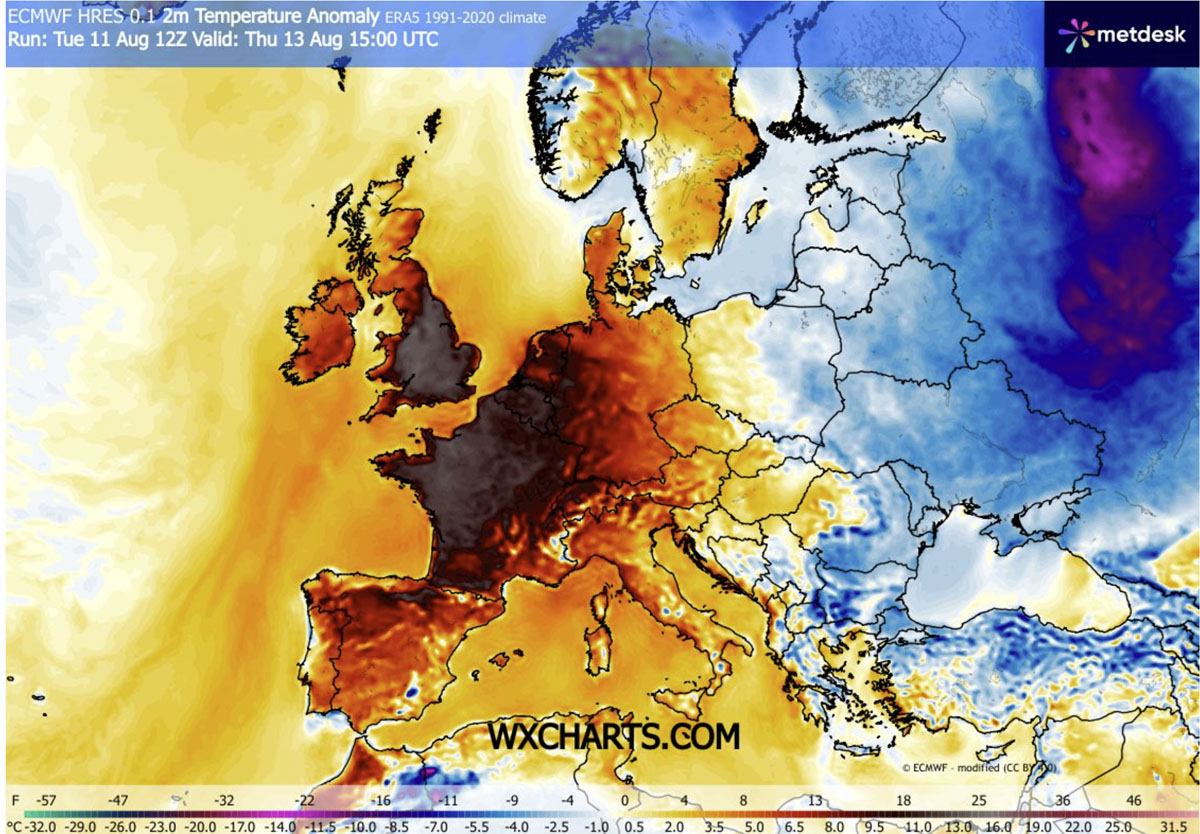
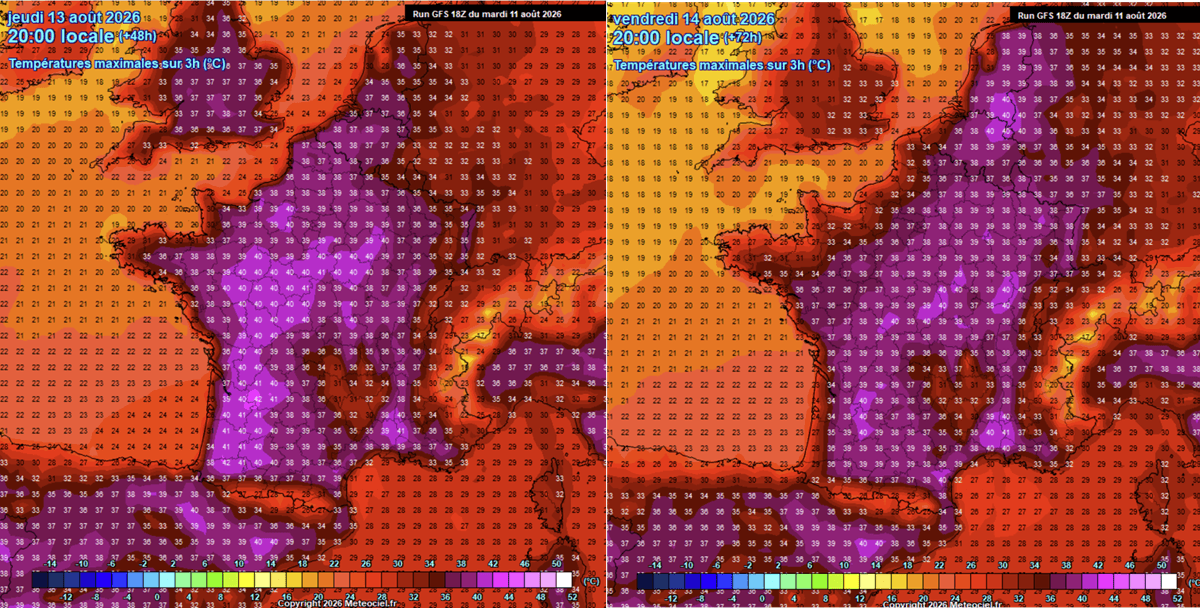
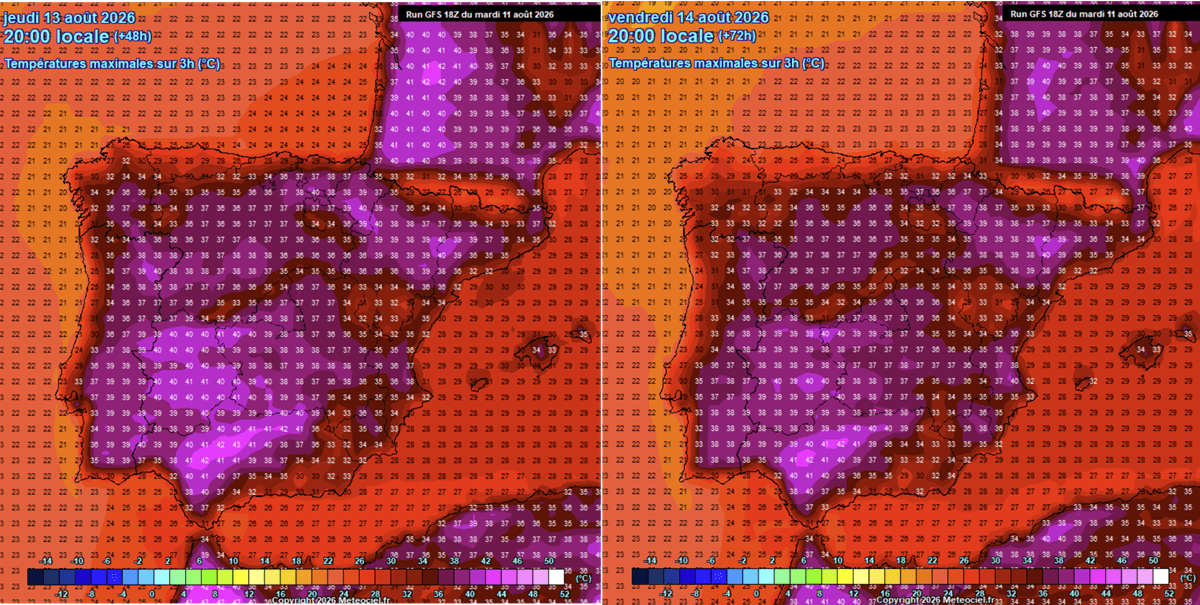
In this specific event, the lack of cloud cover and the presence of dry continental winds have accelerated the warming process. As the air mass compresses, it rapidly strips moisture from the soil, leading to a feedback loop where the ground, no longer cooled by evapotranspiration, radiates even more heat back into the atmosphere. This has resulted in a forecast where peak surface temperatures across low-lying basins and plains are expected to reach between 40°C and 43°C, with some localized pockets in the Iberian Peninsula likely to see temperatures climb even higher.
Chronology of the 2026 Thermal Surge
The progression of this heat dome is methodical, shifting its intensity from the west toward the east as the week concludes.
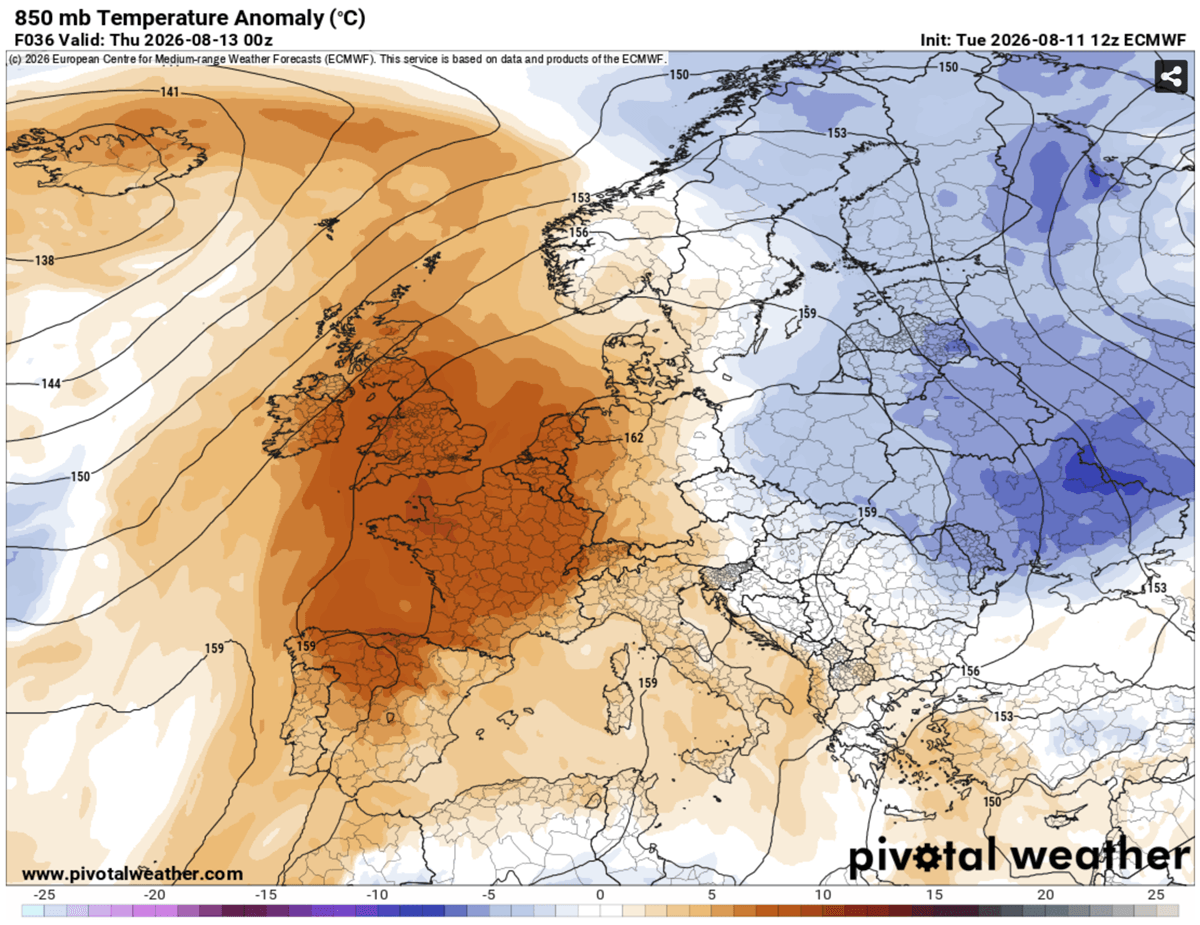
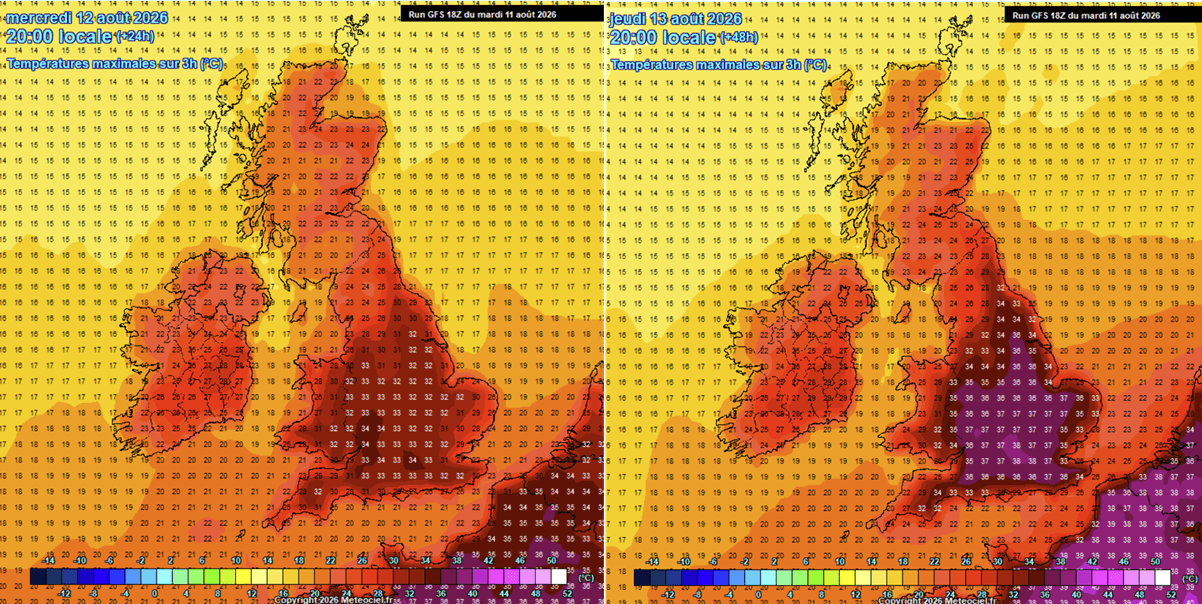
- Mid-Week (Wednesday–Thursday): The western front of the heat dome dominates. England, France, and the Iberian Peninsula are the primary focal points. By Thursday, the core of the warm air mass sits squarely over northern France and the English Channel, pushing temperatures in the UK to an unprecedented 38°C–39°C.
- Late Week (Friday): The intensity shifts slightly toward the Benelux region and Western Germany. France continues to experience peak temperatures in the 40°C–43°C range.
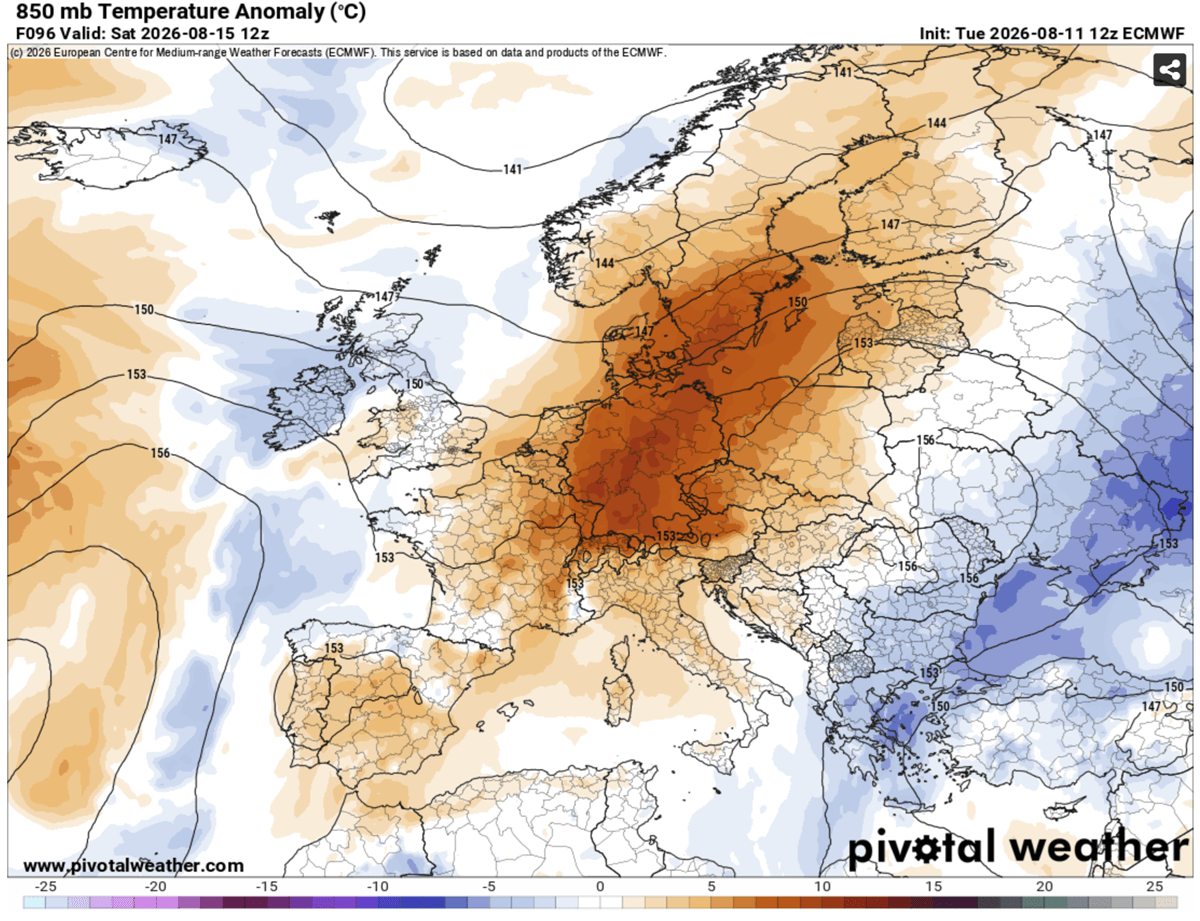
- The Weekend Shift: As the upper-level wave over the Atlantic begins to weaken, the heat dome becomes more elongated and migrates toward Central and Eastern Europe. This shift triggers a second peak of the heatwave across Germany, the Alpine region, Italy, and the northern Balkans. By Saturday and Sunday, countries such as Hungary, Serbia, and the Czech Republic will see their highest temperatures of the week, with the Pannonian plains expected to reach the 40°C mark.
- Early Next Week: Long-range models indicate a potential "pattern flip" as a cooler, maritime air mass from the Atlantic begins to encroach on Western Europe, providing a much-needed, albeit temporary, respite for France, the UK, and the Iberian Peninsula.
Supporting Data and Meteorological Anomalies
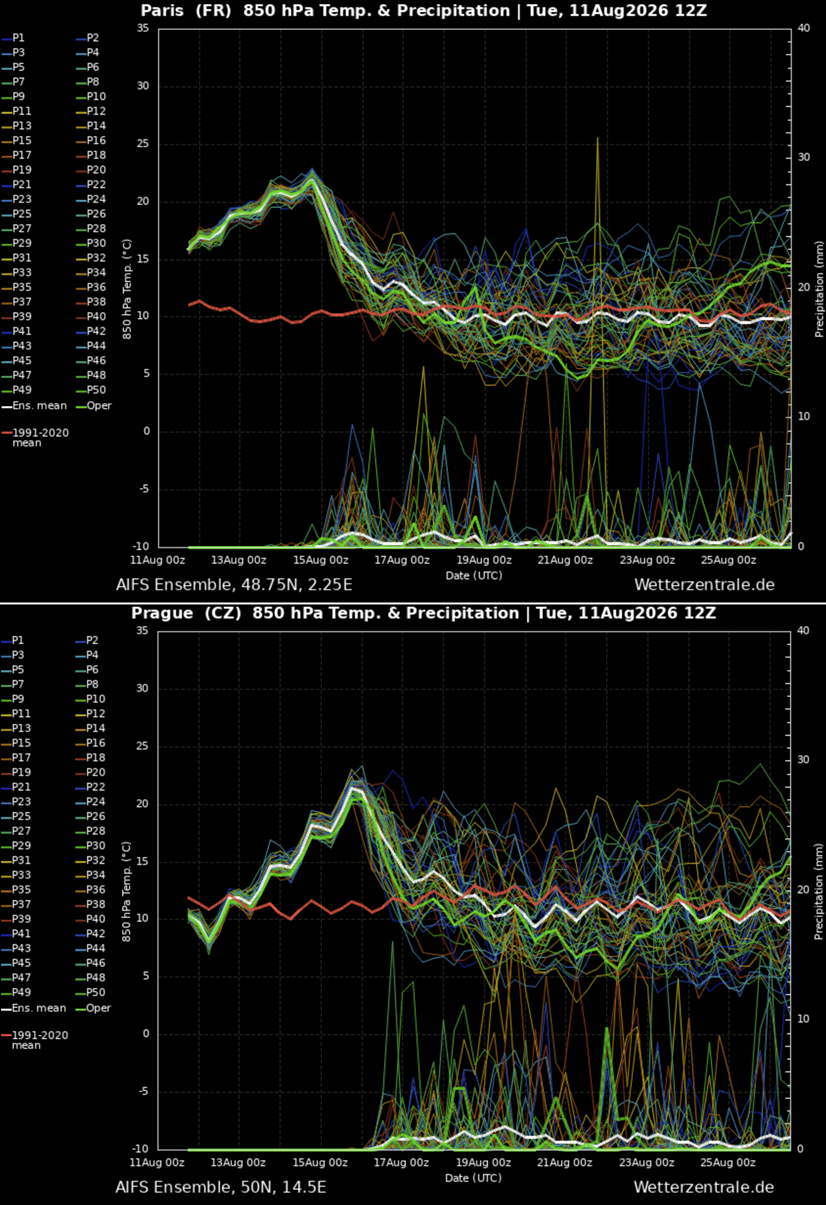
The severity of this event is best understood through 850 hPa temperature anomalies. These metrics, which measure the temperature at roughly 1,500 meters above sea level, are currently 12°C to 16°C above the long-term averages for mid-August.
A critical component of this data is the lack of nocturnal cooling. In major urban corridors—including Paris, London, and Milan—nighttime low temperatures are struggling to drop below 22°C to 26°C. These "tropical nights" are among the most dangerous aspects of the heat dome. Without a cooling period at night, the human body, critical infrastructure, and the environment are denied a recovery window, causing heat stress to accumulate exponentially day after day.
Health, Infrastructure, and Societal Implications
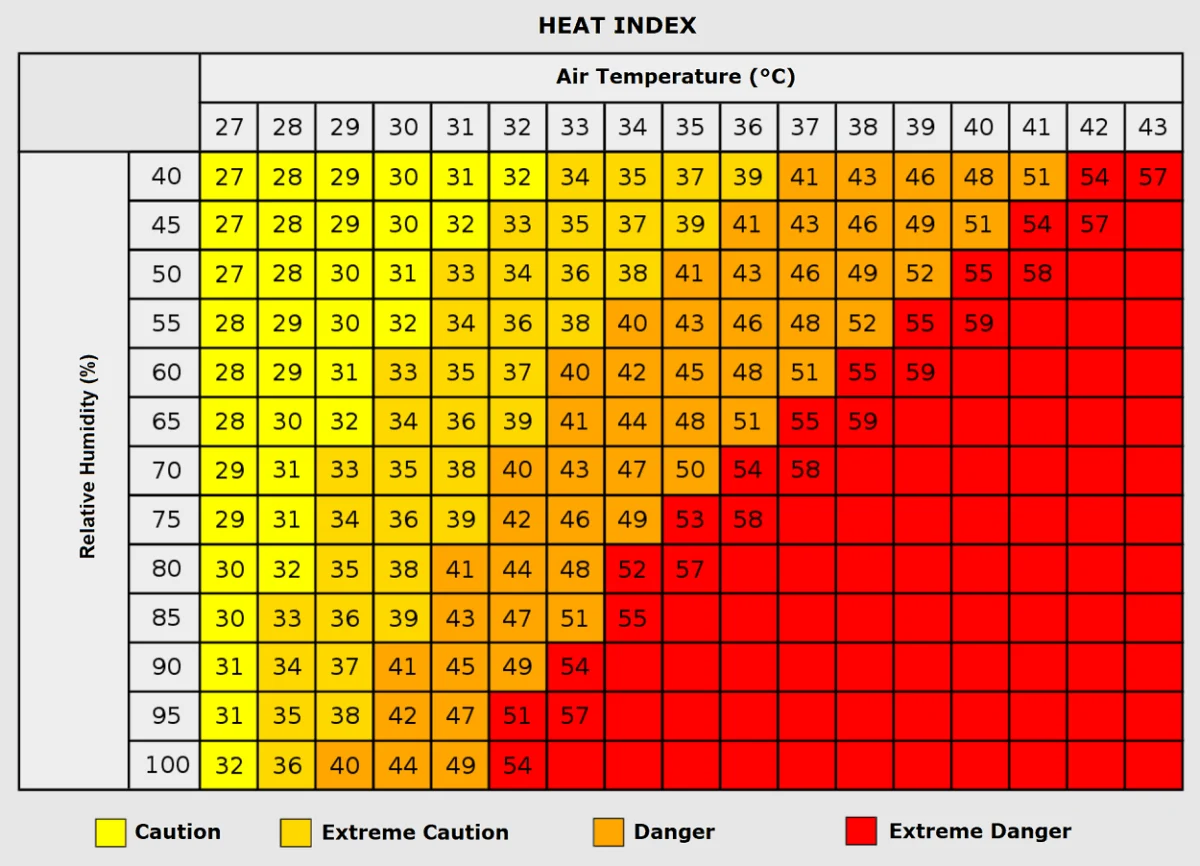
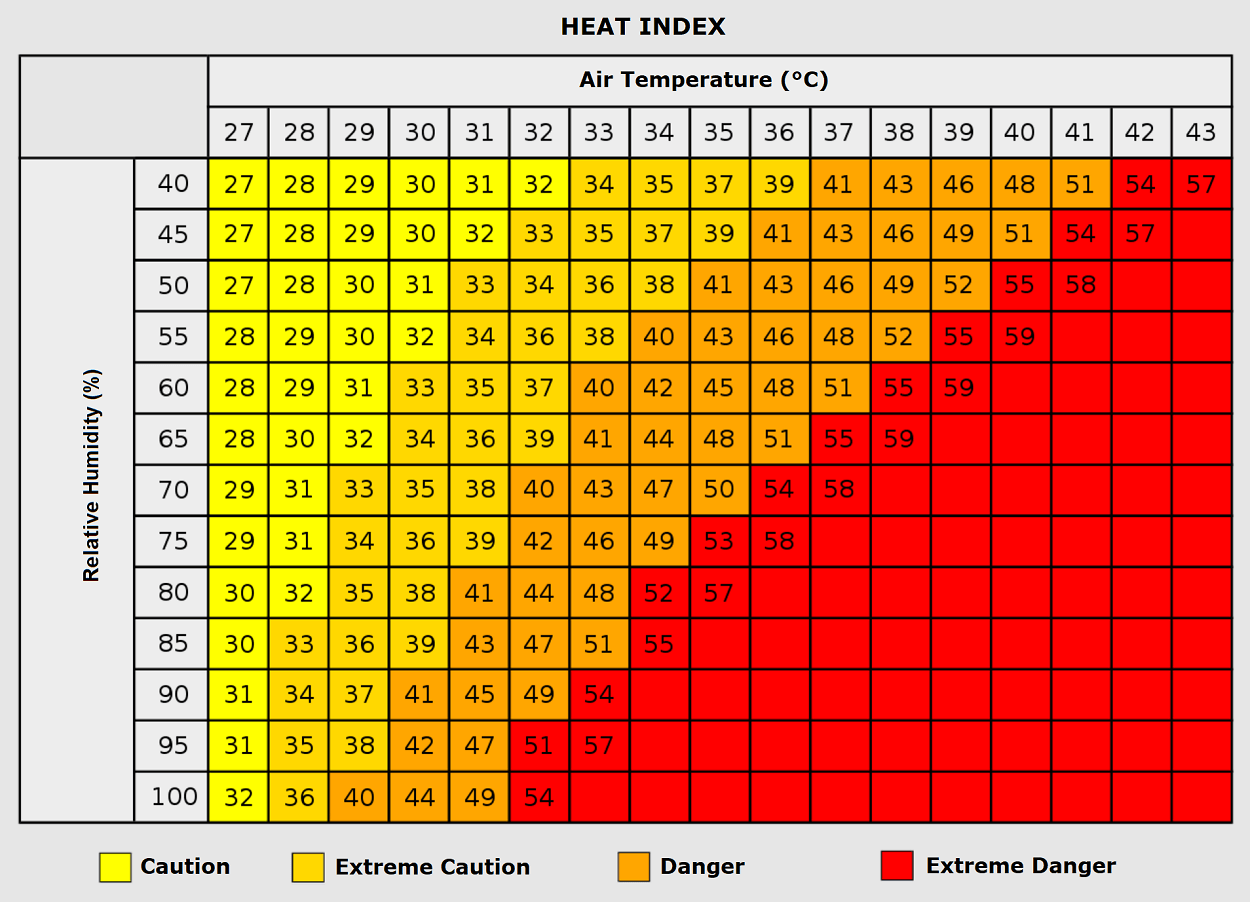
The human toll of such a sustained heat event is profound. Public health agencies are currently focused on the "Heat Index," a calculation that accounts for both temperature and relative humidity. While the current heatwave is characterized by relatively low humidity in some areas, the sheer magnitude of the raw temperatures creates a lethal environment.
Public Health Risks
The most vulnerable populations—the elderly, children, and those with pre-existing cardiovascular or respiratory conditions—are at the highest risk. Emergency services are bracing for a surge in heat-related illnesses, ranging from heat exhaustion to life-threatening heatstroke. Furthermore, laborers in the construction, agricultural, and transportation sectors face significant occupational hazards. Prolonged exposure to these conditions is not just uncomfortable; it is a physiological crisis. The medical community emphasizes that the body’s inability to shed heat during tropical nights is linked to increased rates of heart attacks and strokes, as the heart works overtime to regulate internal temperature.
Energy Grid Strain
The energy sector is under immense pressure. As temperatures climb, the demand for air conditioning and refrigeration skyrockets, testing the limits of the European power grid. Utilities are monitoring the risk of localized brownouts and equipment failures caused by the extreme heat. The combination of high demand and the reduced efficiency of power infrastructure under thermal stress is a significant concern for policymakers.
Environmental and Agricultural Impact
Beyond the human impact, the heat dome is exacerbating drought conditions. The rapid depletion of soil moisture is devastating for agricultural yields, particularly in the corn-growing regions of the Balkans and the vineyards of France and Italy. Moreover, the landscape, parched by weeks of extreme heat, has reached a critical threshold for wildfire risk. In southwestern and central Europe, vegetation has become tinder-dry, and emergency services are on high alert for any spark that could ignite a catastrophic blaze.
Official Responses and Public Advisory
Governments across the affected regions have initiated "Red" and "Orange" heat alerts. Public advisories have been standardized to include:
- Hydration Protocols: Increased intake of water regardless of activity level.
- Urban Mitigation: The establishment of "cool zones" or public spaces with air conditioning for those without adequate housing or cooling systems.
- Workplace Adjustments: Recommendations for businesses to shift outdoor labor hours to the early morning or late evening, avoiding the 12:00 PM to 6:00 PM peak intensity.
- Community Wellness Checks: Municipalities are mobilizing social workers and volunteers to conduct wellness checks on the elderly and isolated residents.
Conclusion: The New Normal
This fifth heat dome serves as a stark reminder of the shifting climatic landscape. Meteorologists and climatologists alike are studying these patterns to determine how these "blocking highs" are becoming more persistent and more frequent. While the heat is projected to subside for some regions by the start of next week, the cumulative impact of five such waves in a single season is an unprecedented strain on European infrastructure and public health.
As the continent waits for the predicted atmospheric shift, the focus remains on mitigation and safety. The data is clear: in an era of intensifying heat domes, the ability to adapt to nocturnal heat stress and manage systemic grid demand is no longer an optional policy goal, but a vital necessity for regional stability. Stay tuned to local meteorological services and adhere to all government warnings as this significant weather event continues to unfold across Europe.