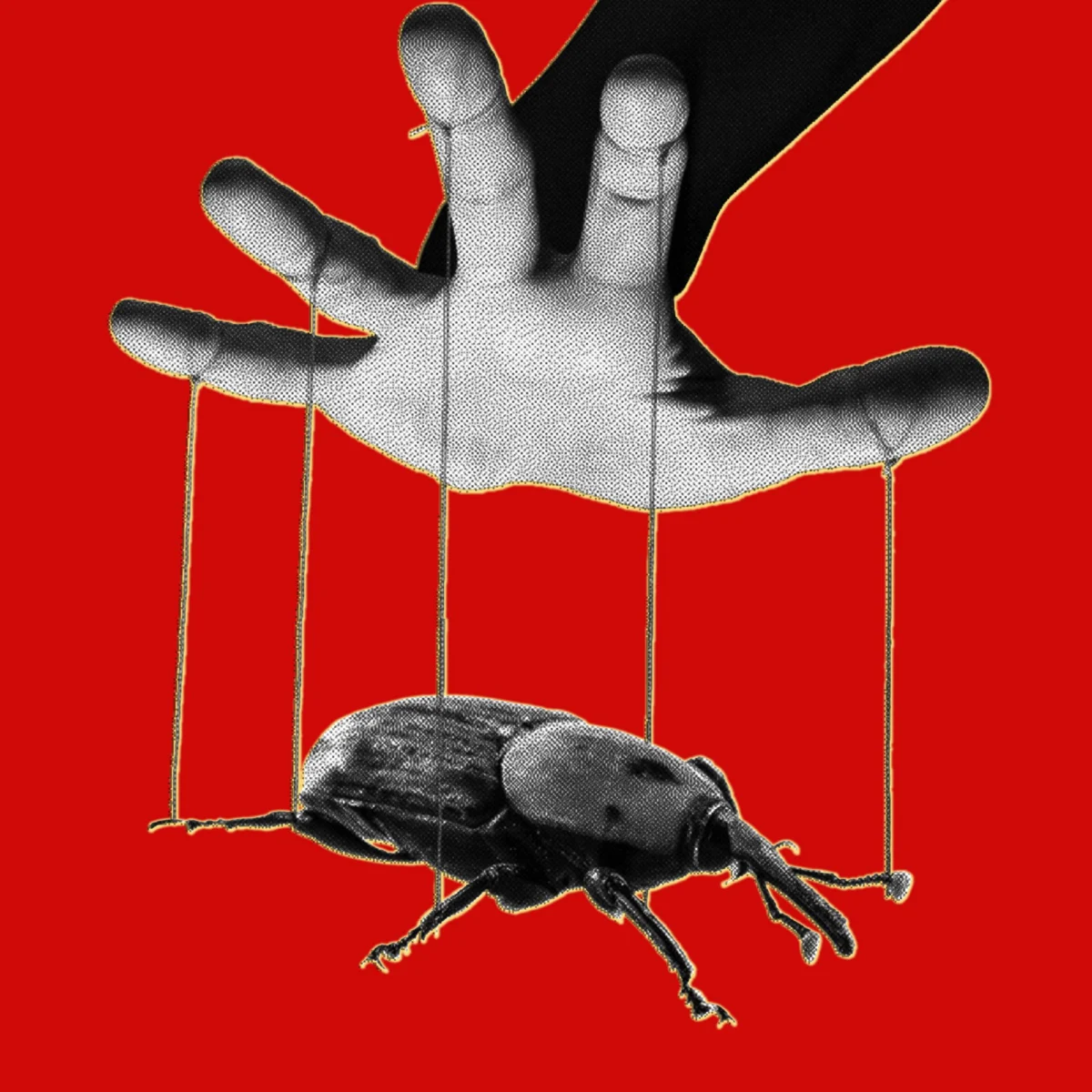
The digital landscape is currently navigating the tremors of "PHP2Shell," a collection of critical vulnerabilities in the PHP programming language that has sent shockwaves through the global cybersecurity community. For web administrators and security teams, the past week has been a frantic exercise in damage control. Yet, beyond the immediate scramble to patch systems, the incident marks a significant, perhaps permanent, shift in the mechanics of cyber warfare: the transition of "dormant" historical vulnerabilities into active, weaponized threats, accelerated by the emergence of frontier artificial intelligence.
While the "nightmare scenario" of widespread, catastrophic data breaches has—so far—failed to materialize, the PHP2Shell incident serves as a definitive case study in how AI is transforming the economics of vulnerability research. It is a world where bugs that were once considered too complex or theoretical to exploit are now being brought to life by the iterative, analytical power of machine learning.
The Anatomy of the Crisis: Main Facts
PHP is a cornerstone of the internet, powering a massive portion of the world’s web servers. The vulnerabilities collectively dubbed "PHP2Shell" are not entirely new; some underlying components were identified as early as 2024. At the time, however, these flaws were classified as low-priority or "too complex" for a human attacker to realistically weaponize.
The shift occurred in early August when researchers at the security firm Calif, leveraging frontier AI models as part of OpenAI’s "Patch the Planet" initiative, successfully mapped a path to exploitation. By combining deep human knowledge of PHP’s architectural dynamics with the pattern-matching capabilities of AI, the researchers bridged the gap between a theoretical flaw and a functional exploit.
Following this discovery, independent research teams at OpenAI and the Google-owned security firm Wiz corroborated the findings. When the vulnerability was finally disclosed, the reaction was instantaneous. Cloudflare reported millions of exploitation attempts within hours of the public release—a testament to the speed at which automated, AI-assisted malicious actors now operate.
Chronology of the PHP2Shell Discovery
To understand the gravity of the situation, one must look at the timeline of the "Patch the Planet" cycle:
- 2024: Initial indicators of the underlying vulnerabilities are documented by the PHP community. Because the exploitation chain required an impractical sequence of events, they are deemed low-risk and remain unaddressed.
- Early August 2026: Researchers at Calif begin a concerted effort to stress-test the PHP codebase using advanced AI tools. They successfully synthesize a functional exploit, proving that what was once "impossible" is now viable.
- Late August – September 2026: OpenAI and Wiz researchers independently arrive at the same conclusions, confirming that the "theoretical" bugs have become a legitimate security threat.
- October 2026 (The Disclosure): The vulnerability is made public. Web administrators globally initiate an emergency patching cycle.
- The Immediate Aftermath: Malicious actors flood the internet with exploitation attempts. However, reports from the PHP Foundation and security researchers suggest that most of these automated, "script-kiddie" style attempts are ineffective, lacking the nuance required to navigate the specific conditions of the vulnerability.
The Role of AI: Magnifier or Catalyst?
The central debate among security experts is whether AI is creating a new class of threats or simply accelerating the discovery of existing ones. Sagi Tzadik, a security researcher at Wiz, offers a stark perspective: "The vulnerability had been known to the PHP team for years, but because it could not be leveraged by an attacker—at least, not a human one—it was not addressed."
This reveals a dangerous "complexity floor." For decades, software security relied on the assumption that if an exploit was too difficult for a human to conceptualize, it was effectively safe. AI has shattered that floor. By performing exhaustive code analysis, AI models can connect disparate, non-critical bugs to form a coherent, exploitable chain.
However, industry experts are cautious about overstating AI’s current capabilities. Ryan Austin of Calif emphasized in a recent report that "no model is simply capable of unearthing ‘all bugs’ with simple prompts." The most sophisticated AI-aided hacking techniques currently in play still require significant human oversight, domain expertise, and iterative testing. AI is not a magic button for hacking; it is an incredibly powerful force multiplier for the human researcher.
Supporting Data: The Expanding Attack Surface
The strain on IT infrastructure is reaching a breaking point. The volume of vulnerabilities is growing at an unprecedented rate, leaving organizations struggling to maintain a "patch-first" posture.
- Record-Breaking Vulnerabilities: Microsoft recently released its monthly security update, which contained a staggering 1,453 unique vulnerabilities.
- Resource Intensification: The cost of defense is skyrocketing. Bank of America recently hired 1,000 consultants specifically to remediate flaws discovered by Anthropic’s "Mythos" AI security platform.
- The PHP Reach: While the industry is worried about a deluge of "long-life" bugs, Jake Williams, VP of Research and Development at Hunter Strategy and a former NSA hacker, provides a degree of solace. "There’s only so much of this low-hanging fruit," he explains. "PHP is a unique case because of its near-ubiquitous exposure to the internet. Most other software tools are not designed with that level of public accessibility."
Official Responses and Industry Outlook
The PHP Foundation has been proactive, working to release patches and clear guidance to mitigate the threat. The consensus from the foundation is one of guarded optimism; while the vulnerability was critical, there is no evidence of widespread, successful breaches resulting from the PHP2Shell exploit.
Security researchers, including Niels Provos, suggest that the "freak-out" over AI’s role in security is slightly premature. "People have now been looking with AI for over a year, and it required a highly skilled team to find this one," Provos notes. "I guess we will see whether I am completely wrong, but I doubt it."
The industry appears to be coalescing around a new security philosophy: Coordinated Disclosure 2.0. As AI makes it easier to find bugs, the time between discovery and exploitation is shrinking. The traditional 90-day disclosure window, which served the industry well for two decades, may no longer be sufficient.
Implications: A New Reality for Cybersecurity
The PHP2Shell crisis provides a clear, albeit unsettling, roadmap for the future of digital security. We are entering an era where the "hidden" flaws of the last thirty years of software development are being systematically unearthed.
1. The Death of Security Through Obscurity
For years, many developers operated under the assumption that if a flaw was hard to find, it would never be found. That era is over. With AI-assisted code analysis, "hidden" flaws are now just waiting to be indexed by an algorithm.
2. The Professionalization of Defense
The "hacker in a basement" stereotype is increasingly irrelevant. The battleground has shifted to firms like Calif, Wiz, and OpenAI, which are using AI to perform defensive research. The implication is that security is becoming a high-capital, high-compute endeavor. Small, under-resourced IT teams will find it increasingly difficult to compete without access to these advanced AI-powered security suites.
3. The Need for Resilient Architecture
If AI can find bugs in existing, legacy code, the focus must shift to creating architectures that are inherently resilient, even when components are compromised. This means moving toward "zero-trust" models, stricter sandboxing, and perhaps a move away from monolithic, legacy-heavy languages where possible.
4. The Human Element
Despite the alarmist headlines, the human element remains the final arbiter of security. As demonstrated by the PHP2Shell incident, it was human researchers who directed the AI, interpreted the results, and eventually authored the patches. The future of security will not be AI versus humans; it will be teams of humans empowered by AI, competing against other teams of humans empowered by AI.
Conclusion
The "PHP2Shell" crisis is a wake-up call, but it is not the apocalypse. It has highlighted that while AI is an incredibly potent tool for discovery, it does not fundamentally change the goal of security—it merely raises the bar for competence.
As we move forward, the organizations that will survive this new era are those that accept that their legacy code is no longer "safe by default." By investing in the same AI-driven analysis tools that attackers use, defenders can reclaim the advantage. The era of the "long-life bug" is coming to a close, not because we have suddenly become perfect coders, but because we finally have the tools to identify the ghosts in the machine before they can be weaponized against us. The arms race is on, and the only path forward is to ensure that the defenders—with their AI assistants in tow—remain one step ahead of the exploiters.