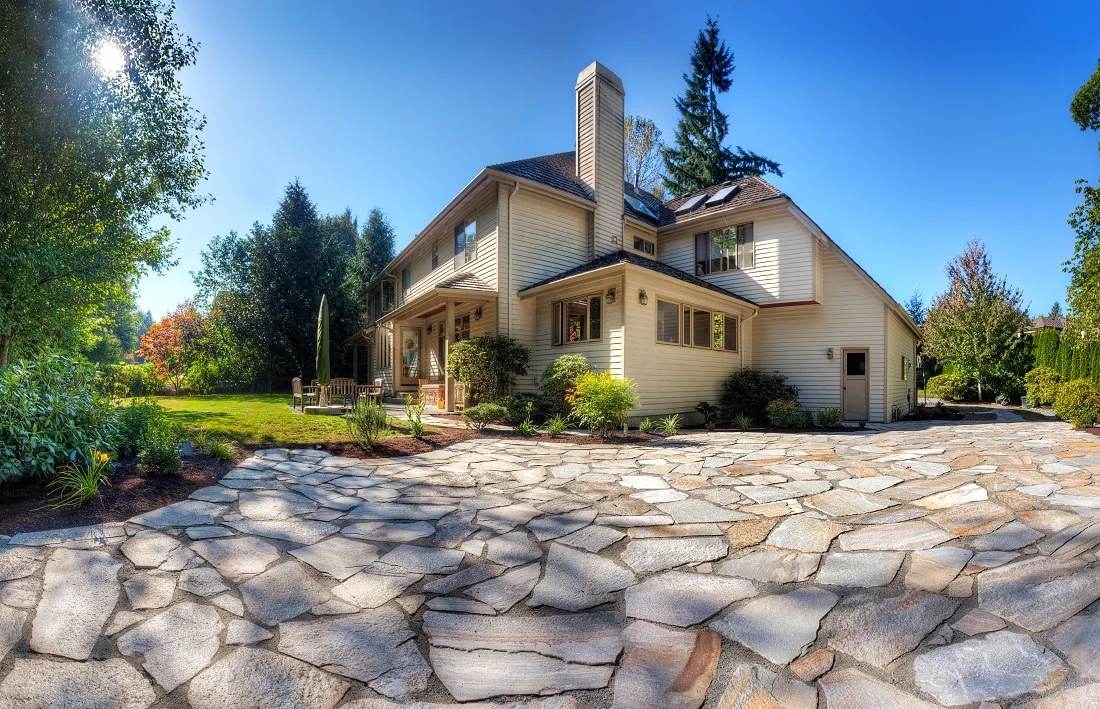
The ground beneath our feet is undergoing a transformation. As global construction demand surges, the humble patio, driveway, and walkway have become focal points in the fight against climate change. With cement and concrete production currently responsible for approximately 8% of global carbon dioxide emissions—a figure that has doubled since 1990—the environmental impact of our built environment is impossible to ignore. For the modern homeowner or commercial developer, the choice of materials is no longer just about aesthetics; it is a critical decision in managing embodied carbon and mitigating the escalating risks of urban stormwater runoff.
Main Facts: The Dual Crisis of Modern Paving
Two primary environmental challenges converge at the surface level: embodied carbon and stormwater management.
Embodied carbon refers to the greenhouse gas emissions associated with the manufacturing, transportation, and installation of building materials. Cement, the binder in concrete, is the primary culprit, accounting for roughly 90% of concrete’s total carbon footprint. In 2022 alone, the world produced over 4 billion metric tons of cement. When we pave over the earth with impervious surfaces, we create a second, equally pressing problem: runoff.
Traditional concrete and asphalt are impermeable, meaning rainwater cannot soak into the ground. Instead, it flows across the surface, gathering pollutants like heavy metals, oil, and tire residue before dumping them into overburdened municipal storm drains and local waterways. Conversely, permeable paving systems can reduce surface runoff by up to 85%. Furthermore, studies monitored by the Environmental Protection Agency (EPA) have documented that these systems can filter out 82–95% of sediment, 65% of phosphorus, and 80–85% of nitrogen, turning a backyard project into a vital tool for environmental restoration.
Chronology: Seven Years of Sustainable Evolution
Since Earth911 first published a guide to sustainable paving in 2019, the market has undergone a significant shift. What was once a niche interest for eco-conscious pioneers has evolved into a robust sector of the construction industry.
- 2019: The conversation focused primarily on basic permeable concepts and the nascent availability of recycled materials. Information was fragmented, and homeowners often struggled to source sustainable alternatives.
- 2021: The publication of major research regarding the 8% global carbon contribution of cement catalyzed industry-wide scrutiny. Companies began seeking ways to "green" the supply chain.
- 2023–2024: Technological breakthroughs in carbon-curing and carbon-negative aggregate production moved from laboratory settings to commercial viability. Peer-reviewed studies began to quantify exactly how much CO2 could be sequestered by these new materials.
- 2026: Today, sustainable paving is mainstream. Permeable paver systems made from recycled plastic (HDPE) are standard retail items, and regional governments have begun implementing stormwater fee credits to incentivize the transition away from impervious surfaces.
Supporting Data: Understanding the Impact
The transition to sustainable hardscaping is backed by hard numbers. The effectiveness of permeable systems is no longer speculative.
The Carbon Equation
New carbon-curing technologies, such as those pioneered by CarbonCure and Solidia, have changed the narrative around concrete. By injecting captured CO2 into the concrete mix during the curing process, these companies lock the greenhouse gas away permanently. According to research published in the journal PNAS, each kilogram of carbon-cured concrete prevents approximately 0.07 to 0.21 kg of CO2 from entering the atmosphere. Even more impressive are "carbon-negative" aggregates, which can store between 0.4 and 0.77 kg of CO2 per kilogram of material.
Water Filtration Efficiency
The shift toward permeable surfaces is essentially a form of decentralized infrastructure. By allowing water to infiltrate the soil, we prevent the flash-flooding common in urban environments. The EPA-documented removal efficiencies for sediment and chemicals highlight that individual choices in residential landscaping have a cumulative impact on the health of regional watersheds.
Official Responses and Regulatory Trends
Cities across the United States are recognizing that they cannot solve stormwater management problems through public works projects alone; they need the cooperation of private property owners.
Many municipalities now mandate a specific percentage of permeable paving for new parking lots and walkways. Beyond mandates, there is a "carrot" approach: many local stormwater utilities now offer significant fee credits or tax incentives to homeowners who install permeable surfaces. Before breaking ground on any project, homeowners are encouraged to consult their local utility board. Often, the cost difference between traditional and sustainable paving can be offset by these financial incentives, making the "green" choice the fiscally responsible one.
Implications for the Future of Hardscaping
As we look toward the remainder of the decade, the criteria for choosing paving materials have become more stringent and transparent.
The Hierarchy of Sustainability
The "greenest" paver is almost always the one that already exists. Reclaimed brick, salvaged flagstone, and "urbanite" (broken, recycled concrete) remain the gold standard for sustainability. Because these materials were manufactured decades ago, their carbon debt has long been paid. Sourcing these items from architectural salvage yards or Habitat for Humanity ReStores is the most effective way to lower the carbon footprint of a landscaping project.
Distinguishing Marketing from Reality
Homeowners must be wary of vague labels. Terms like "eco-friendly" are legally meaningless. Instead, look for concrete specifications: "made from 100% post-consumer recycled HDPE" or "contains 40% recycled glass." Reputable manufacturers now provide downloadable spec sheets that verify these percentages.
The "End-of-Life" Consideration
Sustainability does not end at installation; it extends to the lifecycle of the product. While plastic grids are increasingly recyclable, composite pavers made from mixed rubber and plastic remain a challenge for most recycling facilities. Furthermore, as research from 2024 suggests, recycled rubber (derived from old tires) must be used with caution. The potential release of 6PPD-quinone—a byproduct toxic to salmon—means that rubber pavers should never be installed near vegetable gardens or waterways.
Strategic Selection: A 2026 Buyer’s Guide
For those looking to renovate, here is how to navigate the current landscape:
- Permeable Plastic Grid Systems: The most accessible DIY option. Made from recycled HDPE, these grids are flexible, durable, and can be filled with gravel or grass.
- Permeable Concrete Pavers: These provide the classic "paver" look while maintaining drainage gaps. Look for manufacturers like Unilock or Techo-Bloc that provide transparent sustainability data.
- Carbon-Cured Concrete: Best for large-scale projects. While rarely found in big-box stores, local masonry yards can often special-order products from manufacturers licensed to use carbon-sequestration technology.
- Recycled-Glass Pavers: An excellent aesthetic choice that reuses post-consumer glass. These are frequently used in commercial LEED-certified projects but are increasingly available for high-end residential use.
- Reclaimed Materials: Always the top choice for those who value low-carbon impact above uniformity.
Conclusion: Empowered Choices
The landscape of sustainable paving has matured. With better data, clearer labeling, and a growing network of local incentives, homeowners have the tools to transform their properties into functional, carbon-conscious spaces. Whether you choose to install permeable grids, support carbon-curing technology, or opt for salvaged brick, your choices contribute to a larger effort to manage our resources more wisely. By slowing the flow of stormwater and reducing the embodied carbon of our infrastructure, we aren’t just paving a driveway—we are building a more resilient future, one square foot at a time.
Editor’s Note: This article was originally authored by Gemma Alexander on May 20, 2019, and was substantially updated and expanded in May 2026 to reflect the latest advancements in materials science and environmental policy.